Herbal Tea from Your Garden
The best plants for homegrown tea - mint, chamomile, lemon balm, tulsi and lemon verbena - plus when to harvest, fresh versus dried, brewing ratios and simple blends.
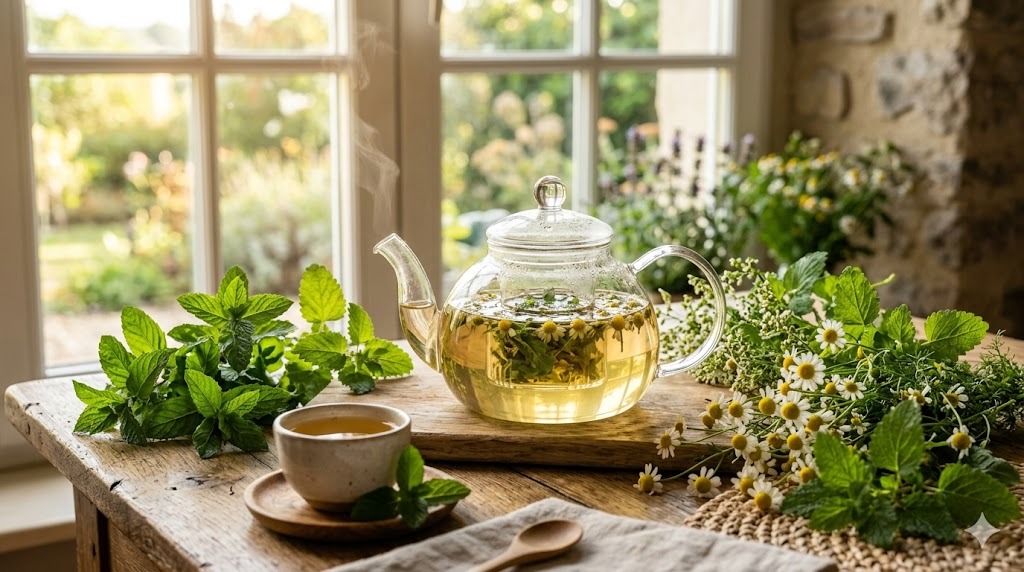
A pot of tea made from leaves you grew and dried yourself tastes noticeably better than anything in a box - fresher, greener, and entirely under your control. Most tea herbs are easy plants that grow faster than you can drink them, which makes them ideal for the garden-to-kitchen habit. Here’s how to choose, harvest, dry and brew them well.
Part of our Garden & Kitchen series - what to do with a harvest once it’s bigger than tonight’s dinner.
A quick note before we start: these are pleasant drinks, not medicine. Enjoy them for their flavour and the small ritual, and we will leave the health claims to one side.
The best plants for homegrown tea
A few reliable performers will give you years of brews:
- Mint (peppermint, spearmint) - the easiest of all, almost too vigorous. Bright, cooling, forgiving. Grow it in a pot so it doesn’t take over the bed.
- Chamomile (German chamomile) - you harvest the small daisy-like flowers, not the leaves. Soft, apple-sweet, calming in flavour.
- Lemon balm - a lemony member of the mint family that grows in a thick clump. Mild, soothing, blends with almost anything.
- Tulsi (holy basil) - warm, clove-and-pepper notes, a little spicy. A tender plant that loves heat; grow it in a sunny spot or pot.
- Lemon verbena - the most intense lemon flavour of the lot, from a woodier plant. A few leaves perfume a whole pot.
Honourable mentions worth trying: lemongrass, fennel seed, anise hyssop, bee balm, and the soft tips of rosemary or sage for a more savoury cup.
When and how to harvest
Timing is the difference between a fragrant cup and a flat one.
- Pick in the morning, after the dew has dried but before the midday heat, when the aromatic oils are at their peak.
- Take leaves just before the plant flowers, when flavour is strongest. Once mint, lemon balm or tulsi bolt into flower, the leaves taste weaker and sometimes bitter, so pinch off flower buds to keep the leaf supply going.
- For chamomile, pick the flowers when the white petals are fully open and flat, every few days through the season - frequent picking encourages more blooms.
- Never take more than a third of any plant at once, and cut whole stems on the soft herbs just above a leaf pair so they branch and grow back bushier.
- Choose clean, healthy, unsprayed growth. You’re going to drink this, so only use plants you know are pesticide-free, and give everything a gentle rinse and shake dry.
Fresh versus dried
You can brew tea herbs either way, and each has its place.
- Fresh is brighter, greener and more delicate - lovely in summer when the plants are growing. The catch: fresh leaves hold a lot of water, so you need roughly three times as much fresh material as dried to get the same strength.
- Dried is more concentrated, stores for months, and is how you drink your garden in winter. Drying also mellows and rounds out the flavour of herbs like chamomile and lemon verbena.
To dry: gather small bunches and hang them upside down somewhere warm, airy and out of direct sun, or spread leaves and flowers on a rack or in a dehydrator on its lowest setting. Keep the heat gentle - high temperatures drive off the very oils you’re after. They’re ready when the leaves are crisp and crumble easily, usually one to two weeks by air. Store them whole in airtight jars away from light, and crumble only when you brew. Our full method, including racks and timing, is in the guide on drying and preserving the harvest.
Brewing ratios and times
The pleasure of homegrown tea is that you can dial it in to taste, but these are reliable starting points per cup (about 250 ml / 8 oz of water):
- Dried leaves: roughly 1 teaspoon per cup.
- Fresh leaves: roughly 1 tablespoon, lightly bruised or torn to release the oils.
- Chamomile flowers: 1 to 2 teaspoons dried, or a small handful fresh.
The method is the same as for any tea:
- Bring water to a rolling boil and let it settle for a few seconds.
- Pour over the herbs in a pot or infuser.
- Cover while it steeps - this traps the aromatic steam that would otherwise float away.
- Steep 5 to 7 minutes for most leaves; chamomile and other flowers are happy with 4 to 5. Longer mainly adds body and a little bitterness, not more flavour, so taste as you go.
- Strain and drink. A slice of lemon or a little honey suits most blends.
Simple blends to start with
Once you have a few dried jars, blending is where it gets fun. Keep it to two or three ingredients at first:
- Calm evening: chamomile + lemon balm.
- Bright and clean: peppermint + lemon verbena.
- Warm and spiced: tulsi + a thin slice of fresh ginger.
- Garden cooler: spearmint + lemon balm, brewed strong, chilled and poured over ice.
- Lemon trio: lemon balm + lemon verbena + a strip of lemon peel.
Mix dried herbs by the spoonful in a jar so you can repeat what you like. Write the blend on the lid; you will forget the ratio that worked otherwise.
The short version
Plant a pot of mint and a clump of lemon balm and you have a tea garden already. Harvest in the morning before flowering, dry the surplus gently and store it airtight, and brew covered for five to seven minutes. A handful of easy plants will keep you in fresh, honest cups right through the year, with none of the dust that comes in a box.