Lemon Balm
Lemon balm is a soft, lemon-scented member of the mint family, grown for leaves that brew into a gentle, citrusy, calming tea.
🗓️ Last reviewed: June 2026
Overview
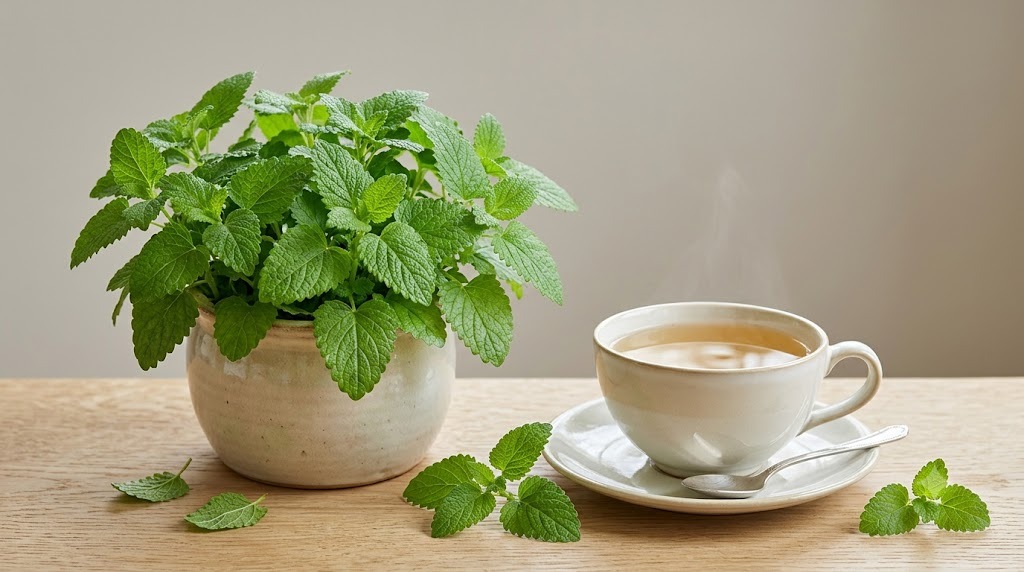
Lemon balm is a soft, lemon-scented member of the mint family, grown for leaves that brew into a gentle, citrusy, calming tea. It has a long history as a herb for easing stress and lifting mood, and it is wonderfully easy to grow - a single plant becomes a generous, fragrant clump within a season. Brush past it on a warm day and the whole garden smells of lemon.
Identification & Appearance
A bushy perennial 30-70 cm tall, with square stems and heart-shaped, deeply veined, toothed green leaves that release a strong lemon scent when crushed. Small white flowers appear in summer, loved by bees - the plant's Latin name, Melissa, means honeybee. It forms a rounded, leafy clump rather than running like true mints.
Where It Grows
Native to southern Europe, the Mediterranean basin, and western Asia, lemon balm has naturalised across temperate regions. It grows easily in gardens, on field margins, and in light woodland edges, favouring moist but well-drained soil and tolerating a wide range of conditions.
How to Grow at Home
Lemon balm grows from seed, division, or a nursery plant, and is very forgiving. Plant it in sun or part shade in any reasonable soil. Cut it back after flowering to keep the leaves fresh and prevent heavy self-seeding. It is a clump-former, so it is far better behaved than peppermint, but it will seed around if left.
Growing Conditions
Light
Full sun to partial shade; light afternoon shade keeps leaves tender in hot summers.
Watering
Water moderately, keeping the soil from drying out fully - lemon balm likes moisture but dislikes waterlogging.
Soil & Temperature
Moist, well-drained soil of average fertility. A hardy perennial that dies back in winter and returns reliably.
Harvesting & Brewing
Pick leaves through the growing season; the scent is strongest on young growth before flowering. Lemon balm is best used fresh, as it loses aroma when dried. For tea, steep a generous handful of fresh leaves in hot water for 5 minutes, covered. The cup is pale, soft, and lemony, with no bitterness.
Health & Benefits
Lemon balm tea is traditionally used to ease anxiety, restlessness, and mild digestive upset, and to support restful sleep. It contains aromatic compounds with mild calming properties and is caffeine-free. It pairs well with chamomile for an evening blend.
Common Problems
- Weak lemon scent - old growth or stressed plant; cut back for fresh, fragrant leaves.
- Self-seeding everywhere - deadhead before seed sets.
- Mildew in late summer - cut back hard and improve airflow.
Pros & Cons
Pros
- Very easy and hardy.
- Lovely lemon fragrance; calming tea.
- Clump-forming - not invasive like mint.
Cons
- Loses aroma when dried; best fresh.
- Will self-seed if not deadheaded.
- Can look tired by late summer.
Best Suited For
- Beginners wanting a fragrant, easy tea herb.
- Anyone after a calming, citrusy evening cup.
- Pollinator-friendly gardens.
Not ideal for those wanting a tea herb that stores well dried.
FAQ
Why does my dried lemon balm taste weak? Lemon balm loses much of its aroma when dried. For the best cup, use it fresh, or freeze leaves to keep more of the scent.
Is lemon balm invasive like mint? No - it forms a tidy clump rather than running underground. It will self-seed, though, so deadhead it.
Can I blend it with other herbs? Yes - lemon balm blends beautifully with chamomile, mint, or lemon verbena for a calming evening tea.