Lavender
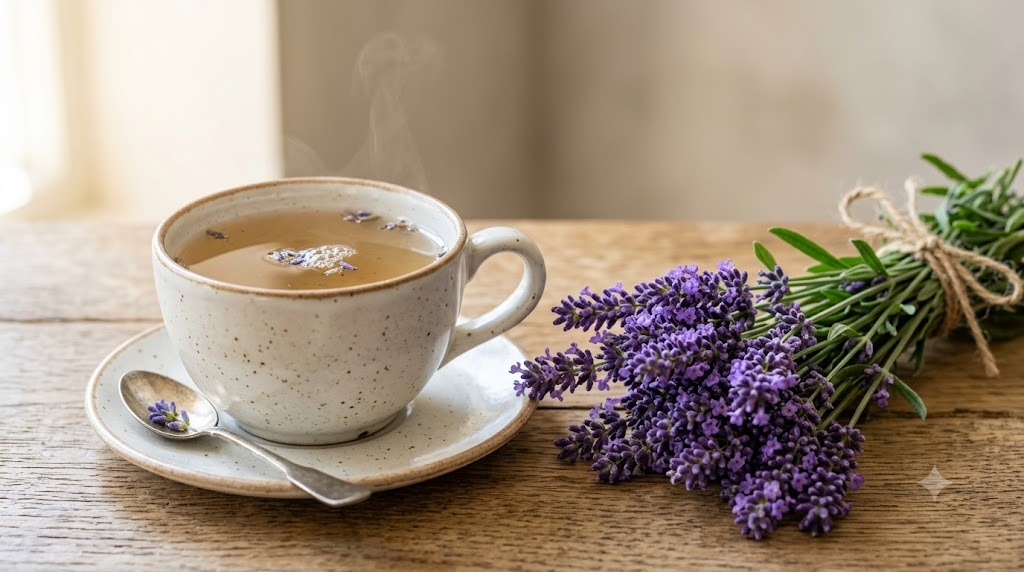
Lavender is best known for its scent and its silvery-purple flowers, but those same flowers brew into a distinctive, floral, faintly sweet tea with a calming reputation.
🗓️ Last reviewed: June 2026
Overview
Lavender is best known for its scent and its silvery-purple flowers, but those same flowers brew into a distinctive, floral, faintly sweet tea with a calming reputation. It is a tough, drought-loving Mediterranean shrub that thrives on neglect - poor soil and full sun are exactly what it wants. A few flower buds go a long way, so even one plant is enough for regular tea.
Identification & Appearance
A compact, woody evergreen shrub, usually 30-60 cm tall, with narrow grey-green leaves and slender flower spikes of small purple-blue blooms held above the foliage on long stalks. English lavender (Lavandula angustifolia) is the type used for tea - sweeter and less camphorous than other lavenders. The whole plant is intensely aromatic.
Where It Grows
Native to the dry, rocky hillsides of the Mediterranean, lavender is grown worldwide in warm, sunny climates and on free-draining soil. It is a classic plant of chalk and gravel gardens. It loathes wet, heavy ground and humid, stagnant air.
How to Grow at Home
Plant lavender in the sunniest, driest spot you have, in gritty, free-draining soil. It is far easier to buy a young plant than to raise it from seed. Do not feed it and do not overwater - lavender performs best when treated harshly. Trim it lightly after flowering each year to keep it compact and stop it going woody.
Growing Conditions
Light
Full sun, all day - lavender needs maximum light and warmth to flower well.
Watering
Water only to establish young plants, then leave it - lavender is drought-tolerant and rots in wet soil.
Soil & Temperature
Poor, gritty, free-draining, slightly alkaline soil. English lavender is hardy; lavender hates winter wet more than cold.
Harvesting & Brewing
Harvest the flower spikes just as the buds show colour but before they fully open - that is when fragrance is highest. Cut whole stems and dry them in bunches, then strip the buds. For tea, use only a small pinch - about half a teaspoon of dried buds per cup - steeped for 4-5 minutes. Too much makes the cup soapy.
Health & Benefits
Lavender tea is caffeine-free and traditionally taken to ease tension, restlessness, and to wind down before sleep. Its aromatic oils are linked to calming effects. The flavour is strong and floral, so it is often blended with chamomile or mint to soften it.
Common Problems
- Soapy, perfumey tea - too many buds; use only a small pinch.
- Woody, sparse plant - not trimmed yearly; cut back lightly after flowering, never into bare wood.
- Rotting in winter - soil too wet; improve drainage with grit.
Pros & Cons
Pros
- Thrives on poor soil and neglect.
- Drought-tolerant once established.
- Beautiful, fragrant, pollinator-friendly.
Cons
- Strong flavour - easy to overdo in tea.
- Hates wet, heavy soil.
- Goes woody if not trimmed each year.
Best Suited For
- Dry, sunny gardens and gravel beds.
- Gardeners who want a low-water, low-effort plant.
- Anyone who likes a floral, calming tea in moderation.
Not ideal for damp, shady, or heavy-clay gardens.
FAQ
Which lavender is best for tea? English lavender (Lavandula angustifolia). It is sweeter and less camphorous than French or hybrid lavenders, which can taste medicinal.
Why is my lavender tea soapy? You used too much. Lavender is powerful - a small pinch of buds per cup is plenty.
Can I use the leaves? Stick to the flower buds for tea; the leaves are more camphorous and harsher.