Tea Plant
The tea plant (Camellia sinensis) is the single species behind every true tea - green, black, oolong, white, and pu-erh all come from its leaves, separated only by how they are processed.
🗓️ Last reviewed: June 2026
Overview
The tea plant (Camellia sinensis) is the single species behind every true tea - green, black, oolong, white, and pu-erh all come from its leaves, separated only by how they are processed. It is a hardy evergreen shrub that, with patience, can be grown at home in a pot or a sheltered garden, giving you a genuine harvest of leaves to make your own tea. It is slow but rewarding, and surprisingly tolerant once established.
Identification & Appearance
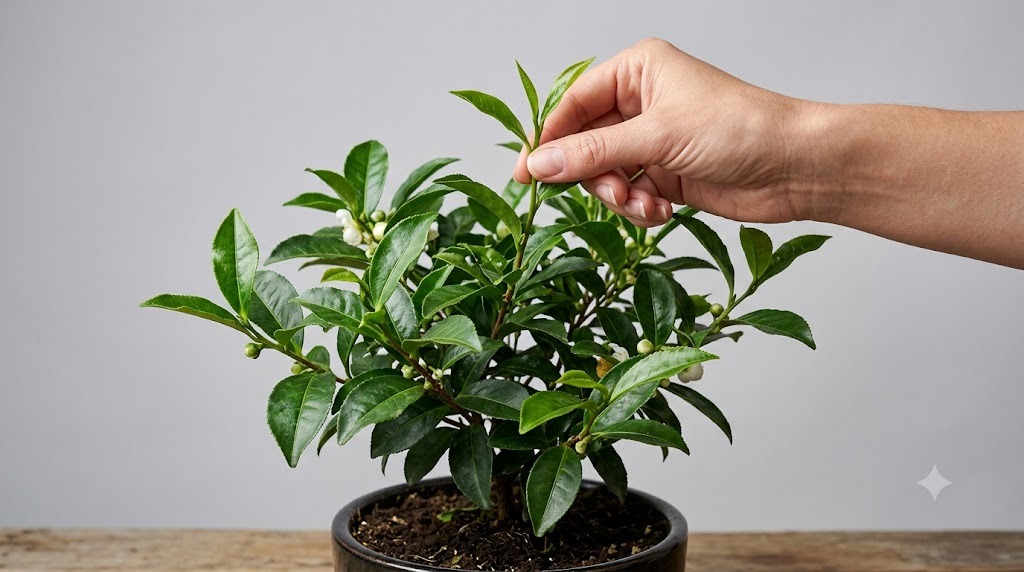
A bushy evergreen shrub, naturally a small tree but kept clipped to waist height. Leaves are glossy, dark green, leathery, 4-12 cm long with finely serrated edges; the youngest shoots - a bud and two leaves - are the prized "flush." In autumn it bears small, fragrant white flowers with a cluster of yellow stamens.
Where It Grows
Native to the forested hills of southwest China and northern Myanmar, tea is grown commercially across subtropical and highland regions of Asia and Africa. It favours acidic soil, high humidity, steady rainfall, and protection from hard frost - classic mountain-slope conditions.
How to Grow at Home
Tea grows from seed or, more reliably, from a nursery plant. Give it a large pot of acidic, free-draining soil, or a sheltered spot outdoors in mild climates. It is slow - expect to wait two to three years before your first real harvest. Keep it pruned to encourage a dense flush of young shoots, which is where the usable leaf comes from.
Growing Conditions
Light
Bright light with some shade in the hottest part of the day; full sun is fine in cooler climates.
Watering
Keep the soil consistently moist but never waterlogged, ideally with soft or rainwater as tea dislikes lime.
Soil & Temperature
Acidic soil (pH 5.5-6.5), like an ericaceous mix. Hardy to about -5°C once established; protect young plants and pots from hard frost.
Harvesting & Brewing
Pick the top bud and the two youngest leaves - the flush. For green tea, steam or pan-fry the leaves briefly, then dry. For black tea, bruise and roll the leaves, let them oxidise until coppery, then dry. Brew green tea at around 80°C for 2-3 minutes; black tea with hotter water for 3-5 minutes.
Health & Benefits
Tea is naturally rich in polyphenols and catechins, antioxidants linked to heart and metabolic health, and contains moderate caffeine plus the calming amino acid L-theanine. Green tea retains the most catechins; all true teas share the same leaf chemistry, shifted by oxidation.
Common Problems
- No new flush - needs feeding and pruning; old wood does not yield usable leaf.
- Yellowing leaves - usually lime in the water or soil; switch to rainwater and acidic feed.
- Frost-burnt tips - move pots under cover in winter.
Pros & Cons
Pros
- Grow and process your own genuine tea.
- Handsome evergreen shrub with autumn flowers.
- Long-lived and hardy once established.
Cons
- Slow - years before a real harvest.
- Needs acidic soil and soft water.
- A single plant yields only a modest amount of tea.
Best Suited For
- Patient gardeners who enjoy a long-term project.
- Tea lovers curious about processing their own leaf.
- Mild or container gardens with acidic soil.
Not ideal for anyone wanting a quick or large harvest.
FAQ
Is green tea a different plant from black tea? No - both come from Camellia sinensis. The difference is entirely in processing: green tea is unoxidised, black tea is fully oxidised.
How long until I can harvest? Usually two to three years for a plant to be strong enough to pick regularly without weakening it.
Can I grow tea indoors? Yes, in a bright spot with acidic soil, though it does best with the airflow and light of a sheltered outdoor position.