Valerian
Valerian is one of the most powerful calming tea plants - a tall perennial whose root brews into an earthy, distinctive infusion long used to ease anxiety and promote deep sleep.
🗓️ Last reviewed: June 2026
Overview
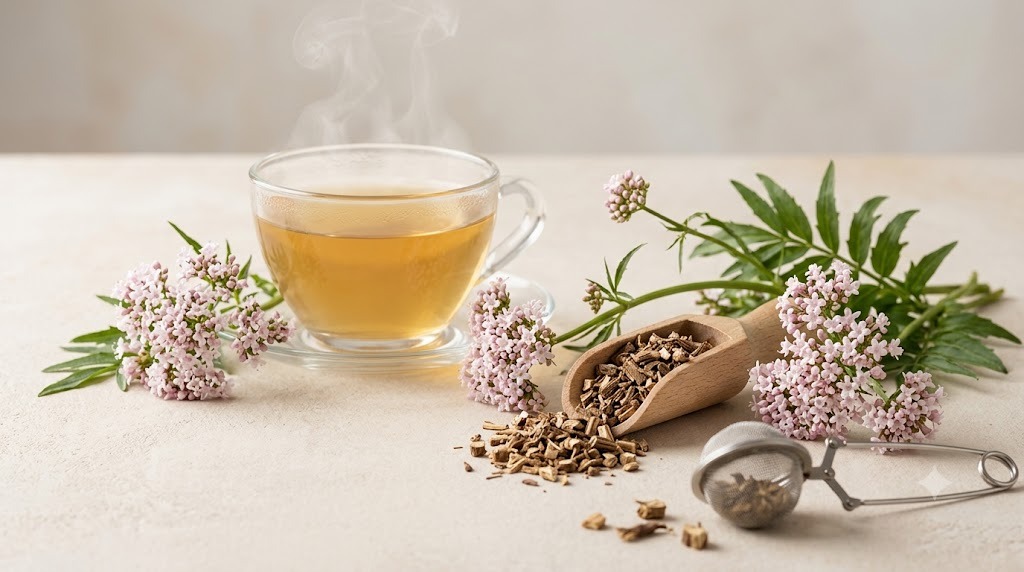
Valerian is one of the most powerful calming tea plants - a tall perennial whose root brews into an earthy, distinctive infusion long used to ease anxiety and promote deep sleep. The plant is tall and graceful, with sweetly scented flowers, but it is the root that is prized: pungent, potent, and the basis of one of the best-known herbal sleep remedies.
Identification & Appearance
A tall perennial 1-1.5 metres in flower, with upright stems, divided fern-like green leaves, and rounded clusters of small, sweetly fragrant pale-pink or white flowers in summer. The roots, by contrast, have a strong, musty, earthy smell that some find unpleasant - cats, however, are drawn to it like catnip.
Where It Grows
Native to Europe and parts of Asia, valerian grows in damp meadows, ditches, and woodland edges, and has naturalised in North America. It favours moist, fertile soil and tolerates sun or partial shade, often growing tallest where its roots stay cool and damp.
How to Grow at Home
Grow valerian from seed, division, or a nursery plant. Give it moist, fertile soil in sun or part shade. It is hardy and easy, and self-seeds freely. The roots are harvested from plants in their second year, in autumn, once the plant has built a worthwhile root mass. It is best grown in a spare corner, as it is tall and spreads.
Growing Conditions
Light
Sun to partial shade; valerian copes well with either.
Watering
Keep the soil moist; valerian is a damp-ground plant and grows lushest with steady moisture.
Soil & Temperature
Moist, fertile soil. A hardy perennial across temperate climates.
Harvesting & Brewing
Lift the roots in autumn of the plant's second year, when the medicinal compounds are strongest. Wash, chop, and dry them - the smell intensifies as they dry. For tea, steep a teaspoon of dried root in hot water for 10 minutes, covered. The cup is earthy and strong; many take it in the evening, blended with mint to soften it.
Health & Benefits
Valerian root is one of the most studied herbal remedies for sleep and anxiety, traditionally taken to calm the nerves and help with falling asleep. It is caffeine-free. Because it is potent, valerian tea is usually drunk in the evening rather than through the day.
Common Problems
- Strong, unpleasant root smell - this is normal; blend with mint and it brews fine.
- Weak effect - roots harvested too young; wait until the plant's second autumn.
- Cats digging the roots - they are attracted to valerian; protect the patch if needed.
Pros & Cons
Pros
- One of the most effective calming sleep herbs.
- Tall, graceful, fragrant flowers.
- Hardy and easy to grow.
Cons
- The root smells strongly musty.
- Roots take two years to be worth harvesting.
- Tall and spreads - needs space.
Best Suited For
- Anyone wanting a genuinely strong bedtime tea.
- Larger gardens with a spare damp corner.
- Gardeners interested in traditional sleep remedies.
Not ideal for small gardens, or those who want a quick first harvest.
FAQ
Why does valerian root smell so bad? The strong, musty odour is natural and intensifies as the root dries. It is part of the plant's chemistry - and in the brewed tea, blended with mint, it is far more pleasant.
When do I harvest the root? In autumn of the plant's second year, once it has built a good root mass and the calming compounds are at their strongest.
Can I drink it during the day? Valerian is potent and best known for sleep, so most people drink it in the evening rather than during the day.