Red Raspberry Leaf
Red raspberry leaf is the tea hiding in plain sight on a familiar fruit bush.
🗓️ Last reviewed: June 2026
Overview
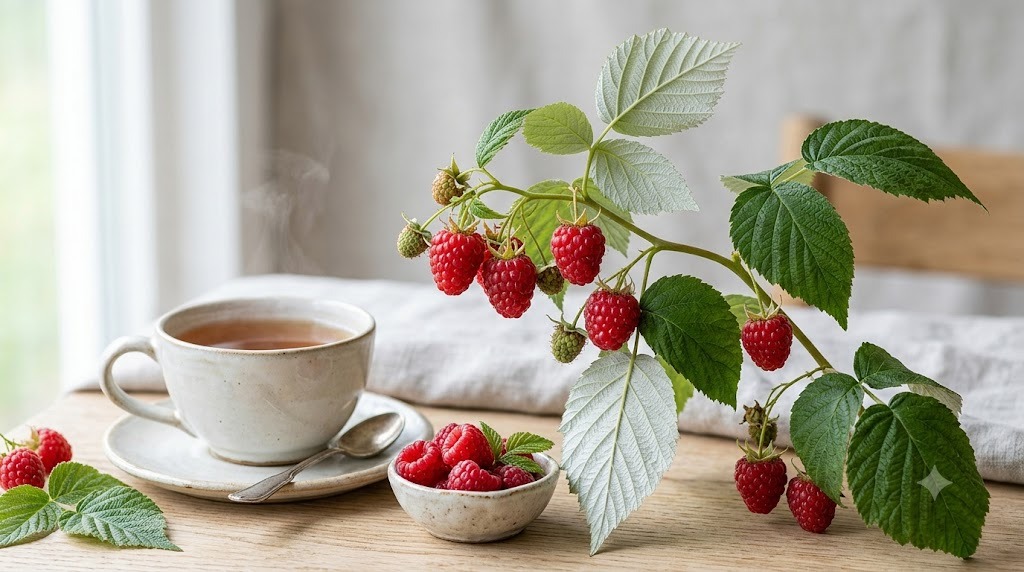
Red raspberry leaf is the tea hiding in plain sight on a familiar fruit bush. While gardeners prize the raspberry for its berries, the leaves brew into a mild, smooth, faintly black-tea-like infusion long valued as a gentle women's tonic. It is one of the most rewarding tea plants because it gives you two harvests from one easy, hardy plant: fruit and leaf.
Identification & Appearance
A deciduous shrub with upright or arching biennial canes 1-2 metres tall, often with fine prickles. The leaves are divided into three or five toothed leaflets, green above and noticeably pale, almost silvery, underneath. White five-petalled flowers in late spring give way to the familiar red aggregate fruits in summer.
Where It Grows
Native to Europe and parts of Asia, the raspberry grows wild in woodland clearings, hedgerows, and on disturbed ground, and is cultivated worldwide for fruit. It favours cool, moist, fertile soil and tolerates partial shade, growing best where summers are not extreme.
How to Grow at Home
Plant raspberry canes in autumn or early spring in moist, fertile, well-drained soil, in sun or light shade, with support such as wires or a fence. They are hardy and easy. Choose a variety for fruit; the leaves are a bonus. Pick leaves from healthy canes - there is no need to grow a separate plant just for tea.
Growing Conditions
Light
Full sun for the best fruit; tolerates light shade, which is fine if you mainly want leaves.
Watering
Keep the soil reliably moist, especially through summer; raspberries dislike drying out.
Soil & Temperature
Moist, fertile, well-drained, slightly acidic soil. A hardy shrub in temperate climates.
Harvesting & Brewing
Pick young, healthy, undamaged leaves from spring through summer, taking only a few from each cane so the plant still fruits well. Dry the leaves thoroughly until crisp - properly dried leaf tastes best and avoids any off-flavours. For tea, steep a tablespoon of dried leaf in hot water for 5-10 minutes for a mild, smooth cup.
Health & Benefits
Red raspberry leaf is one of the most traditional women's tonic herbs, long taken to support the reproductive system and, classically, in the later stages of pregnancy - for which it is best used under guidance from a health professional. It is caffeine-free, rich in minerals, and mild enough for everyday drinking.
Common Problems
- Astringent or "off" flavour - leaves not dried thoroughly; dry until fully crisp.
- Few or poor leaves - cane disease or stress; pick only from healthy growth.
- Reduced fruiting - over-harvesting leaves; take only a few per cane.
Pros & Cons
Pros
- Two harvests - fruit and tea - from one plant.
- Hardy, easy, and long-lived.
- Mild, smooth, everyday flavour.
Cons
- Leaves must be dried properly for good flavour.
- Canes need support and annual pruning.
- Over-picking leaves reduces fruit.
Best Suited For
- Fruit growers wanting a bonus tea harvest.
- Anyone after a mild, traditional tonic tea.
- Cool-climate gardens with moist soil.
Not ideal for very hot, dry gardens, or tiny spaces with no room for canes.
FAQ
Do I need a special raspberry for tea? No - any healthy raspberry's leaves can be used. Choose a variety for its fruit and treat the leaves as a bonus.
Why dry the leaves so carefully? Partially dried or wilted raspberry leaves can taste unpleasant. Fully fresh or fully, crisply dried leaves give the best, cleanest cup.
Is it safe in pregnancy? Red raspberry leaf is traditionally associated with later pregnancy, but anyone pregnant should consult a health professional before drinking it.