Peppermint
Peppermint is the boldest of the mint family - a vigorous, cooling herb whose leaves brew into a bright, refreshing tea that settles the stomach and clears the head.
🗓️ Last reviewed: June 2026
Overview
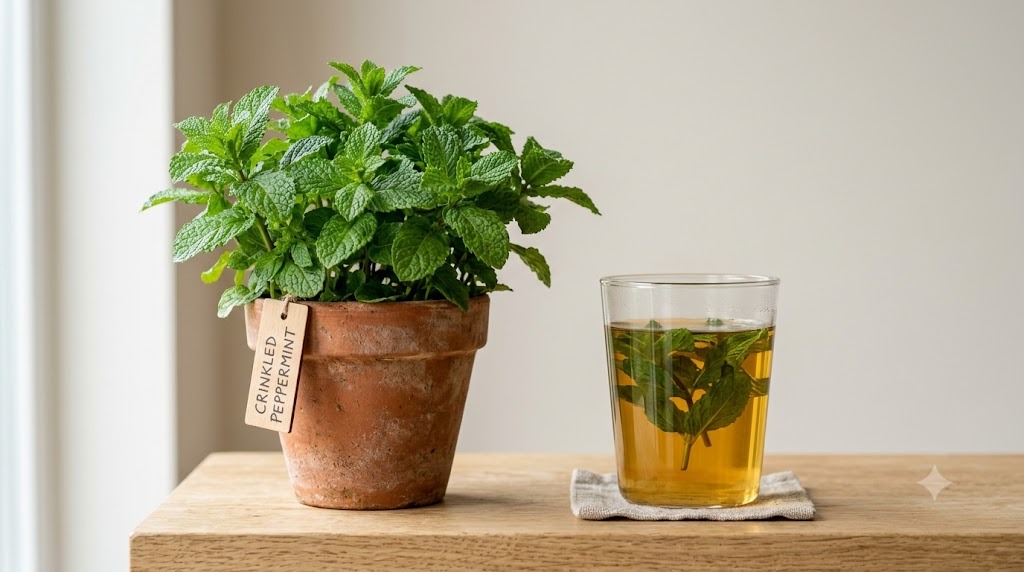
Peppermint is the boldest of the mint family - a vigorous, cooling herb whose leaves brew into a bright, refreshing tea that settles the stomach and clears the head. It is famously easy to grow, almost to a fault: give it a pot to contain its running roots and it will supply mint tea endlessly. A natural hybrid of watermint and spearmint, it carries a high level of menthol, which gives it that signature icy snap.
Identification & Appearance
An upright perennial 30-90 cm tall, with square stems often tinged purple, and pointed, toothed, dark green leaves that are crinkled and aromatic. It spreads aggressively by underground runners. Small lilac flowers appear in spikes in summer. Crushed leaves release an unmistakable sharp, menthol-cool scent.
Where It Grows
A hybrid of European origin, peppermint is now naturalised across temperate regions worldwide, especially along damp ditches, stream banks, and moist ground. It is widely cultivated for its essential oil. It favours rich, moist soil and tolerates partial shade.
How to Grow at Home
Plant peppermint from a nursery plant or a rooted cutting - it does not come true from seed. Always grow it in a pot, or a buried bottomless container, because its runners will otherwise overrun a bed. Keep the soil moist, cut it back hard when it gets leggy, and divide it every couple of years to keep it vigorous.
Growing Conditions
Light
Full sun to partial shade; some afternoon shade keeps the leaves tender in hot climates.
Watering
Keep the soil consistently moist - peppermint is a damp-ground plant and wilts quickly when dry.
Soil & Temperature
Rich, moisture-retentive soil. A hardy perennial that dies back in winter and returns in spring.
Harvesting & Brewing
Pick leaves any time through the growing season; flavour is strongest just before flowering. Harvest whole stems and strip the leaves, using them fresh or dried. For tea, steep a small handful of fresh leaves - or a teaspoon of dried - in hot water for 5 minutes. Fresh peppermint makes an especially bright, clean cup.
Health & Benefits
Peppermint tea is best known for soothing digestion, easing bloating, and relieving tension headaches. Its menthol content gives a cooling sensation and may help relax the digestive tract. It is caffeine-free, making it an easy choice at any time of day.
Common Problems
- Taking over the garden - always contain the roots in a pot.
- Rust (orange pustules under leaves) - remove affected growth; improve airflow.
- Leggy, sparse plants - cut back hard and divide to rejuvenate.
Pros & Cons
Pros
- Extremely easy and vigorous.
- Endless harvest from one plant.
- Bright, refreshing, well-loved flavour.
Cons
- Invasive runners must be contained.
- Prone to rust in damp, crowded conditions.
- Does not grow true from seed.
Best Suited For
- Absolute beginners wanting a reliable tea herb.
- Container growers and small spaces.
- Anyone who drinks mint tea regularly.
Not ideal for open beds where it can escape and spread.
FAQ
Peppermint or spearmint for tea? Peppermint is sharper and more cooling thanks to its menthol; spearmint is sweeter and milder. Both make good tea - it is a matter of taste.
Why must I grow it in a pot? Peppermint spreads by underground runners and will quickly colonise a whole bed. A pot keeps it where you want it.
Can I dry the leaves? Yes - dry whole stems out of the sun, then strip the leaves. Dried peppermint keeps its flavour well.