Freezing the Harvest
An honest guide to freezing garden produce - why blanching matters, freezing herbs in oil or water cubes, what freezes badly, and how to label and rotate a full freezer.
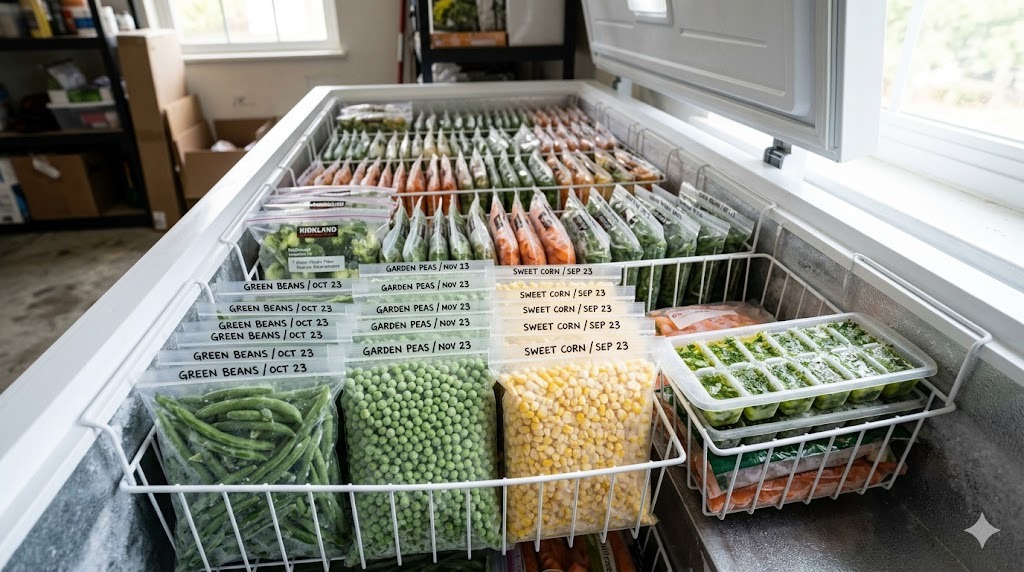
The freezer is the easiest way to save a garden glut: no canning equipment, no fuss, just bags and a little prep. It is one of several routes covered in our wider harvest preserving guide. But it isn’t magic. Some crops come out of the freezer almost as good as fresh, and others come out as a sad puddle. Knowing the difference - and the one step most people skip - is what makes freezing worthwhile.
Part of our Garden & Kitchen series - what to do with a harvest once it’s bigger than tonight’s dinner.
Why blanching matters
If you take one thing from this guide, take this: most vegetables should be blanched before freezing. Skipping it is the most common reason home-frozen veg disappoints.
Blanching means a brief plunge in boiling water, then an immediate dunk in ice water. It does three jobs:
- Stops enzyme activity. Even in the freezer, enzymes keep working slowly, dulling colour, flavour and texture over months. A quick blanch deactivates them so your beans still taste like beans in February.
- Sets the colour and keeps it bright.
- Cleans the surface and softens vegetables just enough to pack tightly.
The method is simple:
- Bring a big pot of water to a rolling boil and set a bowl of ice water beside it.
- Drop in the prepared vegetables for a short, specific time (typically 2 to 4 minutes depending on size - small/cut pieces less, dense or whole ones more).
- Lift them straight into the ice water for the same length of time to stop the cooking dead.
- Drain very well and dry, then freeze.
Freeze them loose first. Spread the cooled, dried pieces on a tray in a single layer, freeze until solid, then tip into bags. This stops everything clumping into one frozen brick so you can grab a handful at a time.
Good candidates for blanch-and-freeze: green beans, broccoli, cauliflower, peas, carrots, corn, greens like kale and spinach (squeeze dry after blanching), and asparagus.
Freezing herbs in oil or water cubes
Soft herbs go brown and lose their flavour when air-dried, so the freezer is their friend - and an ice-cube tray is the perfect tool.
- Oil cubes (best for cooking herbs): chop basil, parsley, oregano, thyme, rosemary, sage or chives, pack into ice-cube tray wells, and top up with olive oil. Freeze, then store the cubes in a bag. Drop one straight into a hot pan - the oil melts, the herbs release, and you skip chopping entirely. Ideal for soups, sautes and sauces.
- Water cubes (best for fresh-finish herbs): the same idea with water instead of oil. Better when you’ll add the herbs to something watery anyway, like a stew or a smoothie.
- Pesto cubes: freeze leftover pesto in the tray and pop out a portion whenever you need it.
Either way, label the bag - a frozen basil-oil cube and a frozen pesto cube look identical.
What freezes badly
Be honest about what the freezer can’t fix. The enemy is water: anything with high water content turns to mush as ice crystals burst its cells. Don’t waste freezer space on:
- Salad greens and leafy raw veg - lettuce, arugula, spinach for salad. They thaw into slime. (Cooked greens freeze fine; raw salad does not.)
- High-water vegetables eaten raw - cucumbers, radishes, celery, raw tomatoes for slicing, whole bell peppers you wanted crisp.
- Watery fruit and veg meant to stay firm - watermelon, raw potatoes (they go grainy and grey).
- Soft dairy and egg-based things - cream sauces and plain yogurt can split; whole eggs in the shell crack.
The fix for most of these is to change the goal. You can’t freeze a slicing tomato, but you can roast or cook a tomato sauce and freeze that. You can’t freeze cucumber, but you can. Raw potatoes fail, but mashed or fully cooked potato dishes freeze well. Decide what the crop will become before you freeze it, not after.
Labeling and rotation
A full freezer is only useful if you can find and trust what’s in it.
- Label every bag with the contents and the date. “Green beans, blanched - June 2026” beats a mystery brick every time.
- Freeze flat. Lay filled bags flat until solid; they stack like files, save space, and thaw faster.
- Press the air out before sealing. Air causes freezer burn - those dry, leathery, off-flavoured patches.
- Keep a simple list taped to the freezer door so you actually use what you froze instead of rediscovering it a year later.
- Rotate first in, first out. Put new bags at the back and pull from the front. Most frozen produce is best within 8 to 12 months; it stays safe longer at a steady freezing temperature but slowly loses quality.
The short version
Blanch most vegetables before they go in, freeze soft herbs in oil or water cubes, and don’t bother freezing watery raw things like salad greens and cucumbers - cook them into something first. Freeze everything loose on a tray, then bag it flat, press out the air, label it with a date, and pull from the front. Do that and a busy harvest week becomes a freezer you actually shop from all winter. For the items that prefer drying - woody herbs, tea leaves and many mushrooms - see our guide on drying and preserving the harvest.