How to Grow Broccoli: From Summer Heads to Winter Spears
A practical guide to growing both calabrese and purple sprouting broccoli outdoors, from firm soil and steady feeding to cutting side shoots for weeks on end.
When to sow & harvest
A rough guide for a temperate climate - shift it to your own zone and last-frost date. Greenhouse growing stretches both windows earlier and later.
Why grow broccoli
Broccoli is one of those crops that pays you back more than once. Cut the main head and, if you chose the right type, the plant keeps throwing out tender side shoots for weeks afterwards. That is a lot of eating from a single plant.
It also fills a gap that most vegetables leave open. Purple sprouting broccoli comes into its own in late winter and early spring, the "hungry gap" when there is almost nothing else fresh in the garden. A row of it standing through the frost, then bursting into spears in March, is a genuinely useful thing to have.
Here is the honest bit: broccoli is not the fastest or the tidiest crop. It takes up space for a long time, especially the overwintering types, and like all brassicas it attracts its share of pests. But it is noticeably more forgiving than cauliflower, which sulks at the slightest check in growth. If you have tried and failed with cauli, broccoli is a much friendlier place to build confidence.
Choosing a variety
The first thing to understand is that "broccoli" covers two quite different plants, and picking the wrong one for your slot is the most common beginner mistake.
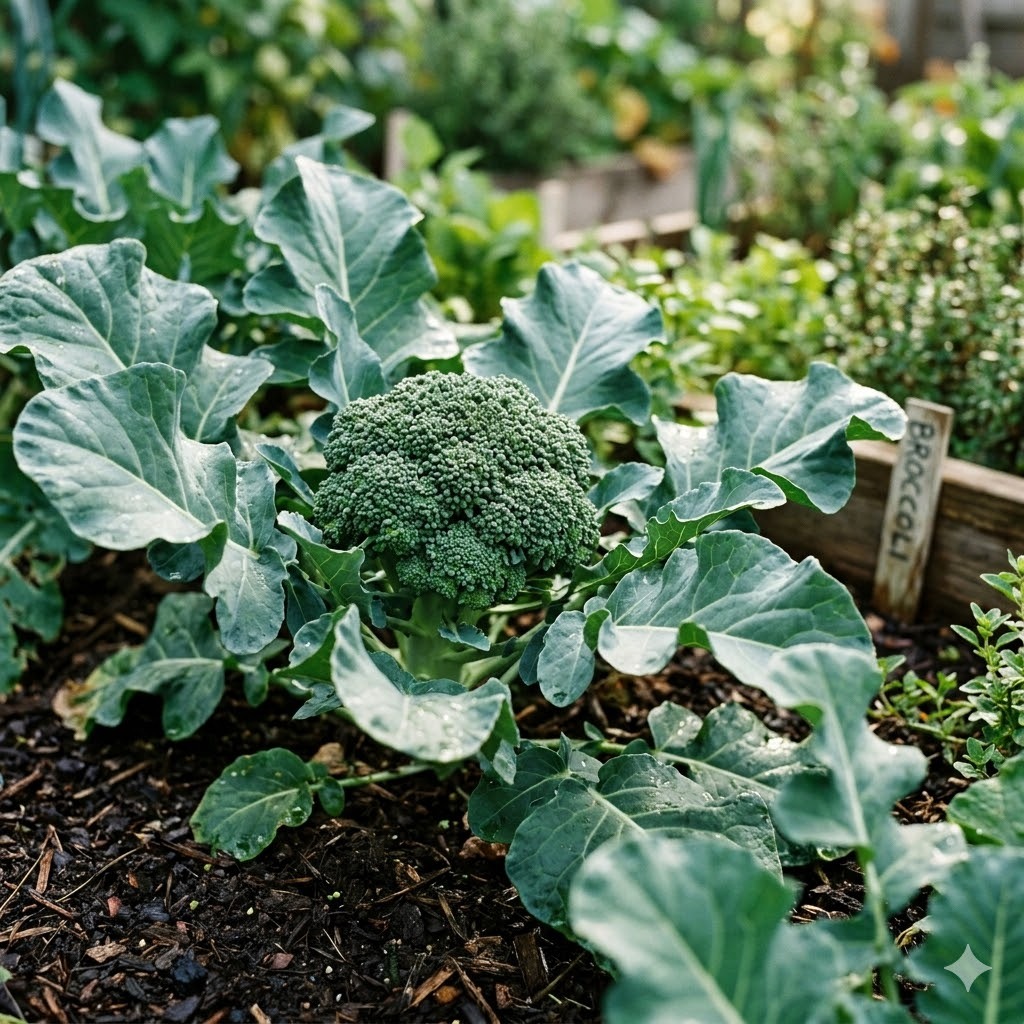
Calabrese is what most people picture: a single large blue-green head on a chunky plant, ready in summer or early autumn. You sow it in spring, and roughly 60 to 100 days later you cut one big dome. Many calabrese varieties then produce a flush of smaller side shoots, but the main event is that central head. Good reliable names include 'Marathon', 'Belstar' and 'Ironman'. This is the type to grow if you want broccoli to eat in the same season.
Sprouting broccoli, usually purple sprouting (PSB), is a different beast. You sow it in late spring, it grows slowly all summer and autumn into a large leafy plant, stands through winter, and then rewards your patience with dozens of small purple spears from February through April. There is no big single head at all. It is very hardy and very productive, but it is a nine-month commitment for a spring harvest. 'Rudolph' is an early, quicker variety; 'Claret' is a heavy cropper. White sprouting types exist too and taste much the same.
A sensible beginner plan is a few calabrese for quick summer heads and a few PSB plants tucked at the back of a bed to fill the hungry gap next spring.
Sowing and starting off
Broccoli is easy to raise from seed. You have two routes.
The reliable method is to sow in modules or small pots, one or two seeds per cell, about 1 to 2 cm deep. Keep them somewhere bright and frost-free. Thin to the strongest seedling once they are up. This gives you sturdy, even plants and protects the vulnerable seedlings from slugs and flea beetle while they are tiny.
Calabrese: sow from March to May. Purple sprouting: sow from April to early June - it does not need heat, and sowing too early just makes overgrown plants before winter.
You can also sow direct into a well-prepared seedbed and transplant later, which is how many gardeners raise brassicas traditionally. Either way, aim to plant out when the young plants have four or five true leaves and are around 10 to 15 cm tall, usually four to six weeks after sowing.
One key point that matters more than people expect: transplant firmly. Brassicas hate loose soil. When you set a plant out, firm the soil down hard around the stem with your fist or heel. A wobbly plant that rocks in the wind will never produce a decent head. If you can tug a leaf and the plant lifts, it is not planted firmly enough.
Greenhouse or garden - where to grow
This is an outdoor crop through and through. Broccoli wants a cool, open site with full sun (or light shade in hot regions), and it does not belong in a greenhouse - under glass it would bolt and struggle in the heat. Use your greenhouse or windowsill only for raising the seedlings, then plant out.
The soil is where the real work happens. Broccoli is a hungry plant that wants rich, firm, well-drained ground with plenty of organic matter. Dig in well-rotted manure or compost the autumn or winter before, then let the soil settle. Firm, settled ground is far better than freshly dug fluffy soil for these plants.
Aim for a fairly high pH, around 6.5 to 7.0. Slightly limed, alkaline soil does two things: it suits brassicas and it discourages clubroot, the disease that plagues this family. If your soil is acidic, add garden lime before planting.
Spacing matters. Give calabrese about 30 to 45 cm each way, and PSB a generous 45 to 60 cm, because those overwintering plants get big. Crowded brassicas give small heads and poor airflow.
Day-to-day care
Broccoli's needs are simple but constant: steady water and steady nitrogen. Any check to growth - drought, starvation, root disturbance - shows up as a small, loose or premature head. Consistency is everything.
Water regularly, especially in dry spells and as the heads begin to form. A deep soak once or twice a week beats a daily splash. Mulching with compost around the plants helps hold moisture and keeps the roots cool.
Feed matters too. These are leafy, nitrogen-hungry plants. If growth looks pale or slow, a nitrogen-rich feed (a top dressing of chicken manure pellets, or a liquid feed) gives them a push. Overwintering PSB benefits from a feed in late winter as it wakes up and starts to spear.
Keep on top of weeds, but hoe shallowly - brassica roots run near the surface and you do not want to disturb them. Tall PSB plants in exposed gardens are worth staking or earthing up around the stem, because a winter gale can flatten a top-heavy plant.
Common problems and pests
Brassicas attract pests, and broccoli is no exception. Protection is not optional if you want a crop - plan for it from day one. The single best tool is a cover of fine insect netting over the whole crop, kept off the leaves with hoops.
Cabbage white caterpillars are the big one. From late spring the butterflies lay clusters of eggs on the leaf undersides, and the caterpillars can strip a plant fast. Netting keeps the butterflies off entirely. If some get through, pick off eggs and caterpillars by hand or check leaf undersides weekly.
Pigeons will shred unprotected brassicas, particularly in winter when other food is scarce - exactly when your PSB is standing exposed. The same netting or a cage keeps them off.
Cabbage root fly lays eggs at the base of the stem, and the maggots eat the roots, causing plants to wilt and collapse. A simple collar - a disc of cardboard or felt about 12 cm across fitted snugly around the stem at soil level - stops the fly laying and is very effective on transplants.
Clubroot is the one to fear long-term. It swells and distorts the roots, stunts the plant, and lives in the soil for years. There is no cure. Manage it by rotating brassicas around your plot (do not grow them in the same bed more than one year in three or four), liming to raise the pH, and improving drainage. Never bring in plants from an unknown source that might carry it.
Aphids (especially mealy cabbage aphid) and whitefly can also gather; a strong jet of water or squashing colonies early usually keeps them in check.
Harvesting
Timing is the thing to get right, and the rule is simple: cut while the buds are still tight. You are harvesting flower buds, and you want them firm and closed. Once they loosen and start showing yellow, the flowers are opening and the texture and flavour drop off fast.
For calabrese, cut the central head cleanly with a sharp knife while it is a firm, tight dome, taking a good length of stem. Do not pull the plant up. Leave it in the ground, keep it watered and fed, and in a few weeks most varieties push out a crop of smaller side shoots from lower down the stem. Keep cutting those, and a single plant can go on producing for weeks.
For purple sprouting, the harvest is all side shoots. Once spears appear in late winter or spring, snap or cut them at about 10 to 15 cm long while the buds are tight. Cutting regularly - every few days at the peak - is the trick: the more you pick, the more the plant produces. Leave spears too long and they flower, and the plant slows down. A good row of PSB can crop for a month or more.
Storing and preserving
Fresh broccoli does not keep long. In the fridge, unwashed and loosely bagged, it holds for about a week, though it is best within a few days of cutting. If it starts yellowing, use it straight away.
For anything beyond that, the answer is the freezer, and the right way is to blanch first. Cut into even florets, drop them into boiling water for about three minutes, then plunge straight into ice-cold water to stop the cooking. Drain well, spread the florets on a tray to open-freeze, then tip into bags once solid. Blanched, frozen broccoli keeps for around a year and holds its colour and texture far better than freezing it raw, which goes limp and drab.
Broccoli does not dry or store as a root crop, so freezing florets is really the one preserving method worth bothering with. With PSB, most people simply eat it fresh through the harvest season, since it is arriving exactly when you want fresh greens most.
Is it worth it?
Honestly, it depends on which broccoli you mean.
Calabrese is worth growing but it will not save you much money - supermarket heads are cheap, and a plant gives you one main head plus a handful of side shoots for a fair bit of space and time. Where it wins is freshness and those extra side shoots you never see in a shop.
Purple sprouting broccoli is the one that earns its place. It is expensive to buy, it crops in the hungry gap when the garden is otherwise bare, and a few hardy plants throw out spears for weeks with almost no work once they are established. For flavour and for timing, it is one of the most rewarding things you can grow.
If you have the space and a little patience, grow a few of each: calabrese to eat through summer, sprouting broccoli standing quietly at the back of the bed, waiting to reward you next spring.