How to Grow Green Beans: The Crop That Keeps On Giving
A beginner's guide to growing runner and French beans outdoors, from a warm-soil sowing to weeks of picking off a wigwam of canes.
When to sow & harvest
A rough guide for a temperate climate - shift it to your own zone and last-frost date. Greenhouse growing stretches both windows earlier and later.
Why grow green beans
If you have space for only a handful of crops, green beans should be near the top of the list. They are among the most productive things you can grow for the area they take up. A short row trained up a wigwam of canes will crop heavily for weeks on end, and the surplus freezes well, so a small patch in July can still be feeding you in winter.
There is a bonus underground too. Beans are legumes, which means they team up with bacteria in the soil to fix nitrogen from the air. They are not going to fertilise your whole garden, but they leave the soil in decent shape for whatever follows, and they need less feeding than a hungry crop like a courgette or a cabbage.
They are also genuinely satisfying to grow. Watching a bean seedling go from a fat seed to a plant taller than you in a couple of months is one of the quiet pleasures of a summer garden, and picking a colander of pods for dinner never really gets old.
Choosing a variety
"Green beans" covers a few different plants, and it is worth knowing which one you are buying, because they behave very differently.
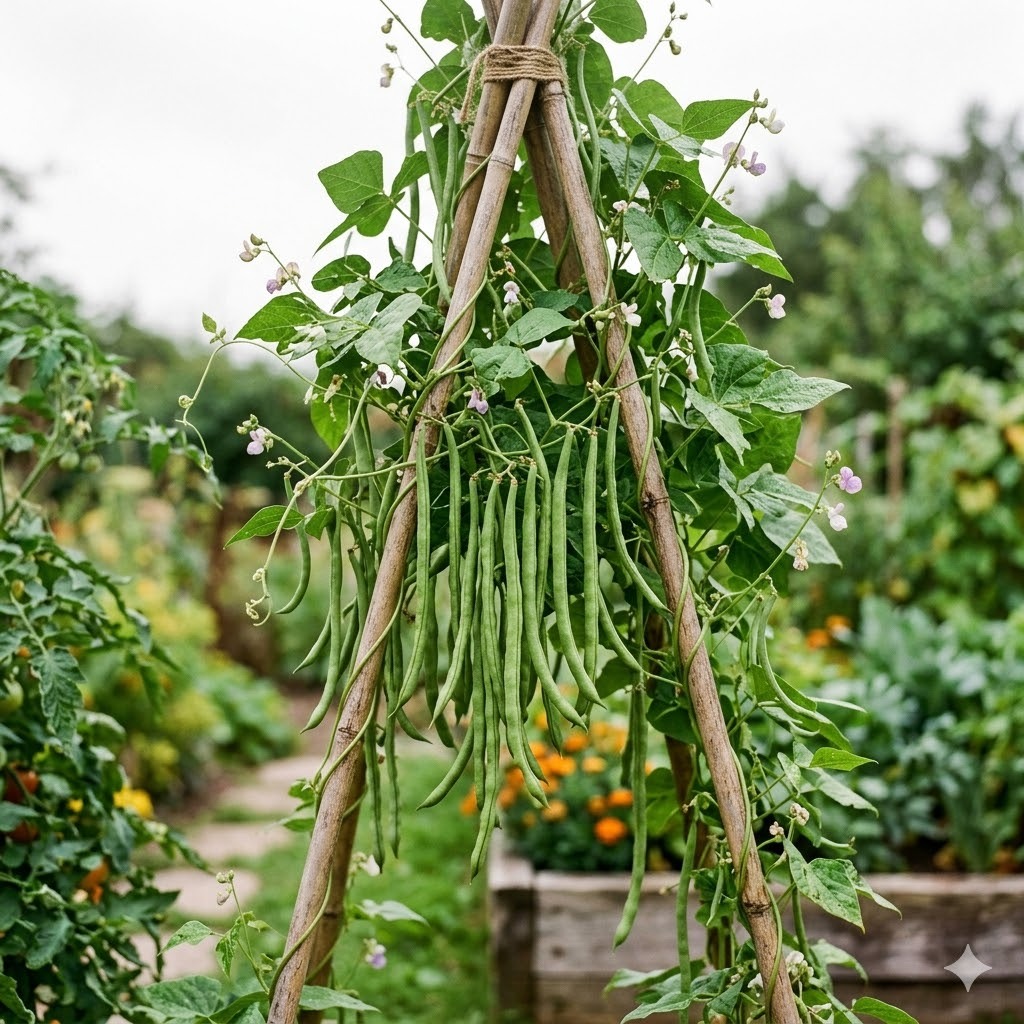
Runner beans are the vigorous climbers with long, flat pods and, usually, showy red or white flowers. They are the classic heavy croppers of a British-style veg plot and can easily reach two metres or more, so they need strong support from the word go. Their one weakness is that they can be fussy about setting pods in hot, dry weather if you let them go short of water, so keep that in mind for a hot spot.
Climbing French beans also climb and need support, but the pods are rounder (some are flat) and the flavour is tender and sweet. Many gardeners find them more reliable at setting in heat than runners, and they come in green, yellow and purple varieties.
Dwarf or bush French beans are the low-growing option. They stay compact, need no support at all, and crop quickly, which makes them ideal for pots, short rows, or anywhere you do not want a two-metre structure. The trade-off is that each plant produces less over a shorter season, so you sow more plants or sow again a few weeks later to keep the supply going.
For a first year, a dwarf French bean is the easiest possible start (no canes to build), while a wigwam of runner or climbing French beans gives you the biggest harvest for the footprint. Many people grow a little of both.
Sowing and starting off
The single most important thing to know: all beans are frost-tender. A late frost will kill young plants outright, and cold, wet soil rots the seeds before they even germinate. Do not be in a hurry. Wait until after your last frost date and until the soil has genuinely warmed up, usually late spring.
You have two ways to start them:
- Sow direct. Once the soil is warm, push the seeds in about 5 cm deep. For dwarf beans, space them roughly 15-20 cm apart in rows. For climbers, sow one or two seeds at the base of each cane. This is simple and the plants never suffer transplant shock.
- Start in pots. If your springs are cool or slugs are a menace, start seeds indoors or in a greenhouse in individual pots two or three weeks before your last frost, then harden them off and plant out once the danger of frost has passed. This gives you a head start and stronger seedlings.
Beans germinate fast in warm soil, often within a week to ten days. If you sowed direct and nothing appears, mice or a cold snap may be the reason, so keep a few spare seeds back to fill gaps.
For climbers, get the support up before or at the same time as you sow. A wigwam of five or six canes tied at the top, or a double row of canes leaning together and tied to a horizontal cane along the ridge, both work well. The plants will find the canes themselves and twine up; you rarely need to tie them in. Do not plant first and hope to add support later, because a strong support is much easier to build before the plants are in the way.
Greenhouse or garden - where to grow
Green beans are an outdoor crop through and through. A greenhouse is useful only for getting seedlings started a few weeks early, or for raising plants in a very cold or short-summer area. Once the frosts are past, they belong outside in the open ground.
Give them a sunny, sheltered spot. Full sun drives the heavy cropping, and shelter matters because a tall wigwam of runner beans in full leaf acts like a sail and can be rocked or blown over in an exposed, windy site. Good, moisture-retentive soil that does not dry out too fast is ideal, so dig in some compost or well-rotted manure before planting if you can.
Dwarf beans and even climbers can be grown in large containers on a patio, as long as the pot is big enough to hold water and you are prepared to water often, since pots dry out much faster than open ground.
Day-to-day care
The main job through summer is water. Beans need to be kept very well watered once they start flowering and podding. This is the make-or-break point, especially for runner beans, which will drop their flowers in dry heat and give you no pods at all if they go thirsty at the wrong moment. A good soak at the base of the plants two or three times a week in dry spells is far better than a light daily sprinkle.
A mulch of compost, grass clippings or similar around the base helps enormously. It keeps moisture in, keeps the roots cool, and cuts down on watering. Lay it once the soil is warm and the plants are up.
Feeding is usually modest thanks to the nitrogen-fixing habit, but if growth is weak or leaves are pale, a general liquid feed will not hurt. Do not overdo the nitrogen, though, or you get lots of leaf and fewer pods.
Once climbers reach the top of their canes, you can pinch out the growing tip to stop them scrambling into a tangle overhead and to push energy back into podding lower down.
Common problems and pests
Beans are not difficult, but a few issues come up often enough to know about.
Poor pod set is the classic disappointment: lots of flowers, no beans. The usual causes are cold weather at flowering, dry heat, and, for runner beans, a lack of pollinating insects, since runners rely on bees to set. Keeping them well watered and growing them in a spot bees can find is the best insurance. Some seasons are simply better than others for setting, and there is only so much you can do about the weather.
Blackfly and other aphids love the soft growing tips. If you see a colony clustering at the top of a plant, pinch out the affected growing tip and squash or hose off the rest. A healthy population of ladybirds and hoverflies usually keeps them in check outdoors.
Slugs and snails will happily mow down young seedlings overnight, which is one good reason to start beans in pots and plant out sturdier plants. Once beans are climbing strongly they are past the vulnerable stage.
Halo blight is a bacterial disease that shows as small spots with a pale yellow "halo" on the leaves. It is seed-borne and spread by wet weather, so buy good seed, avoid handling plants when wet, and remove badly affected leaves. It is rarely fatal to a crop but worth catching early.
Harvesting
Here is the golden rule with beans: pick often and pick young. The more you pick, the more the plant produces, because it keeps making new pods to try to set seed. Leave old pods on the plant and they turn stringy and tough, and the plant reads that as "job done" and slows or stops cropping altogether.
So go over your plants every couple of days at the height of summer, and pick the pods while they are still slim, firm and snap cleanly. A pod that has gone lumpy with the beans swelling inside is past its best for eating whole. Even if you cannot use them all, keep picking to keep the plant going; give the surplus away or freeze it.
Runner beans and climbing French beans will keep this up for many weeks if you stay on top of the picking. Dwarf beans crop over a shorter, more concentrated period, which is why a second sowing a few weeks after the first helps stretch the season.
Storing and preserving
Green beans are at their absolute best eaten fresh, within a day or two of picking, when they are sweet and snappy. But the whole point of such a productive crop is that you will have more than you can eat fresh, so preserving matters.
Freezing is the standout method and it works very well. Top and tail the beans, cut them to size, blanch them in boiling water for a couple of minutes, cool them quickly in cold water, drain, and freeze. The blanching step is not optional; it stops the enzymes that would otherwise turn the beans mushy and flavourless in the freezer. Frozen this way, they keep their colour and texture for months.
Salting is the traditional way to keep runner beans, layering sliced beans with plenty of salt in a jar; you rinse and soak them before use. Pickling is another good route, and pickled beans make a sharp, crunchy addition to a plate. Neither matches the fresh flavour of freezing, but they give you variety and a longer larder.
Is it worth it?
For a beginner growing outdoors, green beans are one of the most rewarding crops you can choose. They ask for warm soil, a bit of support, and steady watering, and in return they give you weeks of heavy picking off a small footprint, plus a freezer full for later. The main pitfalls (sowing too early into cold soil, and letting climbers go dry at flowering) are easy to avoid once you know about them.
Start with a wigwam of runner or climbing French beans for the biggest return, or a short row of dwarf beans if you want the simplest possible first go. Either way, keep them watered, keep picking young, and you will wonder why you did not grow more.