Spearmint
Spearmint is the gentle, sweet cousin of peppermint - lower in menthol, brighter and rounder in flavour, and the mint most people reach for in cooking and in tea.
🗓️ Last reviewed: June 2026
Overview
Spearmint is the gentle, sweet cousin of peppermint - lower in menthol, brighter and rounder in flavour, and the mint most people reach for in cooking and in tea. It brews into a soft, fresh, faintly sweet cup that needs no sugar, and it is just as easy to grow. It is the classic mint of Moroccan mint tea, paired with green tea and a little sweetness.
Identification & Appearance
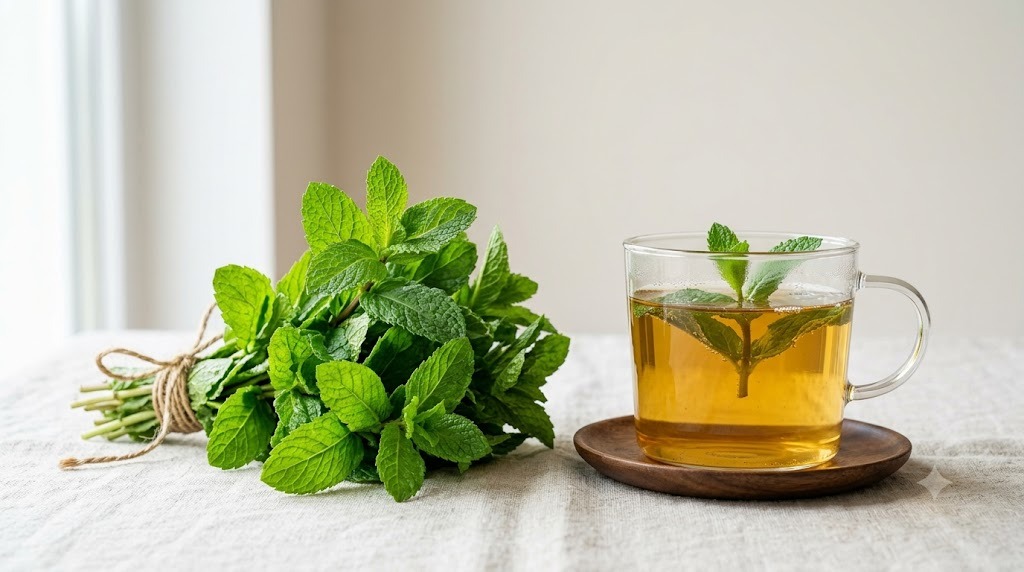
An upright perennial 30-90 cm tall with square stems and bright green, lance-shaped, sharply toothed leaves that are smoother and less crinkled than peppermint's. It spreads by underground runners. Pale lilac or white flower spikes appear in summer. Crushed leaves smell sweet and herbal rather than icy.
Where It Grows
Native to Europe and Asia, spearmint has naturalised across temperate regions worldwide. It is a long-standing culinary herb and grows readily in moist, fertile ground, along ditches, and in gardens. It tolerates a range of conditions but loves damp, rich soil.
How to Grow at Home
Plant spearmint from a nursery plant or a rooted cutting. As with all mints, grow it in a pot or a contained bed to stop its runners spreading. Keep the soil moist, cut it back when it gets leggy, and divide every couple of years. It is one of the most forgiving herbs you can grow.
Growing Conditions
Light
Full sun to partial shade; it copes well with less light than many herbs.
Watering
Keep the soil reliably moist - spearmint wilts quickly in dry conditions and recovers best when never allowed to bake dry.
Soil & Temperature
Rich, moisture-retentive soil. A hardy perennial that dies back in winter and re-shoots in spring.
Harvesting & Brewing
Pick young leaves and stems through the season; flavour is best before flowering. Use fresh or dried. For a simple spearmint tea, steep a handful of fresh leaves in hot water for 5 minutes. For Moroccan-style mint tea, brew spearmint together with green tea and sweeten to taste.
Health & Benefits
Spearmint tea is gently soothing for digestion and is caffeine-free. It is milder than peppermint, with less menthol, making it easy to drink in quantity. Spearmint has also been studied for mild hormone-balancing effects, though it is mostly enjoyed simply as a refreshing everyday cup.
Common Problems
- Spreading into beds - keep the roots contained in a pot.
- Rust on leaves - remove affected stems and improve airflow.
- Sparse, woody growth - cut back hard and divide to refresh.
Pros & Cons
Pros
- Very easy and vigorous.
- Sweet, mild flavour that suits everyone.
- Doubles as a kitchen herb.
Cons
- Invasive runners need containing.
- Can suffer rust in damp, crowded sites.
- Does not grow true from seed.
Best Suited For
- Beginners and busy gardeners.
- Anyone who likes a mild, sweet mint tea.
- Container gardens and small spaces.
Not ideal for open borders where mint can escape.
FAQ
Is spearmint milder than peppermint? Yes - spearmint has far less menthol, so it tastes sweeter and softer, without the icy bite.
What is Moroccan mint tea? It is green tea brewed with plenty of fresh spearmint and sugar - spearmint is the traditional mint for it.
Can spearmint and peppermint grow together? They can, but in separate pots - mints cross and crowd each other, so keep them apart to know what you are picking.