Chamomile
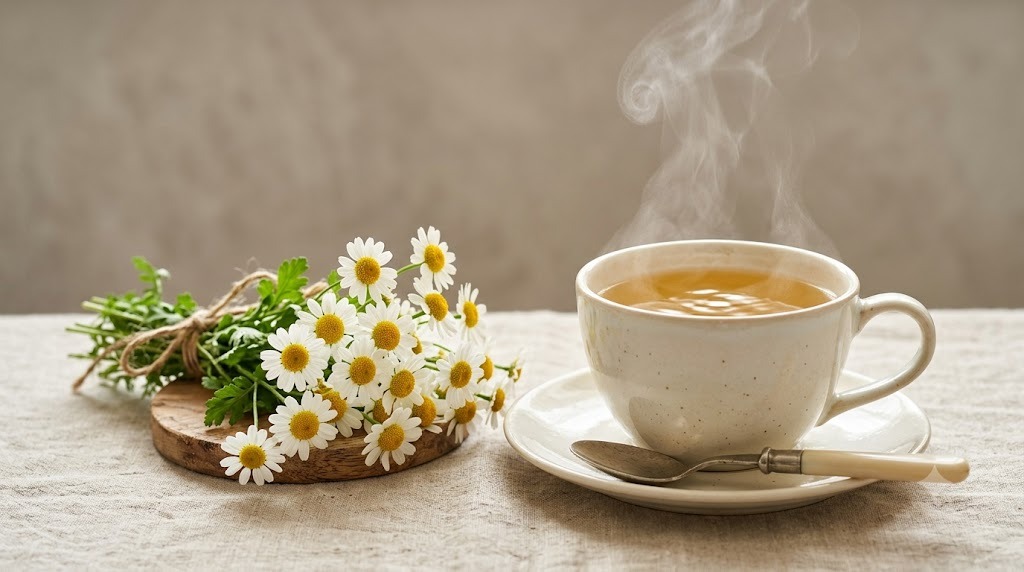
Chamomile is the classic bedtime tea - a small daisy-like herb whose dried flowers brew into a soft, apple-scented infusion famous for calming the nerves and easing sleep.
🗓️ Last reviewed: June 2026
Overview
Chamomile is the classic bedtime tea - a small daisy-like herb whose dried flowers brew into a soft, apple-scented infusion famous for calming the nerves and easing sleep. It is one of the easiest tea plants to grow, thriving in poor soil and sun, and a single patch produces handfuls of flowers all summer. Both German and Roman chamomile are used; German is the usual choice for tea.
Identification & Appearance
A low, feathery plant with finely divided, thread-like leaves and small flowers - white petals around a domed golden centre, 1-2 cm across. German chamomile is an upright annual to 60 cm; Roman chamomile is a low, spreading perennial. The whole plant carries a sweet, apple-like scent when brushed.
Where It Grows
Native to Europe and western Asia, chamomile has naturalised widely across temperate regions, often seen on roadsides, field edges, and disturbed ground. It favours open, sunny sites and tolerates dry, poor soil that many herbs dislike.
How to Grow at Home
Sow seed thinly on the surface of a sunny, well-drained bed or pot in spring - chamomile needs light to germinate, so do not bury it. It is undemanding and self-seeds freely, returning year after year. Thin seedlings to give each room, and it will flower within a couple of months.
Growing Conditions
Light
Full sun is best; chamomile flowers poorly in shade.
Watering
Water young plants until established, then water sparingly - chamomile tolerates dry soil and dislikes constant wet.
Soil & Temperature
Light, well-drained, even poor soil; avoid rich or heavy ground. Hardy and happy in cool to warm temperate summers.
Harvesting & Brewing
Pick the flower heads when the white petals are fully open and flat, ideally on a dry morning. Use them fresh, or dry them in a single layer out of direct sun until papery. To brew, steep about a tablespoon of dried flowers in hot water for 5 minutes, covered, to keep the aromatic oils in the cup.
Health & Benefits
Chamomile is one of the best-known calming herbs, traditionally used for relaxation, sleep, and soothing the digestion. Its flowers contain apigenin and aromatic oils linked to mild sedative and anti-inflammatory effects. It is caffeine-free and gentle enough for an evening cup.
Common Problems
- Few flowers - too much shade or overly rich soil; move to full sun.
- Leggy, floppy plants - overcrowded or overfed; thin and ease off feeding.
- Aphids on buds - rinse off or tolerate; usually minor.
Pros & Cons
Pros
- Very easy; thrives in poor soil.
- Self-seeds and returns each year.
- Long flowering season - repeated harvests.
Cons
- Flowers are small and fiddly to pick in quantity.
- Annual German type must reseed each year.
- Can spread further than wanted.
Best Suited For
- Beginners wanting a foolproof tea herb.
- Anyone after a calming, caffeine-free evening tea.
- Sunny, dry, or poor-soil spots.
Not ideal for shady gardens or those who dislike self-seeding plants.
FAQ
German or Roman chamomile for tea? German chamomile is the usual tea plant - sweeter and more productive. Roman chamomile works too but is more bitter and lower-yielding.
Can I use fresh flowers? Yes, though fresh chamomile is milder; dried flowers give a fuller, more aromatic cup.
Will it come back next year? German chamomile is annual but self-seeds reliably, so a patch effectively returns on its own.