Rosehip
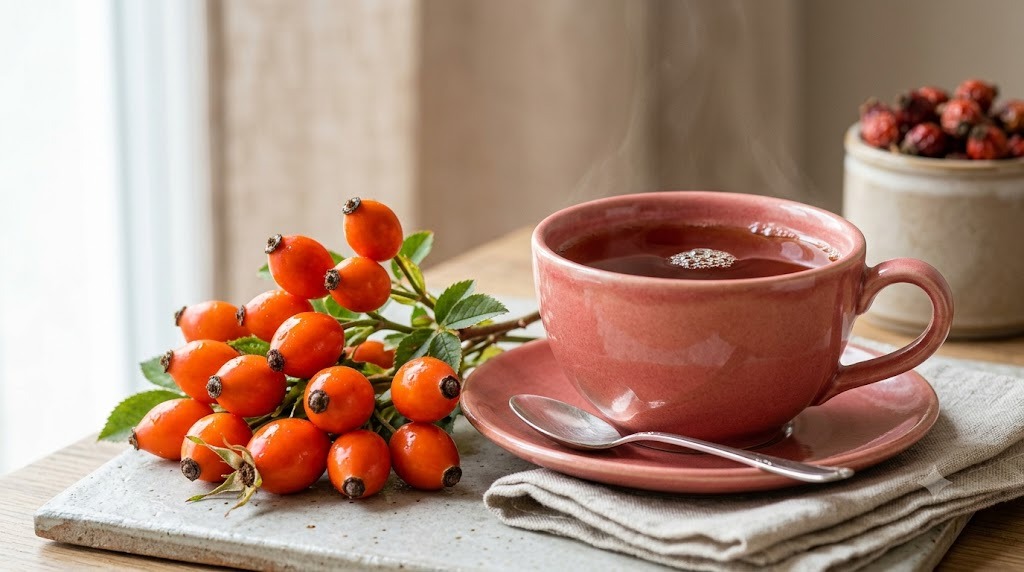
The rosehip is the bright, scarlet fruit of the rose - and one of the richest natural sources of vitamin C of any tea plant.
🗓️ Last reviewed: June 2026
Overview
The rosehip is the bright, scarlet fruit of the rose - and one of the richest natural sources of vitamin C of any tea plant. After the petals fall, the hips swell and ripen, brewing into a tangy, fruity, rosy-coloured tea long valued as a winter tonic. Many gardeners already grow the perfect plant for it without realising the harvest waiting on the bush.
Identification & Appearance
Rosehips are the fleshy fruits left behind after a rose flowers - oval to round, smooth, glossy, and ripening from green to bright orange-red. They sit on thorny, arching canes with the rose's familiar divided, toothed leaves. Inside, the fruit holds seeds surrounded by fine, irritating hairs that must be removed.
Where It Grows
Roses grow across the temperate Northern Hemisphere. The best hips come from species and shrub roses - particularly the dog rose (Rosa canina) of hedgerows and the rugosa rose (Rosa rugosa), which bears large, fleshy hips. They thrive in sun and well-drained soil.
How to Grow at Home
Grow a hip-bearing rose: rugosa roses are ideal, tough, disease-resistant, and heavy-cropping, while wild dog roses suit a hedge. Plant in sun in well-drained soil. Crucially, do not deadhead - the spent flowers must be left on so the hips can form and ripen. Most modern hybrid roses are bred for bloom and set few hips.
Growing Conditions
Light
Full sun - roses need good light to flower and fruit well.
Watering
Water to establish and through dry spells; settled shrub roses are fairly drought-tolerant.
Soil & Temperature
Fertile, well-drained soil. Rugosa and species roses are very hardy across temperate climates.
Harvesting & Brewing
Pick hips when fully coloured and slightly soft, ideally after the first light frost, which sweetens them. Slice them open and scrape out the seeds and their irritant hairs - this step is essential. Use the cleaned flesh fresh or dried. For tea, simmer or steep a tablespoon of dried hips in hot water for 10 minutes, then strain well.
Health & Benefits
Rosehip tea is famous for its very high vitamin C content and is a traditional winter and cold-season tonic. It is caffeine-free, tangy and fruity, and rich in antioxidants. Rosehips have also long been used to support joint comfort. The tea's flavour is pleasant enough to drink simply for enjoyment.
Common Problems
- Itchy throat or irritation - the seed hairs were not removed; always deseed and strain thoroughly.
- No hips forming - flowers were deadheaded, or it is a hybrid bred for bloom; leave flowers and grow a hip-setting rose.
- Hard, sour hips - picked too early; harvest fully coloured, after a frost.
Pros & Cons
Pros
- Exceptionally high in vitamin C.
- Tangy, fruity, genuinely enjoyable tea.
- A bonus harvest from an ornamental shrub.
Cons
- Seeds and irritant hairs must be removed.
- Many hybrid roses set few or no hips.
- Means not deadheading - fewer late blooms.
Best Suited For
- Anyone who grows shrub or species roses.
- People wanting a vitamin-rich winter tea.
- Hedgerow and cottage-style gardens.
Not ideal for gardens of hybrid tea roses bred only for flowers.
FAQ
Why must I remove the seeds? Rosehips contain fine hairs around the seeds that irritate the throat and skin. Scraping them out - and straining the tea - is essential.
Which roses give the best hips? Rugosa roses give large, fleshy, abundant hips and are very tough; wild dog roses are excellent too. Most hybrid tea roses set few hips.
When should I pick them? When fully coloured and slightly soft - ideally after the first light frost, which sweetens the hips.