Yarrow
Yarrow is a tough, feathery wildflower with one of the longest histories of any herb - its botanical name, Achillea, ties it to the legend of Achilles.
🗓️ Last reviewed: June 2026
Overview
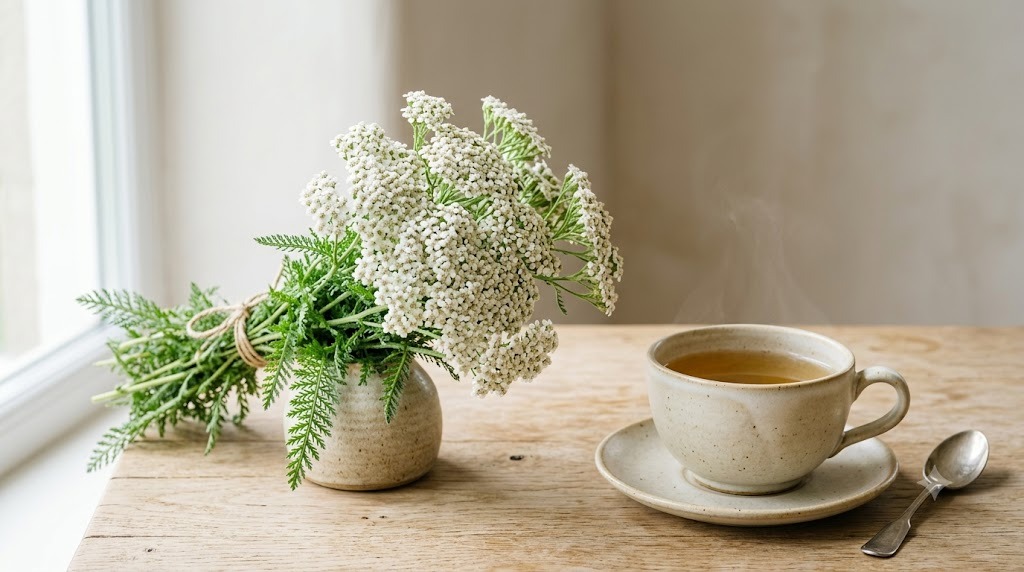
Yarrow is a tough, feathery wildflower with one of the longest histories of any herb - its botanical name, Achillea, ties it to the legend of Achilles. Its leaves and flowers brew into a slightly bitter, aromatic tea traditionally taken to break a fever, ease colds, and support the digestion. It is drought-proof, pollinator-friendly, and grows almost anywhere.
Identification & Appearance
A hardy perennial 30-90 cm tall, with finely divided, soft, fern-like aromatic leaves and flat-topped clusters of tiny flowers - white in the wild plant, and yellow, pink, or red in garden forms. The stems are tough and slightly woody. Crushed foliage has a sharp, herbal, slightly medicinal scent.
Where It Grows
Native across Europe, Asia, and North America, yarrow is one of the most widespread plants in the temperate world. It grows in meadows, grassland, roadsides, and lawns, thriving in poor, dry, well-drained soil and full sun, and shrugging off drought and neglect.
How to Grow at Home
Yarrow grows easily from seed, division, or a nursery plant. Give it full sun and well-drained soil - it positively prefers poor ground and resents rich, wet conditions. It spreads by creeping roots and self-seeds, so it is best in a wild corner or contained. Cut it back after flowering for fresh growth.
Growing Conditions
Light
Full sun - yarrow needs strong light and flowers poorly in shade.
Watering
Water only to establish; yarrow is highly drought-tolerant and dislikes wet soil.
Soil & Temperature
Poor, dry, well-drained soil. A very hardy perennial across temperate climates.
Harvesting & Brewing
Pick leaves and flower clusters when the plant is in full bloom, on a dry day. Both are used, fresh or dried; yarrow dries well. For tea, steep a teaspoon of the dried herb in hot water for 5-10 minutes. The cup is aromatic and noticeably bitter, so it is often blended with mint, elderflower, or honey.
Health & Benefits
Yarrow is a classic cold-and-fever herb, traditionally taken hot to encourage sweating and "break" a fever, and used to support digestion and circulation. It is caffeine-free. Its bitterness is part of its traditional digestive action - but most people blend it for a pleasanter cup.
Common Problems
- Floppy growth - too much shade or rich soil; give it lean ground and full sun.
- Spreading too far - contain the creeping roots or grow it in a wild area.
- Very bitter tea - natural; blend with sweeter herbs or honey.
Pros & Cons
Pros
- Extremely tough, drought-proof, and easy.
- Long history as a cold-and-fever herb.
- Excellent for pollinators.
Cons
- Distinctly bitter - usually needs blending.
- Spreads by root and seed.
- Needs full sun to do well.
Best Suited For
- Dry, sunny, low-maintenance and wild gardens.
- Anyone wanting a traditional cold-season herb.
- Pollinator-friendly plantings.
Not ideal for damp, shady gardens or those wanting a sweet-tasting tea.
FAQ
Why is yarrow tea bitter? Bitterness is natural to yarrow and is part of its traditional digestive action. Blend it with mint, elderflower, or honey for a more pleasant cup.
White or coloured yarrow for tea? The white-flowered wild yarrow is the traditional herb. Colourful garden hybrids are bred for show; the plain species is the safer choice for tea.
How is it used for colds? Traditionally it is drunk hot at the onset of a cold or fever, often with elderflower and peppermint, to encourage sweating.