Milk Thistle
Milk thistle (Silybum marianum) is a striking, spiny thistle marbled with white veins, grown for its seeds, which have a long traditional reputation for supporting the liver.
🗓️ Last reviewed: July 2026
Overview
Milk thistle (Silybum marianum) is a striking, spiny thistle marbled with white veins, grown for its seeds, which have a long traditional reputation for supporting the liver. It is easy to grow - almost too easy, since it self-seeds freely and can become weedy or invasive if left unchecked. The plant is bold and architectural, with large purple flower heads that draw bees, and the ripe seeds can be dried and brewed into a mild, nutty tea. If you can manage its spread and handle its prickles, milk thistle is one of the simplest herbs to grow from seed to cup.
Identification & Appearance
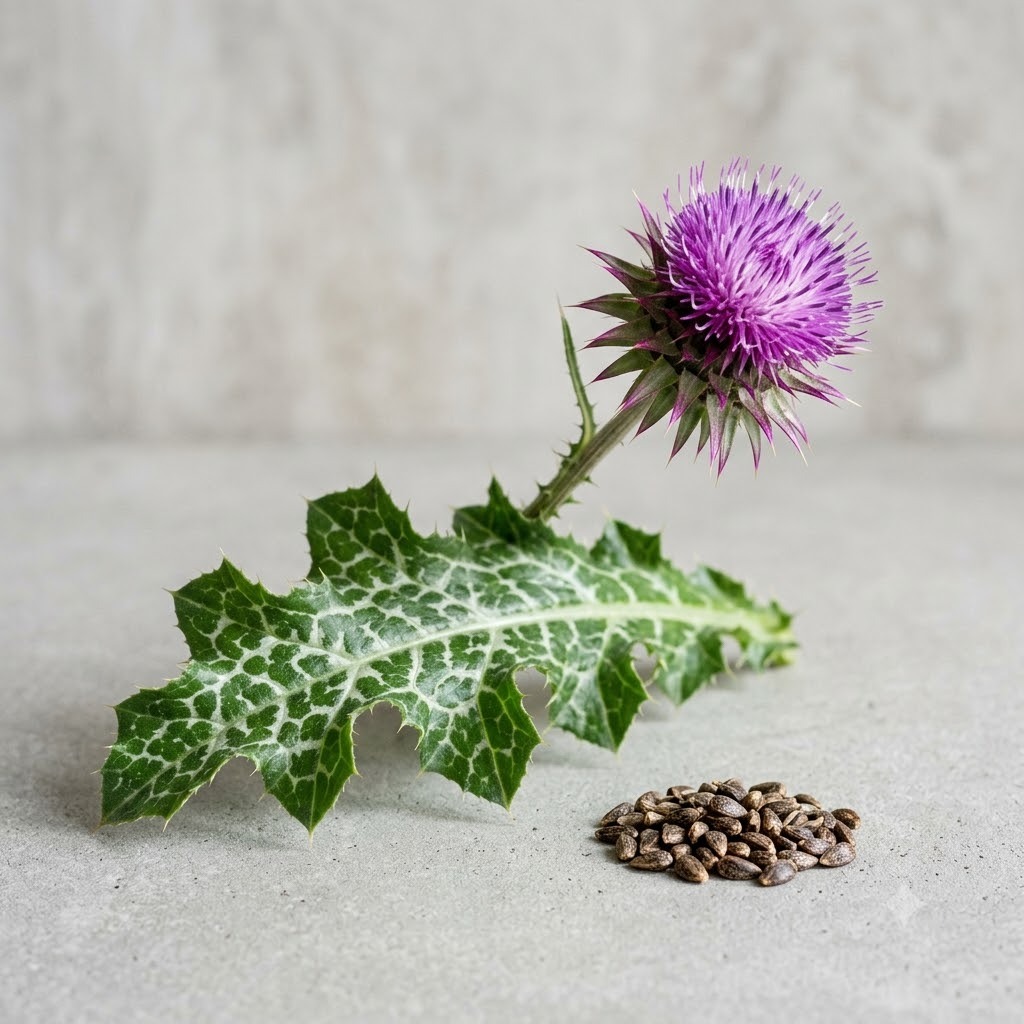
Milk thistle is unmistakable: large, glossy green leaves boldly marbled with milky-white veins, edged with sharp spines. It grows into a robust rosette in its first year, then sends up a stout branching stem to 1-2 m in its second, topped by large, solitary purple flower heads ringed with fierce, spiny bracts. As the flowers fade, they set masses of small, hard, shiny brown-black seeds, each tipped with a tuft of fine white hairs that carry it on the wind - which is exactly why it spreads so readily.
Where It Grows
Native to the Mediterranean and southern Europe, milk thistle now grows across much of the world in warm, dry, sunny places - roadsides, waste ground, pastures, and open fields. It thrives in poor, dry soil where little else bothers to grow, and it tolerates heat and drought with ease. This same toughness is part of why it has naturalised so widely and why it is treated as an invasive weed in some regions, particularly in parts of Australia and the Americas where it can crowd out grazing land. Before planting, it is worth checking whether it is listed as a noxious or restricted weed where you live, and growing it responsibly with strict dead-heading if so.
How to Grow at Home
Milk thistle is grown from seed and could hardly be easier. Sow directly where it is to grow in spring, in a sunny spot with well-drained soil, scattering the seed thinly and covering it lightly. Germination is quick and reliable, and the seedlings soon form bold rosettes; thin them to give each plant plenty of room to spread its spiny leaves. It needs almost no feeding or fussing, and in fact resents pampering - rich soil and heavy watering only make it soft and floppy. The main task is control. Because it self-seeds so aggressively, cut off the flower heads before the seeds scatter unless you deliberately want more plants, and never let it loose where it could escape into the wild. In many areas it is best grown in a contained bed and dead-headed diligently. If you want a seed harvest, allow a few heads to ripen fully but keep a close eye on them, bagging the heads or picking them the moment the white tufts appear so the wind does not claim the crop first.
Growing Conditions
Light
Full sun. Milk thistle is a plant of open, bright places and grows strongest in a sunny, unshaded spot.
Watering
Low. Once established it is highly drought-tolerant; water only young plants and during prolonged dry spells. It dislikes soggy ground.
Soil & Temperature
Undemanding - it grows in poor, dry, even stony soil as long as it drains freely. It handles heat well and is generally hardy, dying back after setting seed as an annual or biennial.
Harvesting & Brewing
Harvest the seeds when the flower heads have finished and begun to dry and the white tufts start to show at the top. Timing matters: too early and the seeds are unripe, too late and the wind has already carried them off. Cut the heads carefully, as the spines are sharp, so always wear stout gloves, and drop them into a paper bag as you go to catch any seeds that loosen. Let the heads dry fully in a warm, airy place, then rub or break them open over a bowl to release the seeds. Separating the small, hard seeds from the fine white fluff takes a little patience - a gentle breeze or a light winnowing helps - and once clean they store well when kept dry and cool. To brew, lightly crush a spoonful of seeds to open them up and steep in hot water for around ten to fifteen minutes; the result is a mild, faintly nutty tea. The seeds can also be added to blends with other herbs for a fuller cup.
Health & Benefits
Milk thistle seed has a centuries-old traditional reputation, best known for its association with liver support. Its seeds contain a group of compounds collectively called silymarin, which has long been the focus of this traditional use. People have historically taken milk thistle as a gentle tonic and after rich food or drink. It is important to be honest about this: these are traditional uses and folk associations, not proven medical treatments, and a mild seed tea is a modest beverage rather than a remedy. Milk thistle is generally considered gentle, but anyone who is pregnant, taking medication, or managing a health condition should check with a healthcare professional first, as it may interact with some medicines. This tea is not a substitute for medical care, and it should never replace proper treatment for any liver or health concern.
Common Problems
- Spreading everywhere - the seeds scatter widely on the wind; dead-head before they ripen to keep it in check.
- Painful prickles - the spines are sharp; always wear gloves when handling flower heads.
- Flopping stems - very rich or wet soil produces soft, floppy growth; it prefers lean, dry ground.
Pros & Cons
Pros
- Extremely easy to grow from seed in poor, dry soil.
- Bold, ornamental foliage and flowers that attract bees.
- Provides your own seed for a mild traditional tea.
Cons
- Self-seeds aggressively and can become weedy or invasive.
- Sharp spines make handling and harvesting awkward.
- Only the seeds are used, and they must be dried and cleaned.
Best Suited For
- Low-maintenance gardeners with a sunny, dry spot.
- Those wanting a bold ornamental that also yields a seed harvest.
- Anyone who can commit to dead-heading to control its spread.
Not ideal for small tidy gardens, anyone unwilling to manage self-seeding, or regions where it is a listed invasive plant.
FAQ
Is milk thistle invasive? It can be. It self-seeds very freely and has naturalised as a weed in many regions. Grow it in a contained bed and remove the flower heads before the seeds scatter, and check whether it is restricted in your area.
Which part do I use for tea? The seeds. Harvest the dried flower heads, extract and clean the seeds, then lightly crush and steep them for a mild, nutty tea.
Does milk thistle tea cure liver problems? No. It has a long traditional association with liver support, but that is folk history, not proven medicine. A mild seed tea is not a treatment and is not a substitute for medical care.