Licorice Root
Licorice (Glycyrrhiza glabra) is a tall, deep-rooted legume grown for its remarkably sweet roots, which have been used for thousands of years to flavour and soothe.
🗓️ Last reviewed: July 2026
Overview
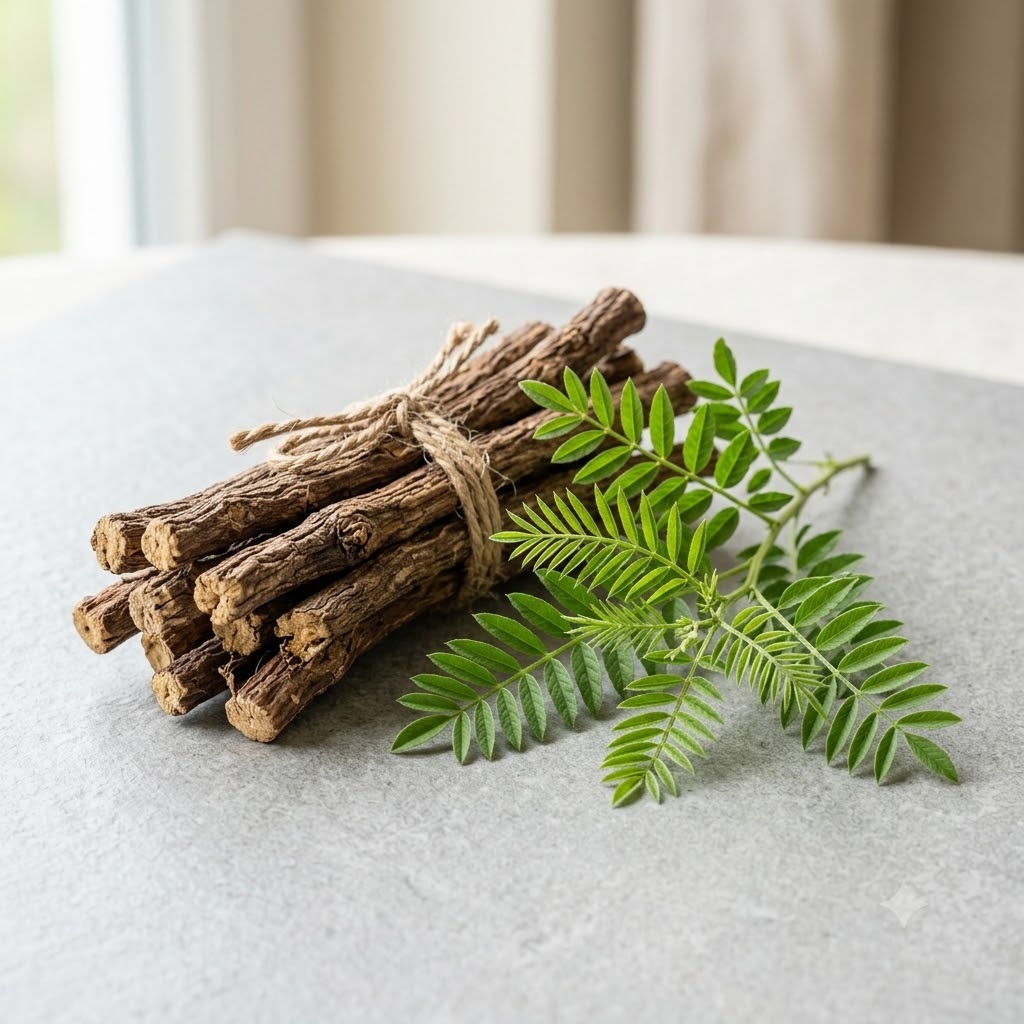
Licorice (Glycyrrhiza glabra) is a tall, deep-rooted legume grown for its remarkably sweet roots, which have been used for thousands of years to flavour and soothe. The sweetness is not sugar but a natural compound many times sweeter, and a small piece of dried root makes a mellow, sweet, slightly earthy tea. The plant itself is handsome and undemanding once settled, though it asks for warmth, patience, and a deep, well-drained bed to send its taproot down. Growing your own gives you clean, chemical-free root to brew, but licorice is one herb to enjoy in moderation - its active compound has real effects on the body.
Identification & Appearance
Licorice is a graceful perennial of the pea family, reaching around 1-1.5 m tall. It carries feathery, pinnate leaves made up of many small oval leaflets that give the plant a soft, airy look, and in summer it produces slender spikes of pale blue to lilac, pea-like flowers, followed by small pods typical of a legume. As a member of the pea family, it also fixes nitrogen through its roots, which is one reason it grows so contentedly in poor ground. The real prize, though, is underground: a woody central taproot with long horizontal runners that spread outward, yellow inside and intensely sweet when scraped. The above-ground growth dies back in winter and returns from the root each spring, so once planted it is a fixture of the bed for years.
Where It Grows
Native to southern Europe, the Mediterranean, and western Asia, licorice thrives in warm, open country with deep, light soil. It has long been cultivated across the Middle East, southern Russia, and Spain, where the long, warm seasons let the roots build up their sweetness. It favours sun, heat, and free-draining ground, and dislikes cold, heavy, or waterlogged soil.
How to Grow at Home
Licorice is usually grown from a root cutting or a nursery plant rather than seed, which is slow and stubborn to germinate. If you do try seed, soaking or scarifying it first helps, but most gardeners find a rooted division far quicker to establish. Choose the sunniest, warmest spot you have and give it deep, loose, sandy soil - the taproot needs room to plunge, sometimes a metre or more down, so raised or double-dug beds suit it well. It is a long-term project: the roots are not worth harvesting until the plant is three to four years old, by which time they are thick and sweet. In the meantime the top growth is happy to be left alone, dying back each autumn and returning stronger each spring. Because the runners spread outward underground, give it space or contain it with a buried barrier, and be patient through the first quiet years while the root builds below ground. A dressing of grit or sand mixed into heavy soil at planting pays off later, when it comes time to lift long, clean, unbroken roots.
Growing Conditions
Light
Full sun. Licorice wants as much warmth and light as you can give it to develop sweet, well-formed roots.
Watering
Moderate. Water while the plant is establishing and during dry spells, but let the soil dry between waterings - the root rots in constantly wet ground.
Soil & Temperature
Deep, light, free-draining, slightly alkaline soil suits it best. It is hardy to frost above ground and regrows each spring, but it grows and sweetens best in long, warm summers; in cool climates it can be slow to build usable root.
Harvesting & Brewing
Lift the roots in autumn once the plant is well established, ideally after the top growth has begun to die back and the plant has funnelled its energy below ground. Dig carefully and follow the long taproot and horizontal runners, loosening a wide area so the roots come up whole rather than snapping off. Wash away the soil, trim the roots, then dry them slowly in a warm, airy place until hard and brittle; properly dried root keeps for a long time. To brew, simmer a small piece of chopped or sliced dried root in water for around ten minutes to draw out the sweetness, then strain. The result is naturally sweet, mellow, and gently soothing, and it is often combined with milder herbs such as mint or chamomile to round out a blend. Because licorice is potent as well as sweet, a little goes a long way, so keep servings small and infrequent rather than brewing it strong.
Health & Benefits
Licorice root has a long traditional history, valued for its natural sweetness and as a soothing tea for the throat and digestion. Its sweetness comes from glycyrrhizin, a compound many times sweeter than sugar, which is also responsible for its stronger effects on the body. Traditionally it has been sipped to comfort a sore throat or settle the stomach. Importantly, glycyrrhizin can raise blood pressure and affect the body's fluid and potassium balance when taken in quantity or over long periods. For this reason licorice should be enjoyed occasionally and in small amounts, and avoided by anyone with high blood pressure, heart or kidney concerns, or during pregnancy. This is a traditional beverage, not a medicine, and it is not a substitute for medical care - anyone with a health condition or taking medication should speak with a healthcare professional first.
Common Problems
- Thin, weak roots - usually too little warmth or a soil that is too heavy; give it more sun and lighter, deeper ground.
- Root rot - caused by wet, poorly drained soil; improve drainage and water less.
- Spreading where unwanted - the runners travel; contain the roots or plant where spread is welcome.
Pros & Cons
Pros
- Naturally sweet root for a soothing homegrown tea.
- Handsome, low-maintenance perennial once established.
- Long-lived, returning each spring from the root.
Cons
- Slow - several years before roots are worth harvesting.
- Needs a warm, sunny site and deep, well-drained soil.
- Must be used in moderation due to real effects on blood pressure.
Best Suited For
- Warm-climate gardeners with deep, light soil.
- Patient growers happy to wait for a root harvest.
- Anyone wanting a naturally sweet herb to blend into teas.
Not ideal for people with high blood pressure or heart concerns, or those wanting a quick, worry-free harvest.
FAQ
Why is licorice so sweet without any sugar? Its sweetness comes from glycyrrhizin, a natural compound many times sweeter than table sugar. This is also why licorice has stronger effects on the body than an ordinary herb.
Is licorice tea safe to drink every day? It is best enjoyed occasionally and in small amounts. Regular heavy use can raise blood pressure and upset fluid balance, so it is not suited to daily drinking, especially for those with hypertension or during pregnancy.
How long before I can harvest the root? Usually three to four years, when the taproot has grown thick and sweet enough to be worth lifting.