Gotu Kola
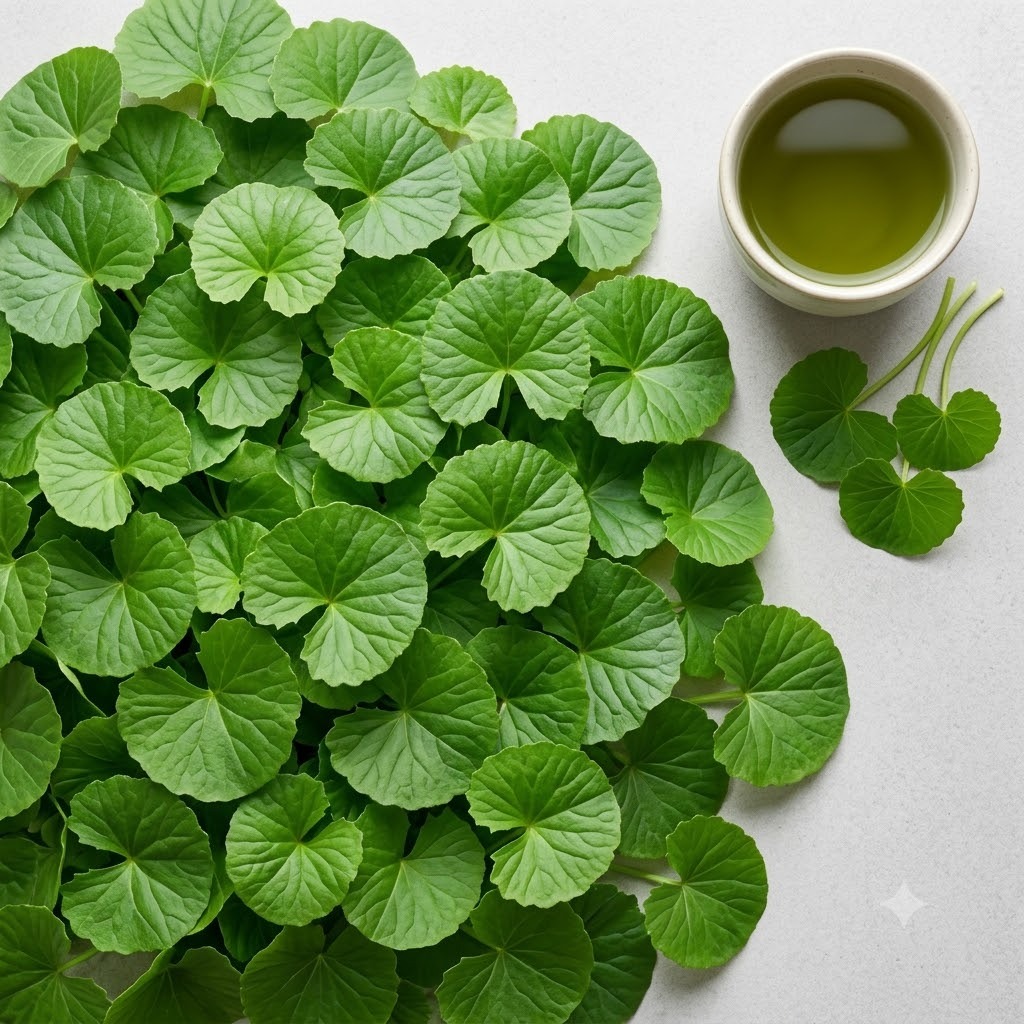
Gotu kola (Centella asiatica) is a low, creeping wetland herb with rounded, fan-shaped leaves, long treasured across Asia as a gentle tonic tea.
🗓️ Last reviewed: July 2026
Overview
Gotu kola (Centella asiatica) is a low, creeping wetland herb with rounded, fan-shaped leaves, long treasured across Asia as a gentle tonic tea. Despite its name, it is entirely unrelated to the caffeine-rich kola nut and contains no caffeine at all - the two should not be confused. Gotu kola spreads happily as a leafy groundcover, thriving in warm, humid, moist conditions, and it grows especially well in a pot where its trailing runners can be kept moist. The fresh or dried leaves make a mild, grassy, slightly bitter tea, and the plant is one of the easiest herbs to keep once you give it the damp warmth it loves.
Identification & Appearance
Gotu kola is a small, low-growing perennial that creeps along the ground on slender red-tinged runners, rooting as it goes. Its leaves are its signature: rounded to kidney or fan-shaped, bright green, smooth, with gently scalloped edges, held up on short stalks. It rarely draws attention with its flowers, which are tiny, pinkish, and tucked low among the leaves. The overall effect is a soft, spreading green mat rather than an upright plant, making it a natural groundcover or trailing pot plant.
Where It Grows
Native to the wetlands and damp margins of tropical and subtropical Asia, gotu kola grows wild across India, Sri Lanka, Southeast Asia, and parts of Africa and Australia. It favours moist, shaded, humid places - the edges of ponds, ditches, paddy fields, riverbanks, and damp lowland ground. It is fundamentally a plant of warmth and water, and it flourishes wherever the soil stays reliably moist and the air stays humid, which is why it can become a vigorous spreader in the wet tropics. In cooler or drier parts of the world it will not survive outdoors year-round, but it adapts happily to life as a potted plant that mimics those damp, warm conditions.
How to Grow at Home
Gotu kola is easy to grow given warmth and constant moisture. Start from a small plant or a rooted runner, as seed is slow and unpredictable. It does beautifully in a wide, shallow pot of rich, moisture-retentive soil kept consistently damp, sitting in a warm, bright but not scorching spot. A pot standing in a saucer of water suits it, since it is a wetland plant and welcomes wet feet that would rot many other herbs. Because it spreads by runners that root as they travel, it quickly fills a container as a lush green groundcover, and you can snip and pot up those rooted runners to make endless new plants to share or replace tired ones. In cooler climates, grow it indoors or under cover through winter, keeping it warm and humid - a bright kitchen or bathroom windowsill often does the job. Regular picking of leaves only encourages fresh, tender new growth, so the more you use it the better it grows.
Growing Conditions
Light
Bright, indirect light or dappled shade. It dislikes harsh, direct midday sun, which can scorch the tender leaves.
Watering
Generous and constant. Gotu kola is a wetland plant and never wants to dry out - keep the soil reliably moist, even standing in a little water, and give it humidity.
Soil & Temperature
Rich, moisture-retentive soil that stays damp. It loves warmth and humidity and is not frost-hardy; protect it from cold and bring it indoors where winters are chilly.
Harvesting & Brewing
Harvest the leaves as needed once the plant is established and spreading well - simply pinch off the mature leaves with their stalks, leaving the runners and younger leaves to keep growing. Because the plant renews itself so readily, you can pick lightly and often rather than stripping it all at once. The leaves can be used fresh or dried; to dry them, spread them in a single layer somewhere warm and airy out of direct sun until they are papery, then store them in a sealed jar. For tea, steep a small handful of fresh leaves, or a spoonful of dried, in hot water for around five to ten minutes, then strain. The flavour is mild, green, and gently bitter, closer to a leafy herbal infusion than a sweet one, and it blends well with milder or sweeter herbs such as mint, lemon balm, or a touch of honey. Fresh leaves give a brighter, grassier cup, while dried leaves are milder and easier to keep on hand year-round.
Health & Benefits
Gotu kola has a long and respected place in the traditional herbal cultures of Asia, where it has been taken for centuries as a gentle, everyday tonic tea. It is traditionally associated with calm, clarity, and general wellbeing, and it is worth stressing that, unlike its name-alike the kola nut, it contains no caffeine, so it does not stimulate in that way. These are traditional and cultural uses rather than proven medical benefits, and a mild leaf tea is a pleasant beverage, not a treatment. Anyone who is pregnant, taking medication, or managing a health condition should check with a healthcare professional before using it regularly, as it may not suit everyone. Gotu kola tea is not a substitute for medical care and should never replace proper treatment.
Common Problems
- Wilting or crisping leaves - almost always too dry or too much direct sun; keep it moist and out of harsh light.
- Slow or stunted growth - usually too cold; gotu kola wants steady warmth and humidity.
- Sparse, leggy runners - give it richer soil, brighter indirect light, and pick regularly to encourage bushy growth.
Pros & Cons
Pros
- Very easy to grow as a lush groundcover or pot plant.
- Fast-spreading, so leaves regrow quickly for frequent picking.
- Mild, caffeine-free tea from a plant with deep traditional roots.
Cons
- Needs constant moisture and warmth; not drought- or frost-tolerant.
- Must be brought indoors in cold climates.
- Easily confused by name with the unrelated caffeine-rich kola nut.
Best Suited For
- Growers who can provide warm, humid, consistently moist conditions.
- Container and indoor gardeners wanting a leafy, spreading herb.
- Anyone seeking a mild, caffeine-free traditional tea.
Not ideal for dry, cold gardens or anyone who forgets to water.
FAQ
Is gotu kola the same as the kola nut? No. Despite the similar name, gotu kola (Centella asiatica) is a completely unrelated wetland herb and contains no caffeine. The kola nut is a different plant altogether and is caffeine-rich.
Does gotu kola tea contain caffeine? No, none at all. It is naturally caffeine-free, which is part of why it has traditionally been enjoyed as a calming, everyday tea.
Can I grow gotu kola indoors? Yes, and in cool climates you should. It does very well in a moist pot in a warm, bright spot with indirect light, and it needs bringing indoors where winters are cold.