Linden
Linden - also called lime or basswood - is a stately deciduous tree whose summer flowers brew into one of Europe's most beloved teas.
🗓️ Last reviewed: June 2026
Overview
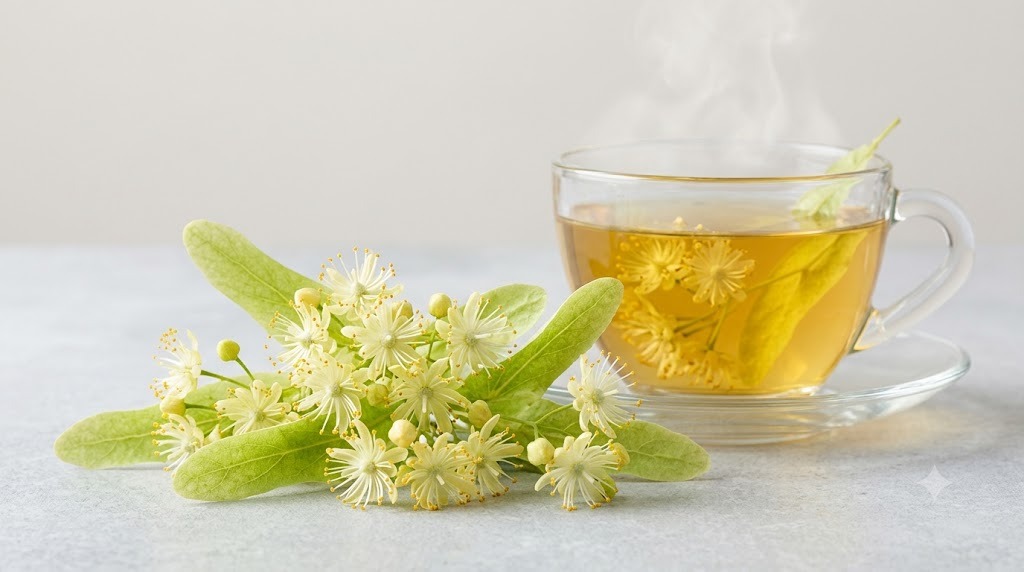
Linden - also called lime or basswood - is a stately deciduous tree whose summer flowers brew into one of Europe's most beloved teas. Tilleul, as it is known in France, is a pale, sweetly fragrant, honeyed infusion famous for its calming, soothing qualities. A mature linden in flower hums with bees, and a single tree provides far more blossom than one household could ever brew.
Identification & Appearance
A large deciduous tree, 20-40 metres tall when mature, with a broad crown and heart-shaped, toothed green leaves. In early summer it bears clusters of small, pale yellow-white, intensely fragrant flowers, each cluster joined to a distinctive pale, strap-shaped leafy bract that helps the seeds disperse on the wind.
Where It Grows
Several linden species are native across Europe and into Asia and North America. The tree grows in mixed woodland and is very widely planted in streets, parks, and avenues for its shade and scent. It favours deep, fertile, moist soil and is fully hardy.
How to Grow at Home
A linden is a long-term tree, not a quick herb - plant one only where there is space for a large tree, in deep, fertile soil. It is slow to reach flowering size, so most people harvest from established trees in parks and streets instead. If foraging, choose a clean tree away from heavy traffic and pollution.
Growing Conditions
Light
Full sun to partial shade; lindens are adaptable woodland trees.
Watering
Established trees need no watering; water only young trees through dry spells.
Soil & Temperature
Deep, fertile, moist, well-drained soil. A fully hardy tree across temperate climates.
Harvesting & Brewing
Harvest the flower clusters - bract and all - just as the flowers open and the scent is strongest, on a dry day. They have only a short window of a week or two. Dry them gently in the shade to preserve the delicate aroma. For tea, steep a small handful of dried flowers and bracts in hot water for 5-10 minutes for a pale, sweet, honeyed cup.
Health & Benefits
Linden flower tea is a classic European calming and cold-season herb, traditionally taken to ease anxiety, aid sleep, and soothe colds and fevers by encouraging gentle sweating. It is caffeine-free, naturally sweet and gentle, and a favourite evening tea for adults and children alike.
Common Problems
- Missing the window - linden flowers for only a week or two; watch the tree and harvest promptly.
- Lost aroma - dried too fast or in sun; dry gently in the shade.
- Polluted trees - avoid harvesting from heavily trafficked streets.
Pros & Cons
Pros
- Delicate, sweet, honeyed, much-loved flavour.
- Naturally calming and gentle.
- One mature tree yields abundant blossom.
Cons
- Far too large a tree to grow purely for tea.
- Very short harvest window.
- Aroma is easily lost if dried poorly.
Best Suited For
- Foragers near established linden trees.
- Anyone wanting a gentle, sweet, calming tea.
- Large estates or parks where a tree fits.
Not ideal for small gardens - this is a forager's tea, not a grow-your-own herb.
FAQ
Is linden the same as the lime fruit? No - confusingly, linden is also called "lime tree," but it has nothing to do with the citrus lime. It is also known as basswood.
Should I grow my own linden for tea? Rarely worth it - it is a huge, slow tree. Most people harvest from established lindens in parks and avenues instead.
Why is the harvest so brief? Linden flowers for only a week or two in early summer. Watch your tree and pick promptly while the flowers are fragrant.