Elderflower
Elderflower is the lacy, sweetly fragrant blossom of the elder tree - a hedgerow shrub that gives one of the most enjoyable seasonal teas there is.
🗓️ Last reviewed: June 2026
Overview
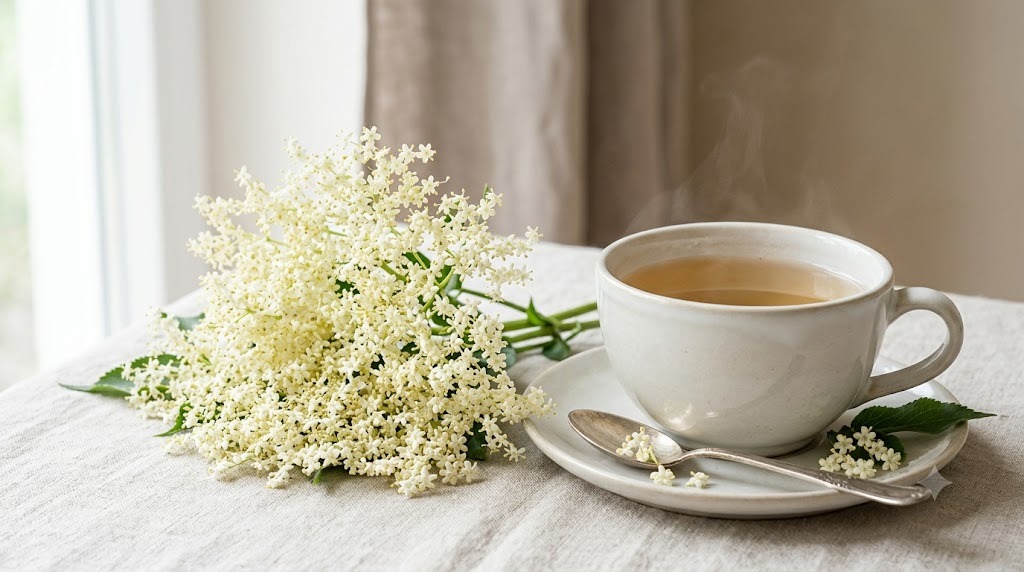
Elderflower is the lacy, sweetly fragrant blossom of the elder tree - a hedgerow shrub that gives one of the most enjoyable seasonal teas there is. The creamy flower heads brew into a delicate, honeyed, muscat-scented infusion, traditionally taken to ease colds and hay fever. The elder also gives a second harvest later in the year: dark berries for a deep, warming autumn tea.
Identification & Appearance
A fast-growing deciduous shrub or small tree, 3-6 metres tall, with arching branches and divided leaves of five to seven toothed leaflets. In early summer it bears large, flat, creamy-white flower clusters with a heady scent. By autumn these become drooping bunches of small, glossy purple-black berries.
Where It Grows
Native across Europe and naturalised widely, the elder is one of the most common hedgerow and woodland-edge shrubs of temperate regions. It thrives almost anywhere - hedges, waste ground, riverbanks - favouring rich, moist soil and tolerating sun or partial shade.
How to Grow at Home
Elder is very easy: plant a young shrub, or root a hardwood cutting, in almost any soil in sun or part shade. It grows fast and can be cut back hard to keep it manageable. Many people simply harvest from wild elders nearby. Be sure of correct identification, as a few similar-looking plants are not edible.
Growing Conditions
Light
Full sun to partial shade; sun gives the heaviest flowering.
Watering
Water young shrubs to establish; mature elders are tough and need little once settled.
Soil & Temperature
Rich, moist soil preferred, but tolerates most. A very hardy shrub across temperate climates.
Harvesting & Brewing
Pick flower heads on a dry, sunny morning when the tiny flowers are just fully open and most fragrant - fading or browning heads are past their best. Shake off insects and dry the heads, then strip the flowers. Important: elderflowers and berries must be used cooked or dried, never raw, and the berries should always be cooked. Steep a tablespoon of dried flowers for 5-10 minutes.
Health & Benefits
Elderflower tea is a classic remedy for colds, fevers, and hay fever, traditionally drunk hot to encourage sweating, often blended with peppermint and yarrow. Elderberry, used cooked, is rich in antioxidants and widely taken to support the immune system. Both are caffeine-free.
Common Problems
- Misidentification - be certain it is true elder before harvesting; some look-alikes are toxic.
- Using raw berries - always cook elderberries; never use them raw.
- Browning flower heads - past their peak; pick only fresh, fully open, fragrant clusters.
Pros & Cons
Pros
- Two seasonal harvests - flowers and berries.
- Delicate, honeyed, much-loved flavour.
- Very easy, fast-growing, and hardy.
Cons
- Must be correctly identified.
- Flowers and berries need cooking or drying - never raw.
- Large - needs space or hard pruning.
Best Suited For
- Larger gardens and hedgerow-style plantings.
- Foragers wanting a classic seasonal tea.
- Anyone after a traditional cold-and-hay-fever herb.
Not ideal for small gardens with no room, or anyone unsure of plant identification.
FAQ
Can I eat or brew elderflowers raw? No - elderflowers and elderberries should be used dried or cooked, never raw. Drying or brewing the flowers and cooking the berries makes them safe.
When do I pick elderflowers? On a dry, sunny morning, when the heads are just fully open and at their most fragrant. Avoid browning or fading clusters.
Are the berries used the same way? The berries give a separate autumn harvest - always cooked - for a deep, warming tea, often taken for immune support.