Jasmine
Jasmine is the climbing shrub behind one of the world's most romantic teas - its small white flowers release an intoxicating perfume used to scent green tea into fragrant jasmine tea.
🗓️ Last reviewed: June 2026
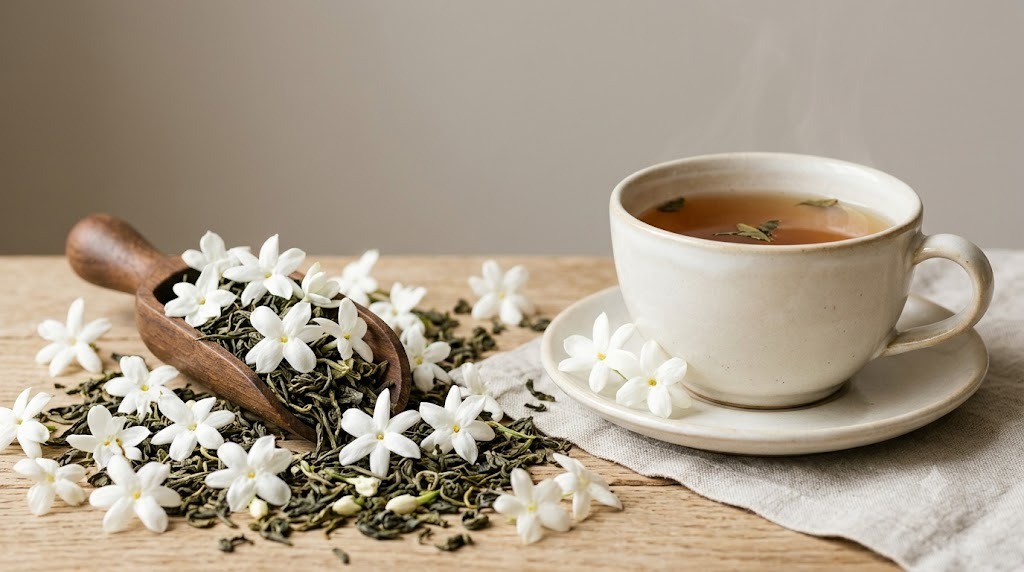
Overview
Jasmine is the climbing shrub behind one of the world's most romantic teas - its small white flowers release an intoxicating perfume used to scent green tea into fragrant jasmine tea. The blossoms themselves can also be brewed alone or blended. Few plants reward the senses like jasmine in flower on a warm evening, when its scent drifts right across the garden.
Identification & Appearance
A twining, scrambling shrub or climber, semi-evergreen to evergreen depending on species and climate, with glossy divided green leaves. The flowers are small, star-shaped, and pure white (sometimes pink in bud), borne in clusters and releasing their famous sweet perfume most strongly in the evening.
Where It Grows
True jasmines are native to warm regions of Asia and beyond; common jasmine (Jasminum officinale) and Arabian jasmine (Jasminum sambac, the classic tea jasmine) are the species most used. They favour warm, sunny, sheltered conditions and are grown outdoors in mild climates and as pot plants elsewhere.
How to Grow at Home
Grow jasmine from a nursery plant against a warm, sunny support - a trellis, wall, or wires. In mild climates common jasmine grows outdoors year-round; in colder areas, grow the more tender Arabian jasmine in a pot that can come indoors for winter. Give it good light, steady moisture in growth, and prune after flowering.
Growing Conditions
Light
Full sun to very bright light; jasmine needs warmth and light to flower and perfume well.
Watering
Water regularly through the growing season; keep potted plants from drying out, and reduce water in winter.
Soil & Temperature
Fertile, well-drained soil. Hardiness varies - common jasmine tolerates some frost, Arabian jasmine needs warmth.
Harvesting & Brewing
Pick the flowers when they are just opening, in the late afternoon or evening when the scent peaks. To make jasmine green tea, layer fresh blossoms with dried green tea leaves overnight so the tea absorbs the perfume, then remove the spent flowers; repeat for a stronger scent. The flowers can also be dried and brewed alone or in blends.
Health & Benefits
Jasmine tea is enjoyed mainly for its exquisite fragrance and the gentle lift it gives. When made with green tea as a base, it carries green tea's antioxidants and a little caffeine; brewed from flowers alone it is caffeine-free. It has a long association with relaxation and a calm, uplifted mood.
Common Problems
- Few flowers - too little light or a cold position; give it sun and warmth.
- Cold damage - match the species to your climate; shelter tender Arabian jasmine.
- Weak scent - pick flowers as they open in the evening, when perfume is strongest.
Pros & Cons
Pros
- Exquisite, world-famous fragrance.
- Beautiful flowering climber.
- Scents green tea or brews alone.
Cons
- Tender species need winter protection.
- Scenting tea is a slow, hands-on process.
- Needs a warm, sunny, sheltered spot.
Best Suited For
- Warm, sheltered gardens, or pot growers with winter space.
- Anyone who loves fragrant, scented teas.
- Gardeners who enjoy a hands-on tea-making project.
Not ideal for cold, shady gardens, or those wanting a quick, simple harvest.
FAQ
Which jasmine is used for tea? Arabian jasmine (Jasminum sambac) is the classic species for scenting jasmine tea, though common jasmine flowers are also fragrant and usable.
How is jasmine green tea made? Fresh jasmine blossoms are layered with dried green tea so the leaves absorb the perfume overnight; the flowers are then removed. Repeating the process deepens the scent.
Are all jasmine-named plants safe for tea? No - use only true Jasminum species. Some unrelated plants share the name "jasmine" and are not suitable, so identify carefully.