Passionflower
Passionflower is a vigorous climbing vine famous for its astonishing, almost otherworldly flowers - and quietly valued as a calming tea plant.
🗓️ Last reviewed: June 2026
Overview
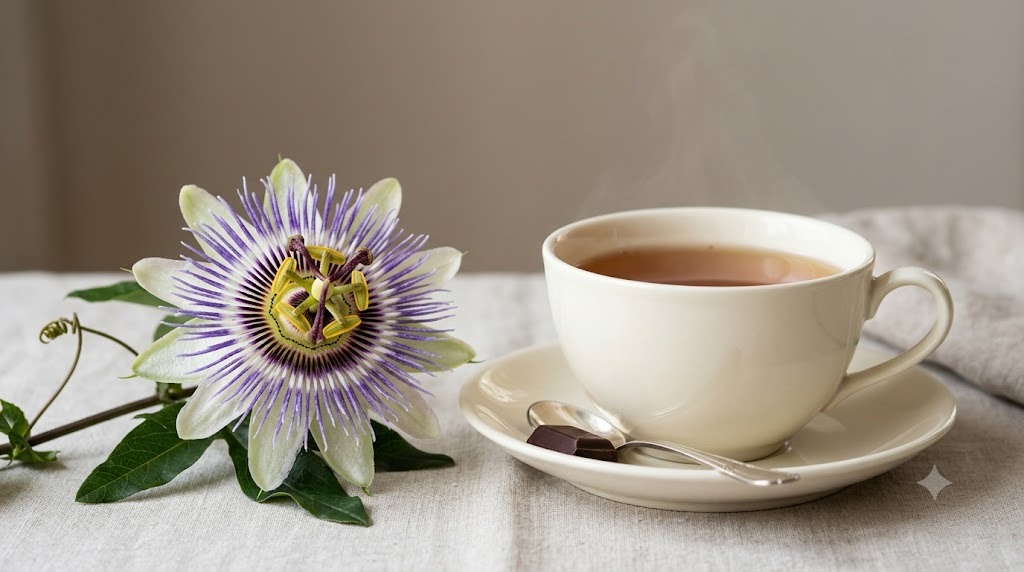
Passionflower is a vigorous climbing vine famous for its astonishing, almost otherworldly flowers - and quietly valued as a calming tea plant. Its leaves and flowers brew into a mild, gently grassy infusion long used to ease anxious thoughts and a restless mind. It rewards the grower twice: with one of the most extraordinary blooms in the plant world, and with a soothing evening cup.
Identification & Appearance
A fast-growing perennial climber that clings by tendrils, reaching several metres in a season. It has deeply lobed green leaves and the unmistakable flower - a flat ring of petals topped by a fringe of fine, wavy purple-and-white filaments around a central column of stamens and stigmas. Some species follow flowers with edible fruit.
Where It Grows
The genus is centred on the Americas, from the southern United States through tropical South America. The hardiest species, Passiflora incarnata (maypop), grows wild in the southeastern US and tolerates frost; tender species need warmth or shelter. All favour sun and good drainage.
How to Grow at Home
Grow passionflower from a nursery plant or cutting against a sturdy support - a trellis, fence, or wires - in a sunny, sheltered spot. The hardy maypop can be grown outdoors in many temperate gardens, dying back and re-shooting from the root; tender species are best in pots that can be sheltered in winter. It grows fast and may need cutting back.
Growing Conditions
Light
Full sun - passionflower needs warmth and light to flower well.
Watering
Water regularly through the growing season; reduce in winter, especially for potted plants.
Soil & Temperature
Well-drained, moderately fertile soil. Hardiness varies - maypop is frost-tolerant, most others are tender.
Harvesting & Brewing
Harvest leaves, stems, and flowers during the growing season, ideally around flowering. Dry them well, as passionflower is mainly used dried. For tea, steep a teaspoon of the dried herb in hot water for 10 minutes, covered. The cup is mild and grassy; it is often blended with lemon balm or chamomile for an evening brew.
Health & Benefits
Passionflower is a well-regarded calming herb, traditionally used to ease anxiety, quieten a racing mind, and support sleep - particularly when worry is the obstacle. It is caffeine-free. Its mild flavour means it works well as part of a relaxing herbal blend.
Common Problems
- All leaves, no flowers - too much shade or overfeeding with nitrogen; give it sun and lean feeding.
- Frost-killed top growth - normal for maypop, which re-shoots from the root; shelter tender species.
- Outgrowing its space - it is vigorous; cut it back to keep it in bounds.
Pros & Cons
Pros
- Extraordinary, unforgettable flowers.
- Genuinely calming tea for anxious minds.
- Fast-growing - quick to cover a support.
Cons
- Most species are frost-tender.
- Vigorous - needs space and pruning.
- Can be shy to flower if pampered or shaded.
Best Suited For
- Gardeners who want a spectacular climber with a use.
- Sunny walls, trellises, and sheltered spots.
- Anyone after a calming tea for an anxious, busy mind.
Not ideal for small gardens with no support, or cold gardens growing tender species.
FAQ
Which passionflower is best for tea and for cold climates? Passiflora incarnata, the maypop - it is the hardiest, the traditional medicinal species, and frost-tolerant.
Will it survive winter outdoors? Maypop usually does in temperate gardens, dying back and re-shooting from the root. Tender tropical species need winter shelter.
Why won't my passionflower bloom? Often too much shade or too much nitrogen feeding, which favours leaf over flower. Give it full sun and go easy on rich feed.