Holy Basil
Holy basil, or tulsi, is a sacred herb of India and one of the best-loved tea plants in the world.
🗓️ Last reviewed: June 2026
Overview
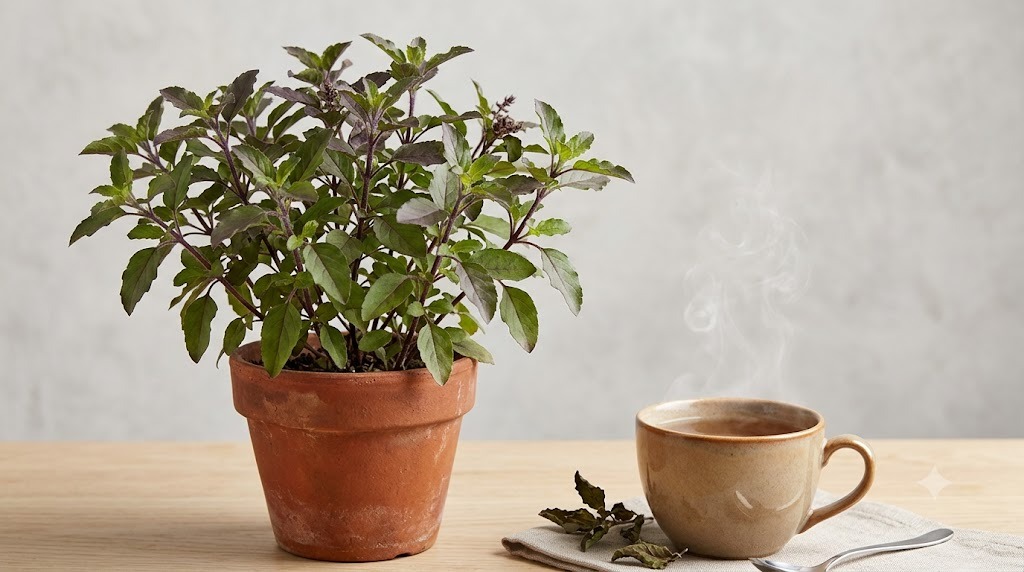
Holy basil, or tulsi, is a sacred herb of India and one of the best-loved tea plants in the world. Its leaves brew into a warm, spicy, clove-and-pepper-scented infusion, valued for centuries as an everyday tonic. Botanically distinct from culinary basil, it is an aromatic, easy-to-grow plant that perfumes the whole garden and supplies tea right through the warm season.
Identification & Appearance
A bushy, aromatic plant 30-60 cm tall, with toothed green or purple-tinged leaves that are slightly hairy and intensely fragrant. The stems are often purple. It produces slender spikes of small lilac or white flowers loved by bees. Crushed leaves release a complex scent - clove, pepper, and a hint of mint.
Where It Grows
Native to the Indian subcontinent and tropical Asia, holy basil is cultivated worldwide and grown beside homes and temples across India. It thrives in warm climates and is treated as a tender annual in cooler regions. It loves heat, sun, and steady moisture.
How to Grow at Home
Sow seed indoors in spring and plant out after frost, in a warm sunny spot or a large pot. It germinates easily and grows fast. Pinch out the growing tips regularly to keep it bushy, and remove flower spikes if you want to favour leaf production for tea. In cool climates, treat it as a summer annual.
Growing Conditions
Light
Full sun - holy basil is a heat-lover and grows strongest in bright warmth.
Watering
Water regularly to keep the soil evenly moist; do not let it dry out fully or wilt.
Soil & Temperature
Rich, well-drained soil. Frost-tender - grow as a warm-season annual in cool climates.
Harvesting & Brewing
Pick leaves and tender stem tips through the growing season; regular harvesting keeps the plant bushy. The flowers can also be used. Holy basil dries well, retaining much of its aroma. For tea, steep a small handful of fresh leaves, or a teaspoon of dried, in hot water for 5 minutes for a warm, lightly spicy cup.
Health & Benefits
Tulsi is one of the most revered herbs in Ayurveda, traditionally used as an adaptogen - a tonic for resilience to stress - and for respiratory and general wellbeing. It is caffeine-free, rich in aromatic oils and antioxidants, and gentle enough for daily drinking.
Common Problems
- Going to flower too soon - pinch out flower spikes and tips to keep leaf growth coming.
- Leggy, sparse plant - not pinched; pinch tips regularly for bushiness.
- Cold damage - never plant out before frost has passed.
Pros & Cons
Pros
- Warm, distinctive, much-loved flavour.
- Easy from seed; fast-growing.
- Dries well and stores its aroma.
Cons
- Frost-tender - a summer plant in cool climates.
- Bolts to flower if not pinched.
- Needs warmth to thrive.
Best Suited For
- Anyone wanting a warm, spicy, tonic-style tea.
- Sunny gardens, balconies, and large pots.
- Gardeners interested in herbal traditions.
Not ideal for cold, shady spots or those wanting a perennial.
FAQ
Is holy basil the same as cooking basil? No - it is a different species. Holy basil (tulsi) is grown for tea and ritual; sweet basil is the culinary herb. Their flavours are quite different.
Should I let it flower? For maximum leaf for tea, pinch out the flower spikes. If you leave some, the bees will thank you and you can use the flowers too.
Can I grow it indoors? Yes, in the brightest, warmest window you have - it needs strong light to stay bushy and aromatic.