How to Grow Zucchini: The Crop That Never Stops Giving
Zucchini is one of the easiest, most productive crops a beginner can grow outdoors, and this guide covers sowing, care, the glut problem, and how to keep up with the harvest.
When to sow & harvest
A rough guide for a temperate climate - shift it to your own zone and last-frost date. Greenhouse growing stretches both windows earlier and later.
Why grow zucchini
If you want a single crop that makes you feel like a real gardener in your first season, zucchini is hard to beat. It is fast, it is forgiving, and it produces so much fruit that the main challenge is not growing it but keeping up with it. Two healthy plants will feed a family through the summer, with plenty spare to give away.
A quick note on names: courgette and zucchini are the same thing. In the UK you will usually see "courgette", in the US and much of Europe it is "zucchini". It is a summer squash, picked and eaten young while the skin is still soft. Leave the same fruit on the plant and it becomes a marrow, so the crop rewards you for picking early and often.
The honest appeal is the sheer return. You sow a couple of seeds in late spring and by midsummer you are harvesting several fruits a week from each plant. The season runs from early summer right through to the first autumn frost. For a beginner working an outdoor bed, this is about as reliable as vegetable growing gets.
Choosing a variety
For a first attempt, almost any variety will succeed, so choose based on what you actually like to eat and how much space you have.
The standard green bush types are the safest starting point. Varieties like "Defender", "Ambassador" and "Black Beauty" grow as compact bushes rather than sprawling vines, which suits a bed or a large container. They crop heavily and early.
If you want a bit of variety, yellow types such as "Gold Rush" are just as easy and make the harvest easier to spot among the leaves, which genuinely helps you avoid the "I found a marrow hiding under a leaf" problem. Round varieties like "Tondo di Nizza" are fun for stuffing.
Two practical tips. First, look for varieties described as "compact" or "bush" if space is tight, and "trailing" only if you have room to let them ramble. Second, resist the urge to grow lots of plants. Zucchini is so productive that three plants can overwhelm a household. For most families, two is the right number, and even one plant produces a steady supply for a couple.
Sowing and starting off
Zucchini seeds are large, flat and easy to handle, which makes them a good crop to sow by hand.
You have two options. The first is to sow indoors in late spring, roughly three to four weeks before your last expected frost. Sow seeds on their edge (not flat) about one inch deep, one seed per 3 inch pot of moist compost. Sowing on edge is a traditional trick that is thought to help the seed rot less if the compost is damp. Keep them somewhere warm, around 18 to 21C, and they usually germinate within a week. Grow them on a bright windowsill or in a greenhouse until the frost has passed.
The second option is to sow direct into the bed once all danger of frost is gone and the soil has warmed up. This is simpler and the plants often catch up with indoor-sown ones because they suffer no transplant check. Sow two seeds together at each planting position and remove the weaker seedling once they are growing well.
Whichever route you take, do not rush. Zucchini is a warmth-loving crop and hates cold soil. Seedlings put out in cold, wet conditions sulk, and a fortnight of patience usually pays off. Before planting out indoor-raised plants, harden them off over a week or so by putting them outside during the day and bringing them in at night, so the sudden change does not shock them.
Space plants generously, around 3 feet (90cm) apart. It always looks like too much when the plants are small. It is not. A mature zucchini plant is large and greedy, and crowding leads to poor airflow and more disease.
Greenhouse or garden - where to grow
Zucchini is fundamentally an outdoor crop, and that is good news because it means you do not need any special equipment.
A greenhouse is useful for one thing only: an early start. Sowing under cover in late spring lets you raise sturdy young plants ready to go out the moment the frost risk passes, which can bring your first harvest forward by a couple of weeks. Some gardeners keep a single plant in a large greenhouse border for a very early crop, but it is not the natural home for the plant. Under glass they take up a lot of room, they are prone to mildew in the humid air, and pollinating insects cannot always reach the flowers.
For the main crop, plant outdoors in the open ground. Choose the sunniest spot you have, sheltered from strong wind, with rich, moisture-retaining soil. Zucchini are hungry and thirsty plants. Before planting, dig in a generous amount of well-rotted manure or garden compost, and if you can, prepare a planting pocket with extra organic matter for each plant. A sunny bed with good soil will do far more for your crop than any structure.
Day-to-day care
Once established, zucchini largely look after themselves, but three things make the difference between a decent crop and a spectacular one.
Water is the first. These are thirsty plants with big leaves that lose a lot of moisture, and they resent drying out. Water deeply and regularly, especially once fruit starts to set and during hot, dry spells. Aim the water at the base of the plant rather than over the leaves, which helps keep mildew at bay. Irregular watering is a common cause of small, bitter or misshapen fruit.
Feeding is the second. If you prepared the soil well, plants will crop happily for weeks. Once they are producing fruit heavily, a weekly liquid feed high in potassium (a tomato feed works fine) keeps them going and supports continued flowering.
Mulching is the third and the easiest thing to overlook. A thick mulch of compost or well-rotted manure around the base of each plant locks in moisture, suppresses weeds and slowly feeds the plant. On an outdoor bed in summer, mulch does a lot of the watering work for you.
Beyond that, keep the area weed-free while plants are young, and once they sprawl their large leaves will shade out most competition themselves.
Common problems and pests
Zucchini is robust, but a handful of problems come up often enough to be worth knowing.
Powdery mildew is the most common. Late in the season you will often see a white, dusty coating on the leaves. It looks alarming but rarely kills the plant, and by the time it appears you have usually had a good harvest already. Good spacing, watering at the base rather than overhead, and removing the worst-affected leaves all help slow it down.
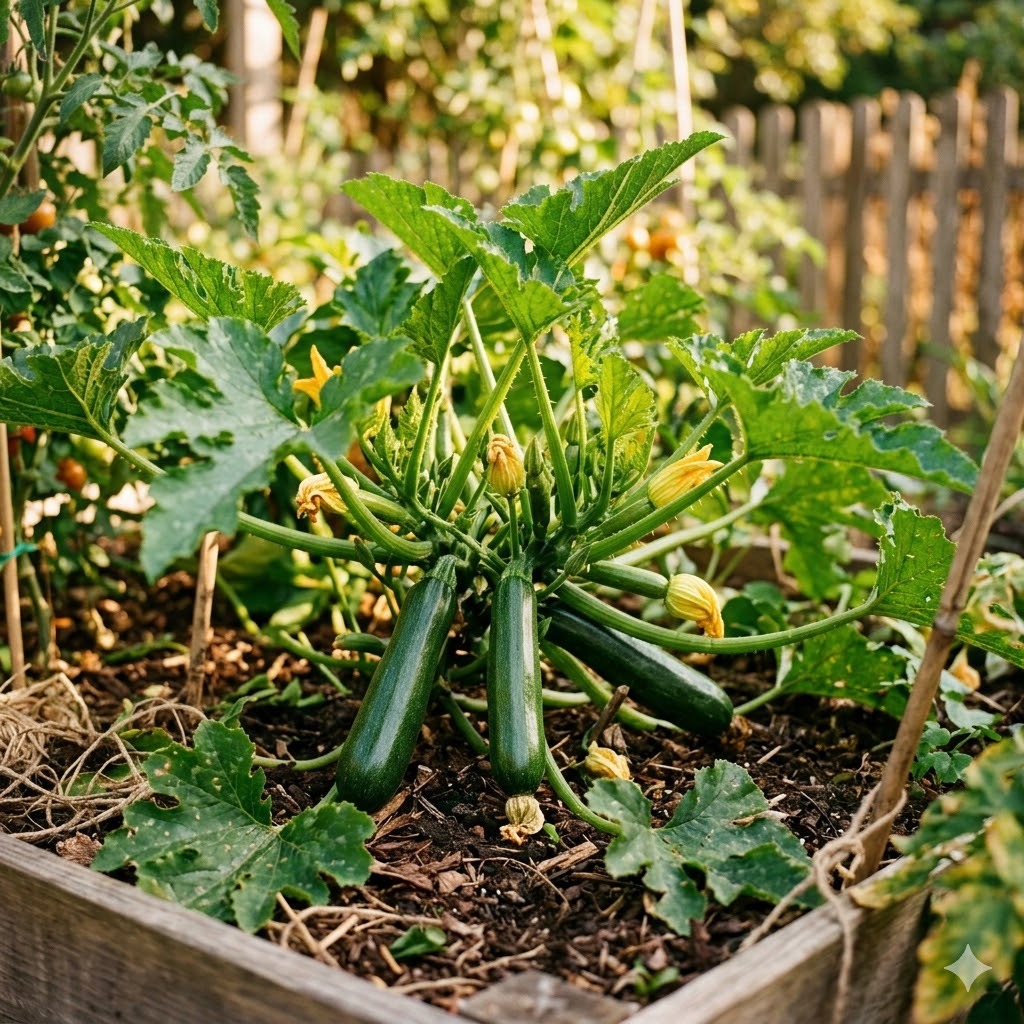
Poor pollination is the frustrating one. In cold or wet weather, or early in the season, bees may not be active and small fruits can shrivel and rot at the tip instead of swelling. Each plant produces both male and female flowers (the female has a tiny fruit behind the bloom). If fruit is failing to set, hand-pollinate: pick a male flower, strip its petals, and dab its pollen into the centre of the female flowers. It takes seconds and reliably fixes the problem.
Blossom end rot shows as a sunken brown patch at the far end of the fruit. It is caused by uneven water uptake rather than a disease, so the fix is consistent watering and good mulching rather than any spray.
Slugs and snails will graze young seedlings, so protect plants when they are small. Once established and large, the plants generally shrug off pests.
Harvesting
This is the part beginners most often get wrong, and getting it right transforms the crop.
Pick young and pick often. The ideal size is around 6 to 8 inches (15 to 20cm) long, when the skin is glossy and the fruit is tender. At this stage they taste best and the plant is encouraged to keep producing. Cut them off with a knife or secateurs rather than pulling, leaving a short stub of stalk.
The trap is leaving fruit on the plant. Turn your back for a few days in warm weather and a small zucchini balloons into a marrow. Not only are marrows watery and less pleasant to eat, but a maturing fruit signals the plant to slow down, so a few overlooked giants can bring your whole harvest to a halt. Check your plants every couple of days at the height of summer, and lift the big leaves to look underneath, because that is where the sneaky ones hide.
At peak season, expect to pick several fruits per plant per week. This is the point where the famous glut begins.
Storing and preserving
There is no polite way to say it: at some point in summer you will have more zucchini than you can eat, and everyone you know will start avoiding you at harvest time. Preserving is not optional, it is survival.
Fresh, zucchini keeps in the fridge for about a week. Beyond that, you need to process the surplus.
Freezing is the workhorse. Zucchini does not freeze well in slices because it turns to mush when thawed, but grated zucchini freezes brilliantly. Grate it, squeeze out excess moisture, pack it into bags in recipe-sized portions, and freeze. It goes straight into soups, cakes, fritters and pasta sauces through the winter.
Chutney is the classic answer to a serious glut. A zucchini chutney with vinegar, sugar, onions and spices uses up huge quantities and keeps for months in sealed jars.
Pickling works well for smaller, firmer fruit, giving you crunchy jars to eat through the year. And courgette preserved in oil, sliced, salted, briefly cooked and packed in oil with garlic and herbs, is a delicious Mediterranean-style way to bank the summer surplus.
Between the freezer, a batch of chutney and a few jars of pickles, even the worst glut becomes manageable.
Is it worth it?
Yes, without much hesitation. Zucchini gives you more edible return for less effort than almost any other crop a beginner can grow. Two plants, a sunny bed, decent soil and regular water will keep a family in fruit for months.
The honest caveats are minor. You need space, because the plants are large. You need to water them properly, because they are thirsty. And you need to keep on top of the picking, because the crop punishes neglect by turning into marrows and shutting down.
Get those three things right and the reward is a summer of steady, generous harvests, and the pleasant problem of working out what to do with it all. For a first-year outdoor grower looking for an early win, zucchini is one of the best crops you can choose.