Calendula (Calendula officinalis)
Calendula, often called Pot Marigold, is a cheerful, easy-going hardy annual that has earned a place in cottage gardens, herb beds, and kitchen gardens for centuries.
🗓️ Last reviewed: July 2026
Overview
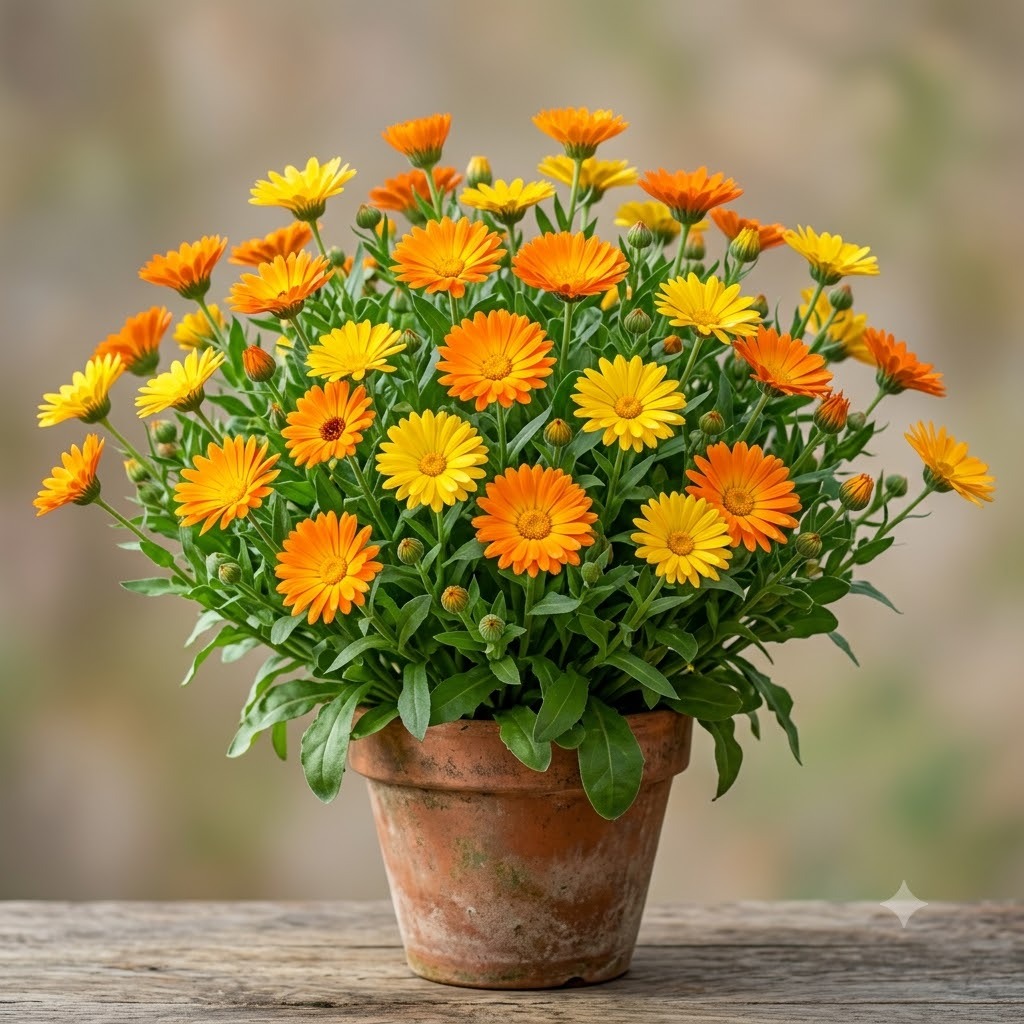
Calendula, often called Pot Marigold, is a cheerful, easy-going hardy annual that has earned a place in cottage gardens, herb beds, and kitchen gardens for centuries. It produces a steady succession of bright orange and yellow daisy-like flowers over a remarkably long season, thriving in cool weather when many other flowers struggle. The petals are edible, giving it a place at the table as well as in the border, and the plant self-seeds happily, so a single sowing can return year after year. Undemanding, quick from seed, and generous with its blooms, calendula is one of the friendliest plants for beginners and busy gardeners alike.
Origin & Natural Habitat
Calendula is thought to originate around the Mediterranean and southern Europe, where its wild relatives grow in open, sunny, disturbed ground with mild winters and cool springs. This heritage explains its love of cool-season growing: it germinates and flowers best in the milder parts of the year and often fades or pauses in the peak of summer heat. It has been cultivated for so long, both as an ornamental and a herb, that it is now grown across temperate regions worldwide. Its long history in kitchen gardens gives it the old name "pot marigold," referring to its use in the cooking pot - not to be confused with the unrelated French and African marigolds of the genus Tagetes.
Appearance
Calendula forms a bushy, upright plant, usually 30 to 60 cm tall, with soft, slightly sticky, aromatic light-green leaves. The flowers are daisy-like, single or double, in warm shades of orange, gold, apricot, cream, and yellow, often with darker centers. Blooms are typically 5 to 8 cm across and open in sunshine. As the flowers fade they form distinctive curved, ridged seeds arranged in a ring. The overall look is informal and cheerful, at home in relaxed cottage and kitchen-garden plantings rather than formal beds.
Why People Grow It - Qualities & Benefits
- Very easy from seed: quick, reliable germination and no special care needed.
- Long flowering season: blooms for months, especially in cool weather, with regular deadheading.
- Edible petals: the orange and yellow petals are edible and used to color and garnish food.
- Cool-season performer: flowers when many summer annuals are not yet going or have finished.
- Self-seeding: drops seed freely and often returns on its own each year.
- Pollinator-friendly: open flowers attract bees, hoverflies, and other beneficial insects.
Care
Light & Position
Calendula flowers best in full sun but tolerates light shade, which can actually help it keep going through hot spells. An open, sunny position gives the most blooms in cooler weather.
Soil
It is not fussy about soil and grows well in average, well-drained ground. It tolerates poor soil but appreciates reasonable drainage. Overly rich soil is not needed for good flowering.
Watering
Water to establish young plants and during dry spells; calendula prefers evenly moist but not waterlogged soil. Once established it is fairly resilient. Avoid letting containers dry out completely.
Feeding
Calendula needs little or no feeding in reasonable soil. Excessive feeding is unnecessary; a modest amount of compost worked into poor soil is plenty.
Maintenance
Deadhead regularly - removing faded flowers is the single best way to prolong blooming and keep the plant tidy and productive. If you want it to self-seed, leave some late flowers to set seed. Plants may look tired in the heat of high summer; cutting them back can encourage a fresh flush as cooler weather returns.
Hardiness & Winter Care
Calendula is a hardy annual, tolerating light frosts far better than tender annuals. In mild climates seed sown in autumn can overwinter for early spring flowers. It completes its life cycle in a year but reliably self-seeds, so it often behaves as if permanent in the garden.
Planting & Propagation
Calendula is grown from seed and is very easy to raise. Sow directly where it is to grow in spring, after which it germinates quickly, or start earlier indoors and transplant. In mild-winter areas, an autumn sowing gives sturdy plants that flower early the next spring. Sow about 1 cm deep and thin seedlings to around 20 to 30 cm apart. It self-seeds readily, so once you have grown it, volunteer seedlings often appear the following season, which you can leave in place or move.
Common Problems & Pests
- Powdery mildew: a white powdery coating can appear on the leaves, especially late in the season or in crowded, humid conditions; improve airflow and spacing.
- Aphids: may cluster on soft new growth and buds; hose off, squash, or let predators handle them.
- Slugs and snails: can nibble young seedlings.
- Heat fade: plants slow down and look tired in intense summer heat, as this is a cool-season plant; cut back for a later flush.
Overall calendula is a healthy, low-trouble plant.
Toxicity & Safety
Considered non-toxic and edible. True calendula (Calendula officinalis) is generally regarded as non-toxic to cats, dogs, and humans, and its petals are edible and traditionally used to color and garnish food. It is one of the safer flowers to grow around children and pets. Do not confuse it with the unrelated Tagetes marigolds, which are different plants. As with any edible flower, use only clean, chemical-free petals and in normal food amounts.
Pros & Cons
Pros
- Very easy and fast from seed.
- Long flowering season, especially in cool weather.
- Edible, useful petals.
- Self-seeds and often returns each year.
- Attracts bees and beneficial insects.
Cons
- An annual - each plant lasts one season.
- Slows and fades in high summer heat.
- Needs deadheading for the longest display.
- Can self-seed a little too freely for tidy gardeners.
- Prone to powdery mildew late in the season.
Best Suited For
- Cottage gardens and informal borders.
- Kitchen and herb gardens.
- Edible flower and cutting gardens.
- Cool-season and early or late displays.
- Beginner and children's gardens.
Not ideal for very formal plantings, or hot climates where it struggles through peak summer without a cool break.
FAQ
Is calendula the same as marigold? It is called "pot marigold," but true calendula (Calendula officinalis) is a different plant from the French and African marigolds sold as Tagetes. Calendula is the edible, cool-season herb-garden marigold with soft orange and yellow daisy flowers.
Can you eat calendula flowers? Yes. The petals are edible and have long been used to color and garnish food, such as soups, rice, and salads. Use only clean, chemical-free petals in normal food quantities.
Why has my calendula stopped flowering in summer? Calendula is a cool-season plant and often slows or fades in intense summer heat. Keep deadheading, and try cutting the plant back so it produces a fresh flush of blooms when cooler weather returns.
Does calendula come back every year? Each plant is an annual and lasts one season, but calendula self-seeds freely, so volunteer seedlings usually appear the following year, making it feel like a returning plant.
How do I keep calendula blooming for as long as possible? Deadhead regularly - removing faded flowers before they set seed encourages the plant to keep producing new blooms over a long season. Growing it in cooler weather and full sun also helps.