Nasturtium (Tropaeolum majus)
The Nasturtium is one of the easiest and most cheerful annuals a gardener can grow - a plant that rewards beginners and children with almost no effort.
🗓️ Last reviewed: July 2026
Overview
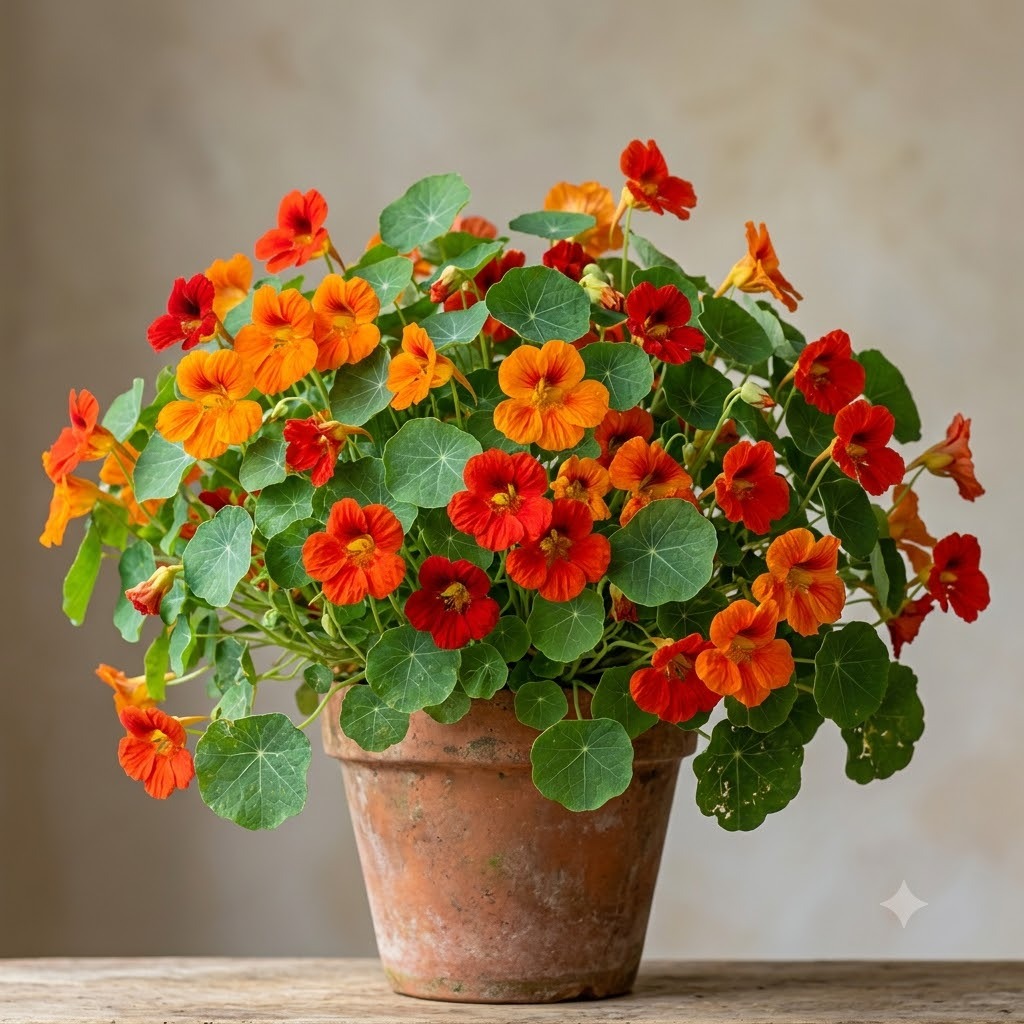
The Nasturtium is one of the easiest and most cheerful annuals a gardener can grow - a plant that rewards beginners and children with almost no effort. From large seeds that sprout quickly and reliably, it produces round, water-lily-like leaves and vivid trumpet-shaped flowers in fiery orange, red, yellow, and cream. It comes in mounding bushy forms for beds and containers, and trailing or climbing forms that tumble over walls and scramble up supports. Best of all, the whole plant is edible, with a fresh peppery taste, and it doubles as a useful companion in the vegetable patch. If you want a fast, fuss-free, generous plant, the nasturtium is hard to beat.
Origin & Natural Habitat
The garden nasturtium comes from the cool highlands of the Andes in South America, particularly Peru, Bolivia, and Colombia. In the wild it grows as a sprawling, scrambling plant in open, often rocky and nutrient-poor ground. This mountain origin explains two of its key habits: it does not need rich soil to thrive - in fact it prefers lean ground - and it grows best in mild, cool conditions rather than intense heat. It was brought to Europe from the Americas centuries ago and quickly became a cottage-garden favorite. Note that despite the common name shared with watercress, it is unrelated to the true nasturtiums of the genus Nasturtium.
Appearance
Nasturtiums have distinctive round, shield-shaped (peltate) leaves, usually mid to bright green, sometimes variegated, held on long stalks that join near the center of the leaf. The flowers are showy, funnel-shaped blooms with a backward-pointing spur, in warm shades of orange, scarlet, gold, yellow, mahogany, and creamy pastels, often with contrasting throats. Mounding bush types stay compact at around 30 cm, ideal for edging and pots. Trailing and climbing types can scramble 1.5 to 3 m across the ground or up a support, clinging by twisting leaf stalks. The whole plant has a fresh, slightly succulent feel.
Why People Grow It - Qualities & Benefits
- Extremely easy: big seeds, fast germination, and no fuss make it perfect for beginners and children.
- Long, generous flowering: blooms from early summer until the first frosts.
- Edible and useful: leaves, flowers, and unripe seed pods all have a peppery, watercress-like flavor.
- Thrives on poor soil: happy in lean ground where fussier plants struggle.
- Versatile forms: mounding types for pots and edging, trailing types for baskets, walls, and ground cover.
- Companion planting: widely grown as an aphid "trap crop" and to attract pollinators to the vegetable garden.
Care
Light & Position
Nasturtiums flower best in full sun, ideally at least six hours a day. They will grow in part shade, but produce more leaves and fewer flowers there. A sunny, open spot gives the most blooms.
Soil
This is the key to a flower-filled nasturtium: grow it in poor to average, well-drained soil. Rich, fertile, heavily fed soil produces lush leaves and very few flowers. Do not add fertilizer or rich compost - lean ground is exactly what this plant wants.
Watering
Water young plants to establish them, then water moderately in dry spells. Established nasturtiums are fairly drought-tolerant. Avoid overwatering, and make sure containers drain freely, as soggy conditions cause problems.
Feeding
Do not feed. Extra nitrogen leads to leafy plants with hardly any flowers. This is one of the rare garden plants that genuinely performs better when neglected on the feeding front.
Maintenance
Deadhead spent flowers if you want to keep blooms coming and prevent excessive self-seeding, though this is optional. Trim back trailing stems if they outgrow their space. Otherwise nasturtiums need very little attention through the season.
Hardiness & Winter Care
Nasturtiums are frost-tender annuals. They are killed by the first hard frost and are grown fresh each year from seed. In mild climates they may self-seed and reappear the following spring.
Planting & Propagation
Nasturtiums are grown from seed and are among the simplest of all plants to raise. Sow the large seeds directly where they are to grow, after the last frost, about 1 to 2 cm deep, or start them a few weeks earlier indoors in pots. They dislike root disturbance, so if starting indoors, use individual pots and transplant carefully. Germination is quick and reliable. Space bush types around 25 to 30 cm apart. In mild areas they often self-seed, giving free plants year after year.
Common Problems & Pests
- Aphids: nasturtiums famously attract blackfly and other aphids - which is exactly why they are used as a trap crop to draw pests away from vegetables. Hose them off, squash them, or tolerate them while predators build up.
- Cabbage white caterpillars: the leaves are a favorite food; you may find caterpillars chewing holes.
- Too few flowers: almost always caused by soil that is too rich or too much feeding - grow lean.
- Leaf problems: occasional viral mottling or, in damp conditions, some leaf spotting; generally minor.
Nasturtiums are otherwise remarkably trouble-free.
Toxicity & Safety
Non-toxic and edible. The garden nasturtium is considered non-toxic to cats, dogs, and humans, and the leaves, flowers, and young seed pods are commonly eaten - they have a peppery, watercress-like flavor and are popular in salads. Because it is edible, it is one of the safest plants to grow around children and pets. As with any edible, eat only plants you have grown or sourced safely and not treated with chemicals, and use it in normal food quantities.
Pros & Cons
Pros
- Extremely easy and fast from big, beginner-friendly seeds.
- Long, generous flowering all summer into autumn.
- Edible flowers, leaves, and seed pods.
- Thrives on poor soil with no feeding.
- Useful companion and pollinator plant.
Cons
- Frost-tender annual - lasts one season.
- Rich soil or feeding gives leaves, not flowers.
- A magnet for aphids and caterpillars.
- Trailing types can spread widely.
- Can self-seed enthusiastically.
Best Suited For
- Beginner and children's gardens.
- Sunny beds, borders, and edging (bush types).
- Hanging baskets, walls, and ground cover (trailing types).
- Vegetable gardens as a companion and trap crop.
- Edible flower and cottage gardens.
Not ideal for deep shade, or gardeners wanting a permanent perennial rather than a fresh annual each year.
FAQ
Why does my nasturtium have lots of leaves but no flowers? The soil is too rich or you are feeding it. Nasturtiums flower best in poor, lean ground with no fertilizer. Stop feeding, and next time grow them in average or poor soil for far more blooms.
Can you really eat nasturtiums? Yes. The leaves, flowers, and young seed pods are all edible, with a fresh peppery, watercress-like flavor, and are popular in salads. Eat only plants grown safely and not treated with chemicals.
Why are my nasturtiums covered in aphids? Nasturtiums naturally attract aphids, which is why gardeners use them as a "trap crop" to lure pests away from vegetables. You can hose or squash the aphids, or leave them for ladybirds and other predators.
Are nasturtiums easy to grow from seed? Very. The seeds are large and easy to handle, germinate quickly, and can be sown straight into the ground after the last frost. They are one of the best plants for beginners and children.
Do nasturtiums come back every year? Not as the same plant - they are frost-tender annuals killed by winter. However, in mild climates they often self-seed and pop up again the following spring on their own.