How to Grow Asparagus: A Patient Bed That Pays Back for Decades
A practical guide to growing asparagus from crowns, from preparing a permanent weed-free bed and waiting through the establishment years to cutting tender spears every spring for twenty years or more.
When to sow & harvest
A rough guide for a temperate climate - shift it to your own zone and last-frost date. Greenhouse growing stretches both windows earlier and later.
Asparagus is the crop that asks you to think in years rather than weeks. You plant it, you wait, and for the first couple of springs you deliberately do not eat much of it at all. That patience is the whole deal with asparagus, and it puts some gardeners off. But those who see it through end up with a permanent bed that throws up tender spears every spring for two decades or more, from a single planting. Few things you grow give back on that scale.
This is not a difficult crop to keep alive; the challenge is discipline. You have to resist harvesting too early, keep the bed relentlessly weed-free, and commit a patch of ground to it more or less permanently. Do that, and asparagus becomes one of the most rewarding things in the garden. It is best thought of as an intermediate project, not because the work is hard, but because it demands planning and restraint that a quick salad crop never does.
Why grow asparagus
The first reason is flavour and freshness. Asparagus loses quality fast after cutting, so shop spears are rarely as sweet and tender as ones you cut and cook the same day. Home-grown asparagus in season is a genuine treat, and it is also expensive to buy, which sharpens the appeal of growing your own.
The second reason is the long return. Once established, an asparagus bed comes back stronger each year with almost no replanting. The upfront investment of ground, patience and a bit of preparation is real, but it is a one-off. After that you get a free harvest every spring for twenty years or more.
The honest cost is time and space. You give over a permanent bed, you wait two to three years for a proper crop, and the harvest season each year is short, only a few weeks in spring. If you want fast results or you move house often, asparagus may not suit you. If you are staying put and can be patient, few crops reward you better over the long run.
Choosing a variety
Asparagus is grown from crowns, which are the dormant root systems of one-year-old plants. You can raise it from seed, but crowns are far quicker and are what most gardeners buy, so they are the sensible starting point.
Modern all-male varieties are the ones to look for. Male plants put their energy into spears rather than into producing seed, so they crop more heavily and, as a bonus, do not self-seed weedy little seedlings all over the bed. These improved all-male types are the mainstay of a good modern asparagus bed and are worth choosing over older mixed varieties.
You will also see purple-speared varieties, which are sweeter and more tender raw and make a nice change, though they tend to lose their colour on cooking. For a first bed, a reliable all-male green variety is the dependable choice, with a few purple crowns added later if you fancy the variety.
When you buy, look for firm, plump, healthy crowns with no sign of rot or drying out, and plant them promptly rather than letting them sit around.
Planting and starting off
Because the bed will be in place for decades, preparation is the most important work you will ever do for this crop, and it all happens before the crowns go in. Choose a sunny, well-drained spot, because asparagus hates sitting in wet ground over winter. Then clear the ground thoroughly of every scrap of perennial weed. This matters enormously: once the crowns are in you cannot dig the bed over, so any weed left behind becomes a permanent lodger. Take your time and get the ground genuinely clean.
Improve the soil with plenty of well-rotted organic matter to give the crowns a rich, free-draining home. Traditionally, crowns are planted in a trench with a low ridge of soil along the bottom. You set each crown on top of the ridge and spread its roots down either side like a spider, then cover with soil so the crown sits a little below the surface. Space the crowns generously and plant in spring.
After planting, the single most important rule begins: you do not harvest in the first year, and you harvest only very lightly in the second. Let the spears grow up unchecked into tall, ferny foliage. That fern is not a waste - it is the plant building up the underground crown, feeding the reserves that every future harvest depends on. Cut too soon and you starve the crown and weaken the bed for good.
Where to grow
Asparagus is firmly an outdoor, in-the-ground crop that needs a permanent home. It is not suited to pots for the long term, because the crowns spread and need room and consistency over many years. A dedicated bed in the open garden is what it wants.
Pick the position with care, because you are committing to it. Full sun is best, and good drainage is essential, since waterlogged winter soil rots the crowns. A raised bed can be a good answer on heavier ground, helping the crowns stay drier through winter. Choose a spot where the bed will not be in the way of other cultivation, because you will not be digging or rotating this ground - it stays put and undisturbed for as long as the bed lasts.
Because the fern grows tall in summer, avoid a place where it will shade out low crops you care about, and give some thought to shelter, as the tall summer growth can be knocked about by strong wind.
Day-to-day care
The recurring theme of asparagus care is weeding, gently and forever. Because you cannot dig the bed, weeds must be kept down by hand-weeding and mulching rather than by cultivation. Hoeing risks slicing into the shallow crowns, so weed carefully by hand and lay a mulch to suppress what you can. A weedy asparagus bed is a declining one, so this is the job that matters most.
Beyond weeding, the plants like a feed to keep the crowns strong. A dressing of a general fertiliser or a mulch of well-rotted organic matter in spring, and again after the harvest season ends, keeps the plants vigorous for the years ahead. Water during dry spells, especially while the bed is young and establishing.
The other seasonal ritual concerns the fern. Let it grow all summer and turn golden in autumn - that is the plant recharging its reserves. Once it has yellowed and died back, cut it down close to the ground and clear it away, which also removes any overwintering pests. Then the bed rests until spears push up again the following spring.
Common problems and pests
The pest most associated with this crop is asparagus beetle. Both the adults, which are distinctively marked, and their grubs feed on the spears and the fern, and a bad infestation can strip the foliage and weaken the crowns. The practical defence is vigilance: check plants regularly through the growing season, pick off beetles and grubs by hand when you spot them, and clear away the old fern in autumn so they have nowhere to overwinter. Caught early, they are manageable.
Slugs can damage emerging spears in spring, nibbling the tender tips just as they appear, so keep an eye out during the cutting season. Beyond that, the main problems are cultural rather than pest-driven. Poor drainage leading to crown rot is the classic killer of an asparagus bed, which is why the choice of a well-drained site matters so much. Weeds, as already stressed, are a slow but serious threat because they compete with the crowns and cannot be dug out once the bed is planted.
Overall, a well-sited, well-weeded bed is remarkably trouble-free. Most asparagus failures trace back to a wet position, a weedy bed, or harvesting too hard too soon rather than to any dramatic disease.
Harvesting
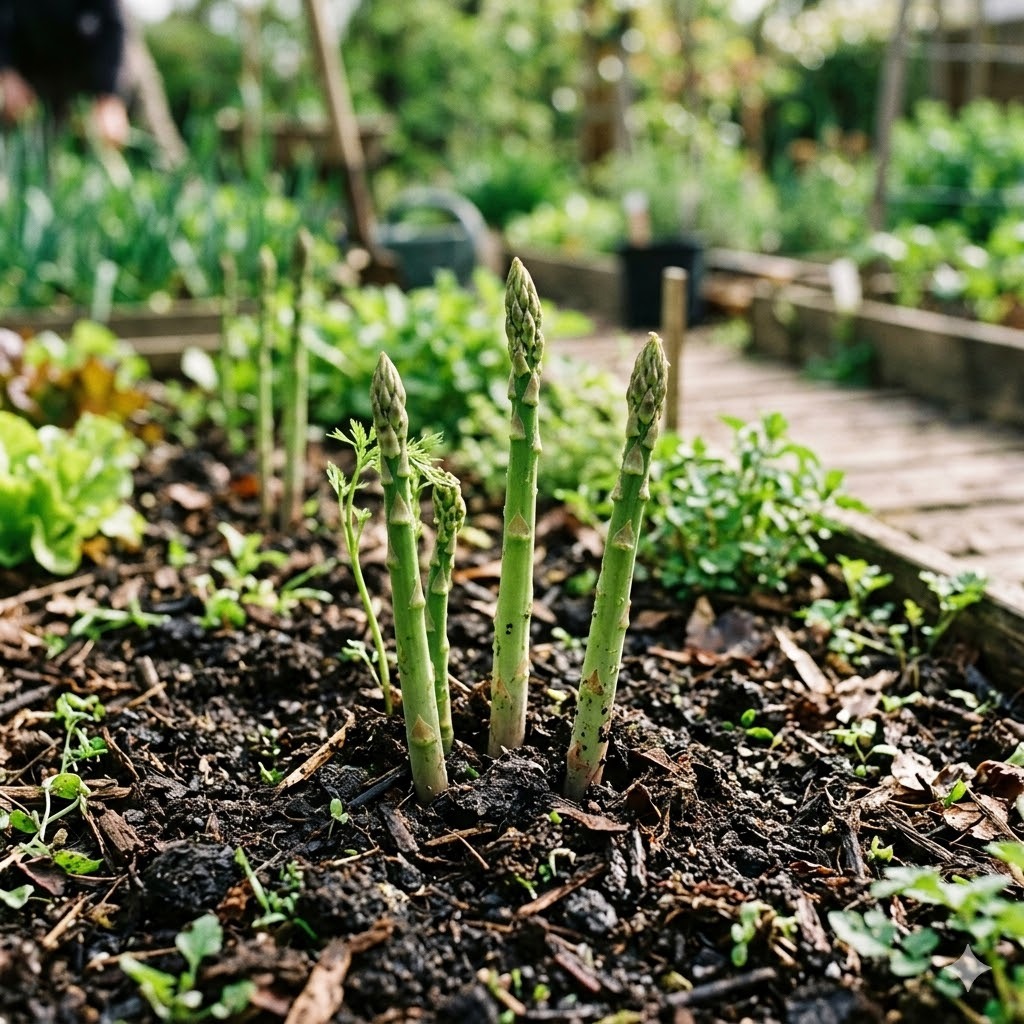
The reward finally arrives, usually in the third spring after planting, when you can begin cutting properly. Spears push up from the ground in mid-spring, and you harvest them while they are young, tight-tipped and tender, cutting or snapping them off at or just below soil level when they are a decent length. Cut regularly, as often as every couple of days at the peak, because spears grow fast and quickly become tough and open at the tip if left.
The season is short and this is part of asparagus's character: a burst of harvesting over roughly six to eight weeks in spring, and then you stop. Knowing when to stop is as important as knowing when to start. Once the main season ends, you deliberately leave the remaining spears to grow up into fern, so the plants can rebuild the crowns for next year. Keep cutting past that point and you exhaust the plants and reduce future crops.
In the establishment years, remember the restraint: nothing in year one, only a light cut over a week or two in year two, and full harvesting only from year three onward once the crowns are strong.
Storing and preserving
Asparagus is at its very best eaten the day it is cut, when it is sweetest and most tender, so fresh use is always the priority. It does not keep well for long as a fresh vegetable; stood upright in a little water in the fridge, like a bunch of flowers, it will hold for a few days but steadily loses quality.
For a genuine surplus, freezing is the practical option. Trim the spears, blanch them briefly in boiling water, cool them fast in iced water, drain well and freeze. As with most vegetables, blanching first preserves the colour and texture and stops the spears turning limp and flavourless in the freezer. Frozen asparagus is best used in cooked dishes rather than served as a plain side, but it lets you carry a little of the short season through the rest of the year.
Given how brief the harvest window is, most gardeners simply feast on asparagus while it is in season and freeze only what genuinely overflows.
Is it worth it?
If you want a quick return, asparagus is the wrong crop. It asks for a permanent bed, careful preparation, two or three years of patience, and the discipline to keep a weed-free ground and not over-harvest. That is a real commitment, and it is why this crop suits settled gardeners rather than those after fast results.
But for anyone willing to play the long game, asparagus is one of the best investments in the whole garden. A single well-made bed can crop every spring for twenty years or more from that one planting, giving you tender, sweet spears that are expensive to buy and never as good from a shop. Put in the groundwork, keep the bed clean, hold your nerve through the early years, and asparagus rewards your patience for decades.