How to Grow Bay: The Slow Evergreen That Gives You Cooking Leaves All Year
A beginner's guide to growing bay laurel in a pot for a lifetime of cooking leaves, with honest advice on frost, slow growth and the two pests to watch for.
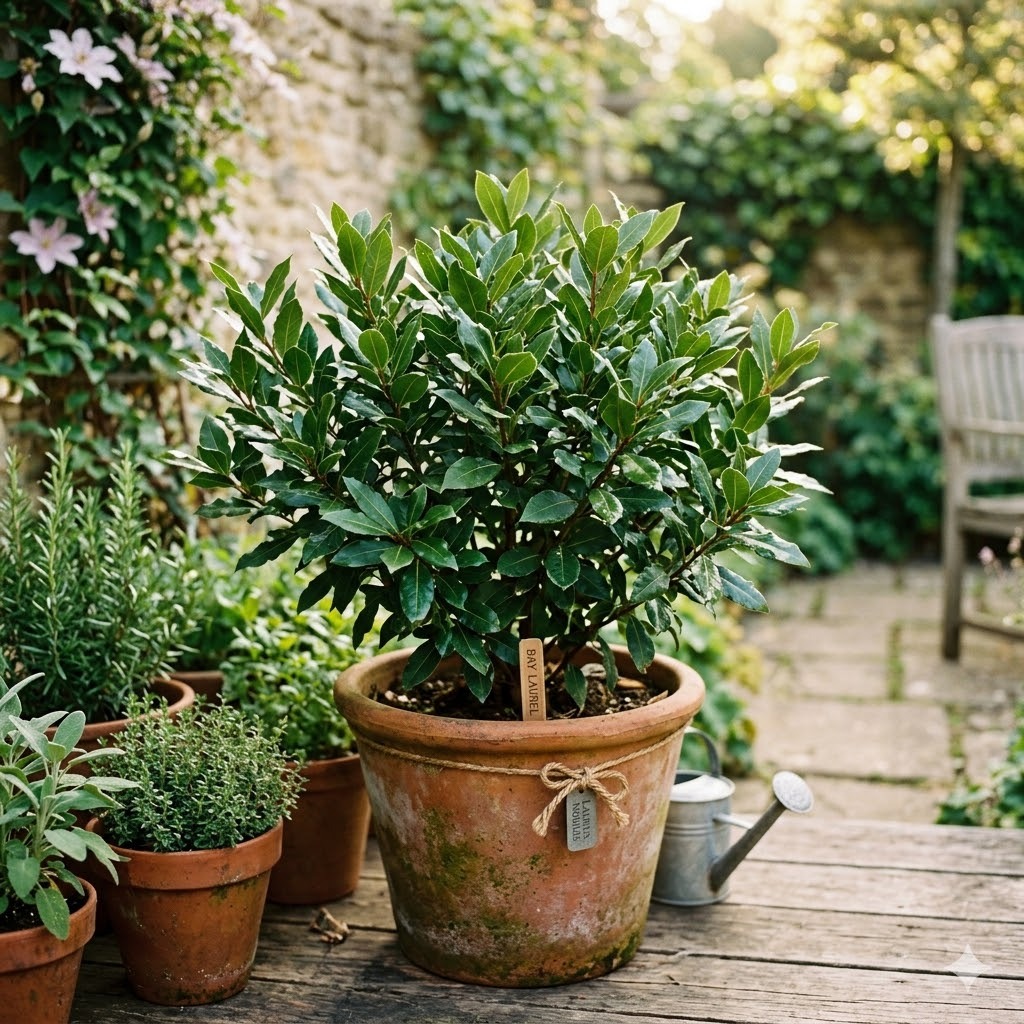
Bay is the patient herb. It will never race away like basil or take over a border like mint, but plant one and look after it and it can quietly supply your kitchen with leaves for decades. A bay laurel is really a slow evergreen shrub or small tree, and its great virtue is that it holds its leaves through winter, so you can pick a fresh leaf for a stew or a stock on the darkest day of the year. It asks for very little, but it does ask for time and a bit of shelter from hard frost while it is young.
Why grow bay
The honest reason to grow bay is convenience that lasts. A single established plant gives you fresh cooking leaves all year round, which is something no annual herb can offer. Where basil and coriander come and go with the seasons, bay just sits there being useful, evergreen and dependable, ready whenever a recipe calls for a leaf.
It is also an investment that pays off over a very long time. Bay is slow to grow, but it is also long-lived, and a well-kept plant can last for decades and become a real feature. That slowness is a feature as much as a drawback: it means the plant needs almost no keeping up with once it is settled, and it will never outgrow its welcome the way a vigorous herb does.
On top of the kitchen use, bay is a genuinely handsome plant. Its glossy dark green leaves look smart in a pot by a door, and it takes clipping well, which is why you so often see it grown as neat lollipop standards or trained into topiary. Few edible plants earn their place on looks alone the way bay does.
Choosing a variety
For most people the plant to grow is simply the common bay, or sweet bay laurel. This is the true culinary bay, the one whose leaves you want for stocks, stews, sauces and slow-cooked dishes. When you buy a plant labelled "bay" or "bay laurel", this is almost always what you are getting, and it is the right choice.
There are a couple of variations you might come across:
- Golden bay - a form with yellower, lighter foliage, grown mainly for its looks in a pot or a bright corner. The leaves are still usable in the kitchen, but people choose it for colour.
- Willow-leaf bay - a narrower-leaved form, again an ornamental variation rather than a different cooking herb.
Do not confuse true bay laurel with other unrelated plants that borrow the "bay" name, such as cherry laurel, which is not the same thing and is not for the kitchen. Buy a plant sold as culinary bay or sweet bay from a reputable source and you will have the right one. For a beginner, the plain common bay is exactly what you want.
Planting and starting off
Bay is almost always started from a bought plant rather than from seed, and for good reason. It is slow and unreliable to raise from seed, and it takes years to reach a usable size, so buying a young plant saves you a great deal of waiting. A small, healthy plant from a garden centre is the sensible starting point for nearly everyone.
The best home for a bay, especially in a cooler area, is a large pot rather than open ground. A pot lets you control the compost and drainage, and, crucially, it lets you move the plant. Choose a good-sized container with drainage holes, use a loam-based potting compost that does not stay sodden, and pot the plant up with room to grow. Bay is not greedy, but it likes a container it can settle into for a few years.
If you garden somewhere reliably mild and want to plant one in the ground, choose a sheltered, well-drained spot in sun or light shade. Just be aware that a bay in the ground cannot be moved out of hard frost, which is a real consideration in colder climates. For most beginners, a pot is the safer and more flexible choice.
Where to grow
Bay likes a bright, sheltered position. A spot in full sun or light shade, out of cold, drying winds, suits it well, and a warm corner near the house is ideal. Good drainage matters more to bay than rich feeding, so wherever it grows, make sure it never sits in cold, waterlogged compost or soil.
The single most important thing to understand about siting bay is frost, particularly while the plant is young. Bay is on the tender side, especially in its early years and in cold areas, and a hard freeze can scorch its leaves brown or, in a really severe spell, damage the whole plant. This is exactly why growing it in a pot is such a sensible approach: when hard frost is forecast, you can move the pot into a porch, a greenhouse, an unheated conservatory or against a sheltered wall, then bring it back out when the cold passes.
An established bay in a mild spot grows tougher with age and often comes through ordinary winters outdoors without trouble. But treat a young plant with care, keep it moveable while it is small, and give it shelter in the worst of the cold, and you set it up for the long life it is capable of.
Day-to-day care
Bay is refreshingly low-maintenance once it is settled, which is one of the joys of growing it. The main jobs are watering, occasional feeding, and clipping to shape, none of them demanding.
Watering matters most for pot-grown plants. Bay does not want to be waterlogged, but a plant in a container can dry out in warm weather, so check it and water when the compost starts to feel dry, letting any excess drain away freely. In the ground, an established bay rarely needs watering except in a long drought. A pot-grown bay also benefits from a liquid feed through the growing season, since it can only draw on the compost you give it, and topping up the surface compost or potting it on every few years keeps it healthy.
Clipping is where bay rewards a little attention. It takes trimming very well, which is why it is so often shaped into standards and topiary, and even if you just want a tidy bush you can prune it to keep a good shape. Clip in late spring or summer, using secateurs rather than shears if you want to avoid cutting the large leaves in half, and shape the plant to your liking. There is no rush and no wrong season within the growing months - bay's slowness means mistakes grow out gently.
Common problems and pests
Bay is a tough, healthy plant on the whole, but there are two pests worth knowing about, and a couple of leaf problems that usually trace back to the weather rather than any disease.
The two pests to watch for are bay sucker and scale insects. Bay sucker is a small insect whose feeding causes the leaf edges to curl, thicken and turn yellow or brown, giving the foliage a distorted, unhappy look. Scale insects show up as small brown or pale bumps stuck to the stems and the undersides of leaves, often with sticky residue and sooty black mould where they have been feeding. For both, catching them early is the key: pick off and destroy badly affected leaves, wipe or rub scale off stems, and keep the plant healthy and unstressed so it can shrug off minor attacks.
Beyond those, most bay troubles are down to conditions. Brown, scorched leaves in winter or early spring usually mean cold or wind damage rather than disease, and the plant often recovers and pushes out fresh leaves in spring. Yellowing leaves can signal waterlogging, a nutrient shortage in an old pot, or simple stress, so check drainage and feeding before assuming the worst. Bay is slow to react to everything, including problems, which gives you plenty of time to put things right.
Harvesting
Harvesting bay could not be simpler, and it is one of the herb's great advantages: because it is evergreen, you can pick leaves whenever you need them, all year round. There is no season to wait for and no glut to deal with - you simply take a leaf or two for the pot as a recipe requires.
Pick mature, fully developed leaves rather than the soft new growth, as older leaves carry more flavour. Snip or pull individual leaves from the plant, and try to harvest in a way that keeps the plant's shape rather than stripping one area bare. A cook rarely needs more than a couple of leaves at a time, so even a modest plant supplies far more than a household will use, and your picking barely dents it.
Many cooks find dried bay leaves actually have a mellower, more rounded flavour than fresh ones, which is unusual among herbs and useful to know. Fresh leaves are a little sharper and more aromatic. Either way, a leaf goes into the pot at the start of cooking and comes out before serving.
Storing and preserving
Because bay is evergreen and you can pick it fresh at any time of year, there is genuinely less need to store it than with almost any other herb. For many growers, "storing" bay just means having the plant by the back door. That said, drying is the traditional and very effective way to keep a supply of leaves.
To dry bay, the simple approaches work best:
- Air drying - lay leaves in a single layer somewhere warm and airy, or hang a small branch up, until the leaves are crisp and dry. This takes a couple of weeks and needs no equipment.
- Storing dried leaves - once fully dry, keep the leaves in an airtight jar out of direct light, where they hold their flavour well for many months.
Unlike many herbs, bay dries without much loss of quality, and dried bay leaves are entirely usable and widely used in cooking. This makes bay one of the easiest herbs to keep a stock of, whether you dry your own or simply pick fresh from the plant as you go. Freezing is possible too, though there is rarely much point when the plant itself keeps its leaves through winter.
Is it worth it?
Yes, if you take the long view. Bay is not the herb for anyone who wants a quick return - it grows slowly and takes a few years to build into a proper plant. But that patience buys you something no annual herb can match: fresh cooking leaves every day of the year, from a handsome evergreen that can go on for decades.
The honest conditions are a good pot, decent drainage, and a bit of care to shelter a young plant from hard frost until it toughens up. Do that, keep an eye out for bay sucker and scale, and give it the occasional clip, and bay becomes one of the most rewarding and least demanding plants in the garden. For a beginner willing to plant now and pick for years, it is well worth it.