How to Grow Beetroot: The Easiest Root for a First-Time Grower
A honest, practical guide to growing beetroot outdoors, from sowing those knobbly seed clusters to pickling the sweet, earthy roots.
When to sow & harvest
A rough guide for a temperate climate - shift it to your own zone and last-frost date. Greenhouse growing stretches both windows earlier and later.
Why grow beetroot
If you are new to growing your own vegetables and want a crop that rewards you quickly without much fuss, beetroot is hard to beat. It is one of the easiest roots you can grow: fast, forgiving, and happy in most soils and most seasons from spring onwards. You sow the seed straight into the ground, keep it watered, and a couple of months later you are pulling glossy roots out of the earth. There is very little that can go badly wrong.
Beetroot is also doubly useful, which makes it excellent value for the small space it takes up. The roots are the obvious prize - sweet, earthy, and brilliant roasted, boiled, grated raw into salads, or pickled. But the leaves are a genuine second crop. Young beetroot leaves are a tasty salad green when small, and larger leaves cook down much like chard or spinach (beetroot and chard are close relatives, so this is no surprise). Nothing is wasted.
Add to that the fact that shop-bought beetroot is nearly always sold ready-cooked and vacuum-packed, or pickled in harsh vinegar, and the case for growing your own gets stronger. Home-grown beetroot eaten fresh has a flavour and firmness you rarely find in the shops. For a beginner, it is one of those crops that quietly builds confidence.
Choosing a variety
Beetroot is not just red globes. There is a decent range of shapes and colours, and picking the right one matters more than you might think.
- Round red is the classic and the best starting point. Look for Boltardy, a variety specifically bred to resist bolting (running to seed prematurely). For a beginner sowing early, that bolt resistance is a real safety net, and Boltardy is widely available and reliable. Start here.
- Cylindrical varieties grow long and sausage-shaped rather than round. They are handy for slicing because you get uniform, even discs, and they can be planted a little closer together for a heavier yield per row.
- Golden beetroot has orange-red skin and sweet yellow flesh that does not bleed the way red beetroot does, so it will not stain everything on the plate. Germination can be a touch slower and less reliable, so sow a few extra.
- White beetroot is mild and sweet with no colour at all - useful if the purple stains put people off.
- Chioggia is the pretty one: cut it open and the flesh is ringed pink and white like a target. The rings fade when cooked but stay vivid raw, so it is best sliced thin into salads.
For your first year, sow a variety of Boltardy for a dependable main crop, and if you want to experiment, tuck in a short row of golden or chioggia alongside.
Sowing and starting off
Here is the one quirk of beetroot worth understanding before you start. Each beetroot "seed" is not a single seed but a cluster - a corky little ball containing several seeds. This is why it is called multigerm. Sow one cluster and you will often get three or four seedlings crowding up together. That is fine, but if you leave them all in place they will fight for space and give you a knot of small, misshapen roots. So you must thin to one seedling per station once they are up and have a couple of true leaves. Pinch or snip the weaker ones off at soil level rather than pulling, so you do not disturb the root of the one you are keeping.
If the thinning sounds like a chore, look for monogerm varieties, which are bred so each seed produces a single seedling. They save the fiddly work, though the choice of monogerm types is narrower.
To sow direct outdoors, wait until the soil has warmed a little in spring - beetroot germinates poorly in cold, wet ground. Draw out a shallow drill about 2 to 3 cm deep, water the bottom if it is dry, and space clusters roughly 10 cm apart along the row, with rows about 30 cm apart. Cover, firm gently, and keep the soil damp until seedlings appear, usually in one to three weeks.
You can sow direct from spring right through to midsummer. The trick for a steady supply is successional sowing: sow a short row every three or four weeks rather than one big batch all at once. That way you pull tender young roots over a long season instead of facing a glut of tough old ones.
If you want an early start or your soil stays cold and wet in spring, sow into modules under cover. Beetroot transplants well as long as you move it while young. Sow two or three clusters per module, thin to the strongest seedling, and plant out once the little roots have filled the cell and the weather has settled.
Greenhouse or garden - where to grow
Beetroot is fundamentally an outdoor crop, and that is where the vast majority of gardeners should grow it. It does not need the heat of a greenhouse, and a greenhouse is far better used for tomatoes, cucumbers, and other tender crops that genuinely need the protection.
The one sensible role for cover is at the very start of the season. A greenhouse, cold frame, or even a windowsill is useful for raising early module-sown plants for planting out, or for warming the soil under a cloche so you can sow direct a few weeks sooner. Beyond that head start, beetroot wants to be out in the open ground.
Choose a spot in full sun or light shade. Beetroot is not fussy about soil but it does best in ground that is fertile, free-draining, and not freshly manured. A stony or heavily compacted bed can produce forked and distorted roots, so a light fork-over and a rake to a fine tilth beforehand pays off. Avoid soil that has just had a lot of fresh nitrogen-rich manure - more on why below.
Day-to-day care
The good news is that once beetroot is up and thinned, it more or less looks after itself. There are just two things to get right.
The first is water. Beetroot needs steady, even moisture. Let the soil dry out and the roots respond badly: they turn woody and tough, and the plants become far more likely to bolt (run to seed). A sudden drenching after a dry spell can also make roots split. So aim for consistency - a good soak in dry weather rather than the occasional splash, and a mulch to hold moisture in during summer helps a lot.
The second is feeding, or rather not overfeeding. Beetroot does not want rich, nitrogen-heavy soil. Too much nitrogen pushes lush leafy top growth at the expense of the roots, which is the opposite of what you want. On reasonably fertile ground you will not need to feed at all. This is why freshly manured beds are a bad idea for beetroot - save the manure for hungry crops like brassicas and follow them with beetroot the next year.
Beyond that, keep the rows weeded, especially while plants are small, and hoe carefully so you do not nick the shallow roots.
Common problems and pests
Beetroot is refreshingly trouble-free, which is another reason it suits beginners. There are only a few things to watch for.
- Bolting is the most common disappointment. If a plant is checked - by cold, by drought, or by a sudden temperature swing - it may decide to run to seed instead of swelling a root, sending up a tough flower stalk. Once it bolts the root is spoiled. Prevent it by not sowing too early into cold ground, keeping plants evenly watered, and choosing a bolt-resistant variety like Boltardy for early sowings.
- Leaf miner is the pest you are most likely to see. The larvae tunnel between the layers of the leaf, leaving pale, blistered squiggles. It looks alarming but rarely troubles the root itself. Pick off and destroy badly affected leaves and the plant carries on regardless.
- Birds can be a nuisance on seedlings, pecking them out just as they emerge. A little netting or some twiggy cover over freshly sown rows sees them safely through the vulnerable stage.
That really is most of it. Beetroot is not plagued by the slugs, caterpillars, and diseases that trouble so many other crops.
Harvesting
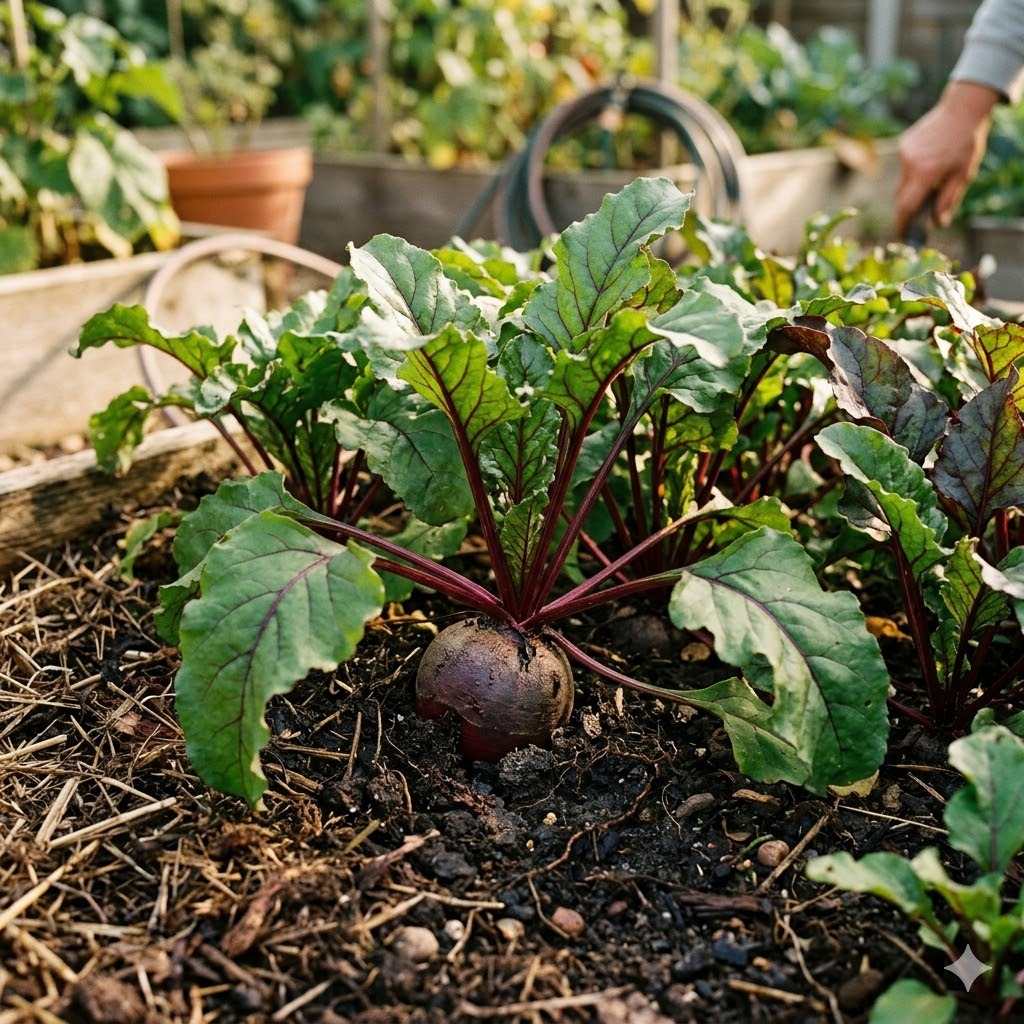
Do not wait for beetroot to reach the size you see in the shops. The single best piece of advice with this crop is to pull them young and tender. Roots are at their sweetest and most succulent somewhere between golf-ball and tennis-ball size. Left in the ground too long they grow large, coarse, and woody, losing the delicacy that makes home-grown beetroot worth the trouble.
Because you sowed successionally, you can start pulling the largest roots first while the smaller ones keep growing, giving you a rolling harvest. Ease each root out with a hand fork if the soil is firm, and take care not to break the skin.
When you harvest, twist off the leaves an inch or two above the crown rather than cutting flush - beetroot "bleeds" its colour and moisture through a cut, and leaving a short stub keeps the roots firmer. Save the young leaves for the kitchen; they are too good to compost.
Storing and preserving
Beetroot keeps well, which is part of its appeal. You have several options.
For the freshest keeping, in mild areas you can simply leave roots in the ground and lift them as needed through autumn, protecting them with a layer of straw if hard frost threatens. In colder or wetter gardens, lift the roots before the ground freezes or turns to sludge, twist off the tops, and store them in boxes of just-damp sand somewhere cool, dark, and frost-free like a shed or garage. Packed so they do not touch, they will keep for weeks or months.
The classic preserve, and the reason so many people grow beetroot in the first place, is pickling. Home-pickled beetroot in a good spiced vinegar is a world away from the sharp shop version. Boil or roast the roots until tender, slip off the skins, slice, and pack into sterilised jars with hot spiced vinegar. It stores for months and is one of the most satisfying things a small vegetable patch can produce.
You can also roast and freeze. Roasting concentrates the sweetness; once cooled, the roasted chunks freeze well and go straight into soups, salads, and traybakes through winter. Raw beetroot does not freeze successfully, so cook it first.
Is it worth it?
For a beginner, beetroot is close to a perfect crop. It is genuinely easy, it germinates and grows fast, and it forgives most of the mistakes a first-time gardener makes. It has few pests, needs little feeding, and asks for not much more than a spot in the sun and steady watering.
On top of that, you get two crops from one - sweet, earthy roots and a supply of tasty leaves - and the roots pickle and store better than almost anything else you can grow in the same space. Fresh home-grown beetroot, pulled young, is a real step up from the vacuum-packed stuff in the shops.
So yes, it is well worth it. If you are only going to grow a handful of things in your first year, put a row or two of beetroot among them. Sow a little and often, keep it watered, pull it young, and you will get more out of it than the small effort it costs.