How to Grow Blueberries: The Pot-Grown Fruit That Needs Acid Soil to Thrive
A practical guide to growing blueberries in a pot of ericaceous compost, from choosing two varieties for a better crop to freezing your harvest for winter.
When to sow & harvest
A rough guide for a temperate climate - shift it to your own zone and last-frost date. Greenhouse growing stretches both windows earlier and later.
Blueberries are one of the most rewarding fruits you can grow at home, and one of the most misunderstood. Handled right, a couple of bushes will hang with sweet, dusky-blue berries for weeks in high summer. Handled like an ordinary fruit bush, though, they sulk, yellow and refuse to crop. The trick is that blueberries are fussy about one thing above all others - soil - and once you meet that demand, the rest is straightforward.
This is why most people grow blueberries in a pot rather than the open ground. It is not that they cannot go in a border, but that a pot lets you give them exactly the acid soil they need, which very few gardens have naturally. Get that part right and blueberries are genuinely easy to keep happy.
Why grow blueberries
The honest reason is flavour and price. Shop blueberries are picked firm and shipped far, and they can be watery, bland or sharp. A berry ripened fully on the bush, warm from the sun, is a different thing altogether - sweet, aromatic and worth waiting for. They are also expensive to buy by the punnet, so a productive bush earns its keep.
They are also a genuinely good-looking plant. A blueberry bush is neat and tidy, with pretty little bell-shaped flowers in spring, glossy foliage through summer, and leaves that often turn a fiery red in autumn. Grown in a decent pot, a pair of bushes will happily sit on a patio or by a doorway and look ornamental for most of the year, not just at harvest.
The one thing to be clear-eyed about is that blueberries are particular. They will not tolerate ordinary soil, they resent tap water in hard-water areas, and they crop far better with a companion for pollination. None of this is difficult, but it does mean blueberries reward a little planning rather than being stuck in the ground and forgotten.
Choosing a variety
The most important choice is not which single variety to grow, but to grow two different ones. Blueberries will set some fruit alone, but two different varieties flowering at the same time cross-pollinate each other and crop far more heavily, with bigger, better berries. If you have room for only one bush you will still get fruit, but a pair is where blueberries really pay off.
There are three broad types to know:
- Highbush - the most common and the best all-rounder for most gardens. These are the standard blueberries you will see for sale, reliable and productive, growing to around waist or chest height.
- Half-high - compact, hardy crosses bred to stay smaller and shrug off cold winters. A good pick where space is tight or where winters are severe.
- Rabbiteye - vigorous types suited to warmer areas, cropping later in the season. Worth considering if you have a hot summer and want to stretch the picking window.
Beginners rarely go wrong choosing two different highbush varieties that flower around the same time. Aim for one early and one that overlaps with it, and you cover pollination while spreading the harvest.
Planting and starting off
Blueberries have one non-negotiable demand: acid soil. They need ericaceous conditions - the same kind that suits rhododendrons and heathers - and in ordinary or limey soil they simply cannot take up the nutrients they need. This is why the standard advice is to grow them in a pot of ericaceous (acid) compost, where you control the soil completely.
Choose a decent-sized container, at least the size of a large bucket, with plenty of drainage holes. Fill it with ericaceous compost, never ordinary multipurpose or garden soil, both of which are usually too alkaline. Plant your bush at the same depth it sat in its nursery pot, firm it in gently, and water it well to settle the compost around the roots. If you want bushes in the ground, dig out a wide planting hole and backfill with ericaceous compost, though a pot is simpler and far more reliable.
The other thing to sort out from day one is water. In hard-water areas, tap water is often too limey and will slowly raise the compost's alkalinity, undoing all your work and yellowing the leaves. Wherever you can, water with rainwater collected from a butt instead. Setting up a water butt near your bushes is one of the best things you can do for them.
Where to grow
Blueberries want full sun for a good crop. A bright, sheltered spot - a patio, a sunny corner, against a warm wall - is ideal. They will grow in part shade, but the berries will be fewer and less sweet, so give them the sunniest position you sensibly can.
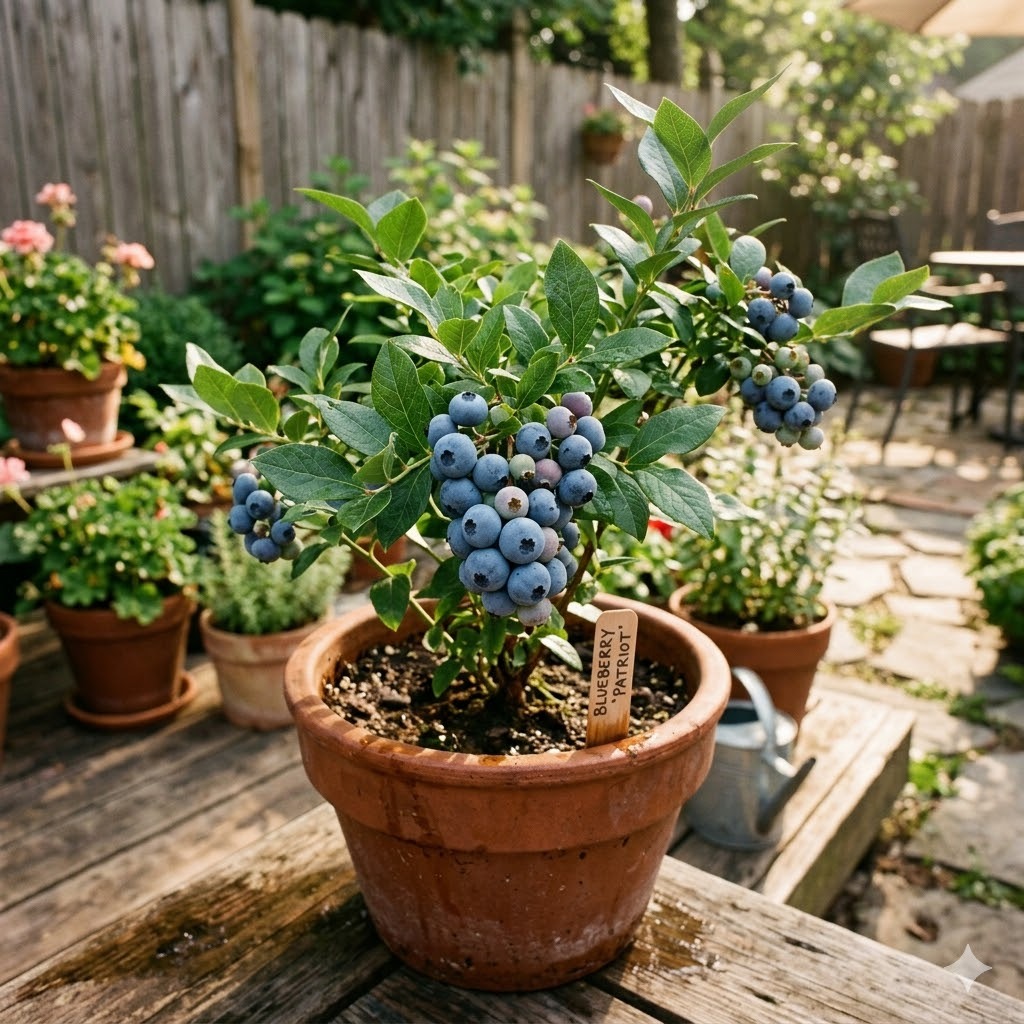
Because they are so often grown in pots, blueberries suit small spaces beautifully. A pair of containers on a patio, balcony or by the back door works perfectly, and it keeps the bushes close to hand for watering and picking. Group your two varieties near each other so pollinating insects can move easily between them.
Drainage matters as much as sun. Blueberries have fine, shallow roots that hate sitting in cold, waterlogged compost, so make sure every pot drains freely and never stands in a saucer of water. Free-draining ericaceous compost, full sun and rainwater are the three conditions they will not compromise on.
Day-to-day care
The single most useful habit is consistent watering with the right water. Those shallow roots dry out fast in a pot, especially in warm weather, so check regularly and never let the compost dry out completely, particularly while the fruit is swelling. At the same time, do not let the pot sit sodden. Aim for evenly moist, and use rainwater whenever you can.
Feeding is simple: use a fertiliser formulated for ericaceous or acid-loving plants, applied through the growing season as directed. Ordinary feeds can nudge the compost too alkaline over time, so stick to the acid-loving type. Every couple of years, topping up or refreshing the ericaceous compost helps keep conditions right, as the acidity naturally fades with time and watering.
Pruning is light and only really needed once the bush is a few years old. In winter, take out any dead, weak or crowded stems, and gradually remove the oldest wood over the years to encourage strong new growth, which carries the best fruit. Young bushes barely need touching. A mulch of composted bark or ericaceous material on top of the pot helps hold moisture and keep the roots cool through summer.
Common problems and pests
The most common blueberry problem is not a pest at all - it is yellowing leaves, and it almost always comes back to soil or water. Leaves that turn pale or yellow between the veins usually mean the compost has become too alkaline, often from tap water or an unsuitable feed. The cure is to switch to rainwater, use an ericaceous feed, and refresh the acid compost.
The biggest actual threat to your harvest is birds. Blackbirds and others will strip a ripening bush with astonishing speed, often taking the fruit the day before you meant to pick it. The reliable answer is to net the bushes as the berries start to colour up, using netting held clear of the fruit so birds cannot reach through it. A simple frame or a few canes over the pots does the job.
Beyond that, blueberries are refreshingly trouble-free. They are not plagued by the pests and diseases that trouble many fruits, so as long as the soil is acid, the water is soft, and the birds are kept off, you will rarely face much else.
Harvesting
Patience is the whole secret to picking blueberries. A berry that has just turned blue is not yet ripe - it needs several more days on the bush to sweeten fully. Wait until the berries are a deep, dusky blue all over and come away with barely a tug. If you have to pull, they are not ready.
Because the berries on a bush ripen over a period of weeks, you pick a little and often rather than all at once. Go over your bushes every few days through the season, taking only the fully ripe fruit and leaving the rest to finish. A ripe blueberry practically drops into your hand, so gather them gently into a shallow container to avoid crushing the ones underneath.
Storing and preserving
Fresh blueberries keep reasonably well - a few days in the fridge is no problem, unlike many soft fruits - but a good harvest usually outpaces what you can eat straight away, and that is where they really shine.
Blueberries freeze superbly, better than almost any other soft fruit:
- Open-frozen whole - spread the dry berries in a single layer on a tray and freeze until solid, then tip them into bags or tubs. Freezing them loose first stops them clumping into a solid block, so you can pour out just what you need. They go straight from the freezer into baking, porridge, smoothies and sauces.
- As jam or compote - blueberries cook down into a lovely jam or a quick compote, capturing a summer glut in jars for the rest of the year.
Because they hold up so well frozen, freezing is the obvious way to bank a big pick. A couple of well-grown bushes can fill the freezer with far better fruit than the shops sell.
Is it worth it?
Yes, provided you go in with your eyes open. Blueberries are not the plant to shove in a border and ignore, and if you try to grow them like an ordinary fruit bush they will disappoint. But given what they ask for - a pot of ericaceous compost, rainwater rather than hard tap water, full sun, a second variety for pollination, and netting against the birds - they are genuinely easy and generous.
For the right grower they are close to ideal: neat, ornamental, container-friendly, and heavy-cropping once established, with fruit that far outclasses the punnets in the shops. Meet their few firm demands and a pair of bushes will reward you every summer for years.