How to Grow Cabbage: Firm Heads From Spring to the Depths of Winter
A practical guide to growing spring, summer and winter cabbages outdoors, from firm transplanting to netting against pigeons and fermenting the surplus into sauerkraut.
When to sow & harvest
A rough guide for a temperate climate - shift it to your own zone and last-frost date. Greenhouse growing stretches both windows earlier and later.
Why grow cabbage
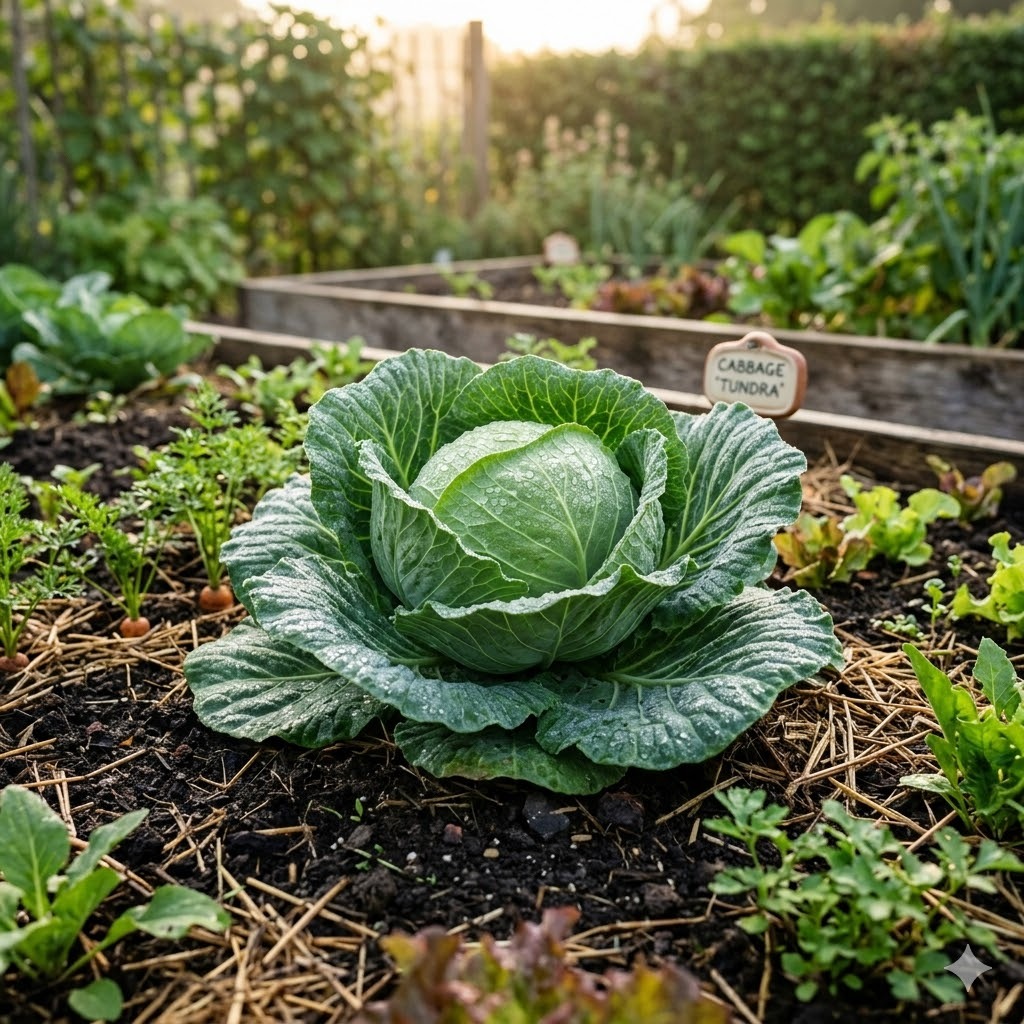
Cabbage is one of those crops that quietly earns its keep. Choose your types well and you can cut heads from your own garden across most of the calendar - tender spring greens in April and May, solid summer heads through the warm months, and dense storage cabbages that sit in a cool shed well into the new year. Few vegetables give you that kind of year-round reach from a single patch of ground.
It is honest, unglamorous food. A good cabbage gives you a dense head of leaves that shreds into slaws, boils down as a side, ferments into sauerkraut, or forms the backbone of a soup. It is also genuinely cheap to grow: a packet of seed costs less than a couple of shop-bought heads and gives you dozens of plants.
I will be straight with you though - cabbage is rated intermediate for good reason. It is not difficult exactly, but it is fussy about firm ground, it is hungry, and it is a magnet for caterpillars, pigeons and root pests. Get the groundwork right and it is very forgiving. Cut corners and you get loose, leafy plants that never form a proper head.
Choosing a variety
The single most important decision is not which named variety to buy, but which type. Cabbages are grouped by their season, and matching the type to when you want to eat is what lets you crop for much of the year.
- Spring cabbage is sown in late summer, overwintered as small plants, and cut the following spring. These are your loose spring greens and the first pointed hearts of the year, filling the gap when little else is ready.
- Summer cabbage is sown in early spring under cover or on a windowsill, and matures through summer. Fast, tender and reliable - a good place to start.
- Autumn and winter cabbage includes the big drumhead and Savoy types. Savoys with their crinkled leaves are properly hardy and stand in the ground through frost.
- Winter storage cabbage (white Dutch types) forms rock-solid heads that you cut in autumn and keep for months in a cool shed.
- Red cabbage behaves like a summer or autumn type but gives you those deep purple heads for braising and pickling.
My honest advice for an intermediate grower: pick two or three types across the seasons rather than a dozen of one. A few summer heads, some Savoys for winter standing, and a red cabbage for variety will teach you far more than a single big sowing.
Sowing and starting off
Cabbage transplants beautifully, so almost nobody sows it where it is to grow. You raise young plants, then move them to their final spacing. There are two common routes.
Modules are the tidiest. Sow one or two seeds per cell about 1.5 cm deep in a tray of multipurpose compost, thin to the strongest seedling, and grow on until each plant has four or five true leaves and a decent rootball. Modules give you an intact rootball that transplants with barely a check.
A seedbed is the traditional route: sow thinly in shallow drills in a spare corner of the garden, then lift the young plants when they are big enough. It saves compost and space but the plants get a bigger check when you lift them bare-rooted.
Timing follows the type. Summer cabbage goes in from late winter to early spring under cover; autumn and winter types in mid to late spring outdoors; spring cabbage in mid to late summer. Read the packet, because this varies by variety.
When it comes to transplanting, here is the rule that matters most for brassicas: plant firmly. Cabbages need to sit in firm ground with their roots pressed in tight. A loose plant makes a loose, leafy head that never hearts up. Water the plants an hour before you lift them, set each one so the lowest leaves sit just above the soil, and firm the soil back hard around the stem with your knuckles or heel. Give the leaf a gentle tug afterwards - if the plant lifts, you have not firmed it enough. Then water them in well.
Spacing depends on the type: roughly 30-35 cm apart for smaller summer and spring cabbages, and 45-50 cm for big winter drumheads that need room to bulk up.
Greenhouse or garden - where to grow
Cabbage is an outdoor crop, and there is no need to give up precious greenhouse space to it. It is fully hardy in its winter forms and actually resents heat - summer cabbages bolt or grow soft if they are cooked under glass. The most a greenhouse or coldframe earns you is a few weeks' head start when raising early modules in late winter, and even a bright windowsill will do that job.
Choose an open, sunny position outdoors with room for air to move around the plants. What cabbage really wants is not shelter but firm, fertile soil. This is the crop that repays autumn digging: dig over the bed, add well-rotted manure or compost, then leave it to settle over winter so it firms down naturally. Loose, freshly dug ground is the enemy of a good head.
Cabbage is a brassica, so it belongs in your brassica rotation along with broccoli, kale, sprouts, swede and turnips. Do not grow brassicas on the same ground more than one year in three or four. This rotation is your single best defence against clubroot, the soil disease that ruins brassica beds for years once it takes hold. Brassicas also prefer soil that is not too acidic, so if your ground is on the sour side, a dusting of lime the winter before planting helps and mildly discourages clubroot too.
Day-to-day care
Once your plants are in firmly, cabbage care comes down to three things: water, feed, and keeping the ground firm.
Water steadily and evenly. Cabbages are mostly water and they hate drying out and then being flooded - erratic watering gives you split heads and checked growth. In dry spells give them a good soak at the base every week or so rather than a daily sprinkle. A mulch of compost around the plants holds moisture and suppresses weeds.
Feed matters because cabbage is a leafy, hungry crop and leaves run on nitrogen. If your soil was well manured you may need little extra, but a nitrogen-rich feed or a top dressing of a general fertiliser part way through growth keeps the plants pushing out leaf and building a solid heart. Spring cabbages especially benefit from a nitrogen feed as they start into growth in spring after standing through winter.
Keep the ground firm. Every few weeks, and especially after frost has lifted the soil or wind has rocked the plants, tread the earth back down around the stems and re-firm any that feel loose. Draw a little soil up around the stems of tall winter types to steady them. Keep on top of weeds while you are at it, since they compete hard with young plants.
Common problems and pests
I will not pretend cabbage is trouble-free. It is one of the most pest-prone crops in the garden, and if you grow it unprotected you will lose plants. The good news is that the defences are simple and mostly physical.
- Cabbage white caterpillars are the big one. The white butterflies lay eggs on the leaves and the caterpillars can strip a plant to ribs in days. The reliable answer is a fine insect-proof net held off the plants on hoops so the butterflies cannot reach the leaves to lay. Check the undersides of leaves for clusters of yellow eggs and rub them off.
- Pigeons will shred cabbages, and winter plants in particular, when other food is scarce. The same netting keeps them off - just make sure it is secure and the birds cannot press it onto the leaves.
- Cabbage root fly lays at the base of the stem and the maggots eat the roots, so young plants suddenly wilt and collapse. Fit a collar - a disc of cardboard, carpet underlay or a bought collar - flat on the soil around each stem at planting to stop the fly laying.
- Clubroot is the one to fear: a soil disease that swells and distorts the roots into useless galls and stunts the plant. There is no cure. Manage it by rotating brassicas, improving drainage, and keeping the soil from getting too acidic with lime.
- Whitefly rise in clouds when you brush the plants. They rarely kill a cabbage but coat the leaves in sticky honeydew. A blast of water and generally healthy plants keep them in check.
- Slugs hide in the folds of the leaves and hollow out young plants and heads. Clear hiding places, go out after rain to pick them off, and protect young transplants especially.
Net early, before the butterflies are on the wing, and fit collars at planting. Prevention costs a few minutes; a stripped bed costs the whole crop.
Harvesting
You harvest cabbage by feel. A head is ready when it feels firm and solid when you squeeze it - a loose, spongy head needs longer, and one that has gone very hard and starts to crack has been left too long and is about to split.
Cut the head cleanly through the stem with a sharp knife, taking it just below the head with a few wrapper leaves left on. With summer and autumn cabbages, if you leave the stump in the ground and cut a shallow cross in the top, many types will push out a flush of small secondary greens for a second, lighter pick.
Spring cabbage can be treated two ways: thin out every other plant early to eat as loose spring greens, leaving the rest to heart up. Winter and storage types are cut as needed - Savoys will stand happily in the ground through frost, which actually sweetens them, so there is no rush to lift them all at once.
Storing and preserving
Cabbage is one of the better keepers among the leafy crops, which is a large part of its value.
Storing whole. Firm winter and storage (white Dutch) types are bred to keep. Lift them with a few outer leaves left on, and store them somewhere cool, dry and airy - a shed, garage or cool room. Laid on racks or hung in nets they will keep for weeks and often a couple of months. Check them over and use any that show soft spots first. In the fridge, a whole head keeps for weeks.
Sauerkraut. The classic way to deal with a glut is to ferment it. Shred the cabbage finely, weigh it, add roughly 2 percent of its weight in salt, and massage until it releases its own brine. Pack it tight under the liquid in a jar or crock so no leaf sits in the air, and leave it at room temperature for one to several weeks. It sours as the lactic bacteria work, then keeps for months in the fridge. It is genuinely easy and turns a surplus into something better than the fresh cabbage was.
Kimchi is the spiced, garlicky cousin of sauerkraut, made the same fermenting way with added chilli, garlic, ginger and often fish sauce. Red and white cabbage both take to fermenting.
Cabbage does not freeze well raw - it goes limp - but blanched, shredded cabbage freezes acceptably for cooking, and red cabbage cooked down with vinegar, sugar and spice cans and freezes very well.
Is it worth it?
Honestly - yes, with one condition. Cabbage is worth it if you are willing to net it and plant it firmly. Do those two things and you get a cheap, heavy-cropping, genuinely useful vegetable that feeds you across seasons when the garden is otherwise bare, and stores or ferments into the lean months. The cost is a packet of seed and a bit of netting.
Skip the netting and don't bother firming the ground, and it is not worth it - you will grow loose, holey plants that never heart up and get eaten before you do. This is a crop that rewards the grower who does the boring groundwork. It asks for firm soil, steady water and a barrier against pests, and in return it will fill your kitchen for much of the year. For an intermediate gardener ready to give it that attention, it is one of the most satisfying crops you can grow.