How to Grow Celeriac: Celery Flavour From a Knobbly Root, No Blanching Needed
A practical guide to growing celeriac from a spring sowing under cover to autumn and winter harvest, including why it keeps so much more easily than celery, how to keep it from ever drying out and staying on top of the weeds.
When to sow & harvest
A rough guide for a temperate climate - shift it to your own zone and last-frost date. Greenhouse growing stretches both windows earlier and later.
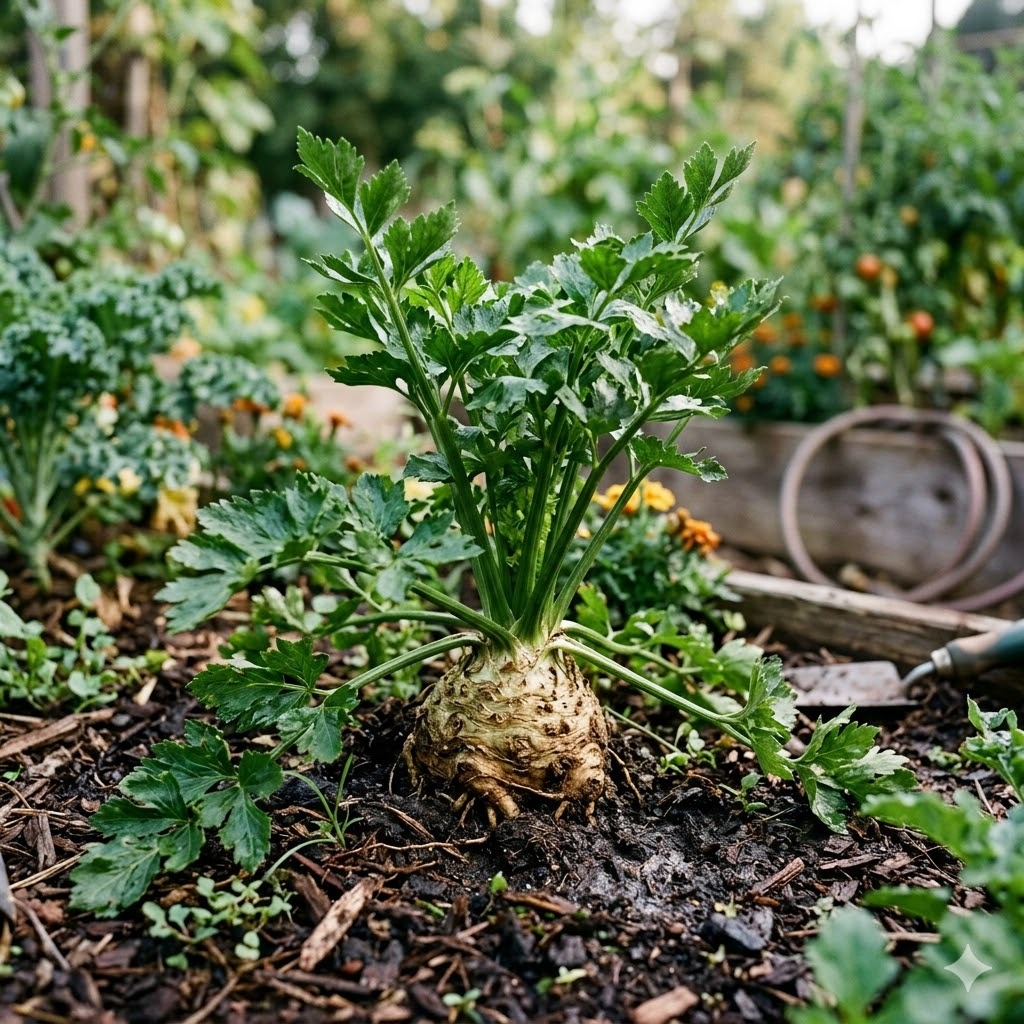
Celeriac is celery's easier, more forgiving cousin. Instead of fussing over tender stalks that need earthing up and blanching, you grow a knobbly, swollen root at the base of the plant that carries all the aromatic celery flavour with none of the palaver. It stores far more easily than celery too, standing out in the garden through the cold or keeping for months in a box, which makes it a genuinely useful winter vegetable for anyone who loves that distinctive taste.
It is not quite a beginner's crop, though, and the reasons are worth being honest about. Celeriac has a long season and two firm requirements: it must never be allowed to dry out, and it must be kept free of weeds, especially while young. Neglect the watering or let weeds smother the seedlings and you will get small, disappointing roots. Meet those two needs, however, and celeriac is remarkably trouble-free. This guide walks through the whole season, from an early sowing under cover to lifting sweet, nutty roots in autumn and winter.
Why grow celeriac
The first reason is that it gives you celery flavour without celery's demands. Growing good celery means earthing up or wrapping the stems to blanch them, keeping them tender and pale, which is fiddly work. Celeriac skips all of that: there is no blanching, no earthing up, just a root that swells at soil level and delivers the same aromatic, savoury flavour to soups, stews, mashes and roasts. For the celery taste, it is far less bother.
The second reason is keeping quality. Celery is a poor keeper, wanting to be used quickly, whereas celeriac stores beautifully. Being hardy, it can stand out in the ground through much of the winter, or it can be lifted and kept in a box of sand for months. That turns a summer's growing into a supply of fresh vegetables reaching deep into winter, when it is most valued.
The third reason is simply that it is a fine and slightly unusual vegetable, better and fresher home-grown than the sometimes tired roots in the shops, and versatile in the kitchen - grated raw into a remoulade, roasted, mashed with potato, or dropped into a winter soup. For the cook who likes that celery note, growing your own celeriac is well worth the patch of ground.
Choosing a variety
Celeriac offers a modest but useful choice of varieties, and a few qualities are worth weighing up.
Smooth-rooted varieties are increasingly the ones to look for, bred to produce rounder roots with fewer of the deep crevices and tangled side-roots that make the knobbly old sorts so awkward to clean and peel. A smoother root means far less waste and much easier preparation in the kitchen, so this is a worthwhile thing to seek out.
Varieties with good bolting resistance are valuable because celeriac, given a check to its growth early on, can run to seed prematurely. Choosing a sort noted for standing well without bolting reduces that risk, especially if you sow early or have a cold, uneven spring.
Varieties that keep their flesh white when cut and cooked are another refinement some growers prefer, as certain older sorts discolour more readily.
Beyond these points the differences are small, and most named varieties will give you a good crop if grown well. For a first attempt, a modern, smooth-rooted, bolt-resistant variety takes much of the awkwardness out of both growing and preparing celeriac.
Sowing and starting off
Celeriac has a long season, so it is sown early, in spring, and always started off under cover, as the seed needs warmth to germinate and the young plants must not meet frost. Sow from around late winter into early spring in a greenhouse, on a warm windowsill or in a propagator.
The seed is very fine, and there is a knack to it: sow it thinly on the surface of moist seed compost and barely cover it, if at all, because celeriac seed needs light to germinate well, so a bare dusting of compost or none is best. Keep it warm and reliably moist, and be patient, as germination can be slow and a little uneven.
Once the seedlings are large enough to handle, prick them out into individual pots or modules and grow them on somewhere warm and bright, never letting them dry out at any stage - a check to growth now can trigger bolting later. As the weather warms, harden the young plants off gradually to acclimatise them to outdoor conditions.
Do not rush them outside. Celeriac plants are set out only once the danger of frost has passed and the soil has warmed, usually in late spring. Plant them out at the same depth they were growing, without burying the crown, and space them around 30 to 40cm apart each way, which gives each plant the room it needs to build a good-sized root.
Where to grow
Celeriac is grown as an outdoor crop, though it starts life under cover. Once planted out, it wants an open, sunny or very lightly shaded position and, above everything, soil that holds moisture. This is a plant that originates from damp ground, and rich, deep, moisture-retentive soil is exactly what it needs to swell a good root. Digging in plenty of garden compost or well-rotted manure before planting both feeds the crop and helps the ground hold water, which is precisely the point.
The greenhouse or cover only plays its part at the start, raising the young plants from that early sowing until it is warm enough to set them out. The crop itself grows in the open ground for the rest of its long season. A greenhouse start is effectively essential given how early and how warm the sowing needs to be, but the plants do not stay under glass.
Choose a spot where you can water easily and reliably, because keeping celeriac moist all season is the single biggest factor in success. A low-lying, naturally moist bed suits it well. Avoid dry, thin, free-draining soil unless you are prepared to water it very generously indeed.
Day-to-day care
Two jobs dominate the care of celeriac, and both matter enormously: watering and weeding.
Water is the great non-negotiable. Celeriac must never dry out, from seedling to harvest. A plant that is allowed to go short of water, even briefly, checks its growth and produces a small, tough, sometimes hollow root, and a bad enough check can trigger bolting. So water generously and regularly throughout the season, especially in warm or dry weather, keeping the soil consistently moist rather than letting it swing between bone-dry and soaked. A thick mulch of compost or other organic matter around the plants, laid over already-moist soil, is one of the best things you can do, holding moisture in and cutting down how often you must water.
Weeding is the other essential. Celeriac grows slowly and does not compete well, so weeds will quickly overwhelm the young plants and rob them of the water and nutrients they so badly need. Keep the bed scrupulously weed-free, particularly in the early weeks, weeding by hand near the crowns to avoid damaging them. The mulch that holds moisture also helps suppress weeds, doing two jobs at once.
One optional refinement, later in the season, is to draw back any soil and pull off the lower, sprawling leaves and some of the side-shoots around the swelling crown, which helps expose the top of the root and encourages a rounder, cleaner bulb. A liquid feed through summer benefits this hungry crop on poorer soils.
Common problems and pests
Celeriac is fairly robust once growing well, but a few problems are worth knowing.
Bolting, where the plant runs to flower before making a decent root, is the classic disappointment and is almost always caused by a check to growth: a spell of cold after planting out, or, most often, a period of drought. Preventing it comes down to not planting out too early into cold ground, and, above all, never letting the plants dry out. A bolt-resistant variety adds further insurance.
Celery leaf miner, sometimes called celery fly, is a pest shared with celery, whose larvae tunnel inside the leaves leaving pale, blistered, dried-out patches. Light attacks do little real harm to a root crop like celeriac; heavier ones can be reduced by picking off and destroying badly mined leaves, and a cover of insect mesh keeps the flies off.
Celery leaf spot is a fungal disease showing as small brown spots on the foliage, worse in wet seasons; using clean seed and removing affected leaves helps keep it in check, and it seldom ruins the root.
Slugs and snails can nibble young plants and the crown, so protect new plantings, and carrot fly may occasionally affect the roots, again deterred by mesh. Overall, though, keep celeriac watered, fed and weed-free and it stays largely healthy.
Harvesting
Celeriac is ready to harvest from autumn onwards, once the roots have swelled to a useful size, typically anywhere from the size of an orange to a good deal larger, according to how the season has gone and how big you like them. There is no need to wait for any particular signal beyond the root reaching a size worth lifting; you can begin taking them from early autumn and continue as they are wanted.
To lift a root, loosen the soil around it with a fork and ease it out, then trim off the leafy top and the long straggly roots beneath. The knobbly base is what you keep. If you have grown a smooth-rooted variety, cleaning and peeling it will be far less of a chore.
Because celeriac is reasonably hardy, you can leave the roots in the ground and lift them as needed through autumn and into winter, treating the bed as your store. In colder gardens a mulch of straw or bracken heaped over the crowns protects them from the hardest frosts and makes lifting easier when the ground would otherwise freeze. In milder areas they will often stand through much of the winter unaided. Try to lift them all before spring growth restarts and the roots turn woody.
Storing and preserving
Celeriac's excellent keeping is one of its chief virtues, and you have two good options.
The first is to leave the roots in the ground and lift as needed, as just described, protecting the crowns with a mulch in cold areas. This keeps them at their freshest and is the least effort where winters are not too severe.
The second, useful where hard frosts would lock the ground solid or where you need the bed cleared, is to lift the roots and store them under cover. Trim off the tops and long roots, brush off loose soil, and pack the sound roots in boxes of just-damp sand or old compost in a cool, frost-free shed or store. Layered so they are not touching, they will keep firm and sound for several months. Discard any damaged roots, which will not store, and check the box occasionally, removing any that begin to spoil.
For longer keeping, celeriac also freezes once prepared. Peel and dice or slice it, blanch briefly, cool and freeze, ready for soups, stews and mashes. Like most roots it softens on freezing, so it is best used cooked. Cooked and pureed celeriac freezes well too. However you keep it, a good crop will supply the kitchen well into the new year.
Is it worth it?
For anyone who loves the flavour of celery, yes. Celeriac gives you that taste in a form that is far easier to grow than celery itself - no blanching, no earthing up - and far easier to keep, standing through winter or storing for months. From one long season's growing you get a supply of aromatic roots reaching deep into the cold part of the year, which is exactly when they are most useful in the kitchen.
The honest catch is that celeriac is not a plant-and-forget crop. It has a long season, needs an early start under cover, and depends utterly on never drying out and staying weed-free, which means real commitment to watering and weeding through the summer. Skimp on either and the roots will be small. But give it steady moisture, a clean bed and a little patience, and celeriac rewards you generously, with a distinctive winter vegetable that is a good deal less bother than the celery it tastes of.