How to Grow Celery: A Thirsty, Fussy Crop That Rewards the Patient
An honest guide to growing celery, a demanding crop that needs constantly rich, damp soil, plus why self-blanching types grown in a block are far easier than the old trench kind.
When to sow & harvest
A rough guide for a temperate climate - shift it to your own zone and last-frost date. Greenhouse growing stretches both windows earlier and later.
Celery has a reputation, and it is a fair one. Of all the common vegetables, this is one of the trickiest to grow really well at home. It is not that any single task is hard - it is that celery insists on the same thing every single day, without a break, for months: rich soil and constant moisture. Let it go dry even once and the plant remembers, turning stringy, tough and bitter.
So this is an honest guide rather than an encouraging one. If you are a beginner looking for an easy win, celery is not it - try turnips or kohlrabi first. But if you have grown a few things, you want a proper challenge, and you can commit to serious, regular watering, home-grown celery can be crisp, sweet and far better than the pale supermarket sticks. This guide is written to give you the best possible chance.
Why grow celery
The honest answer is: for the flavour and texture, and for the challenge. Well-grown home celery has a nutty sweetness and a satisfying crunch that shop celery, bred and grown for shelf life, rarely matches. If you use a lot of celery in stocks, soups and salads, growing your own can be genuinely worthwhile.
There is also the fact that celery is not cheap to buy for the quality you get, and the flavour fades fast after cutting. A stem cut fresh from your own patch is a different thing entirely.
But be clear-eyed about the trade-off. Celery demands more attention, water and feeding than almost anything else you might grow. You are not planting it and walking away. You are signing up to keep it damp and fed, all season, no dry days allowed. If that sounds like too much, it probably is, and there is no shame in growing something easier.
Choosing a variety
The single most important choice you make with celery is between the two main types, because it decides how much work you are letting yourself in for.
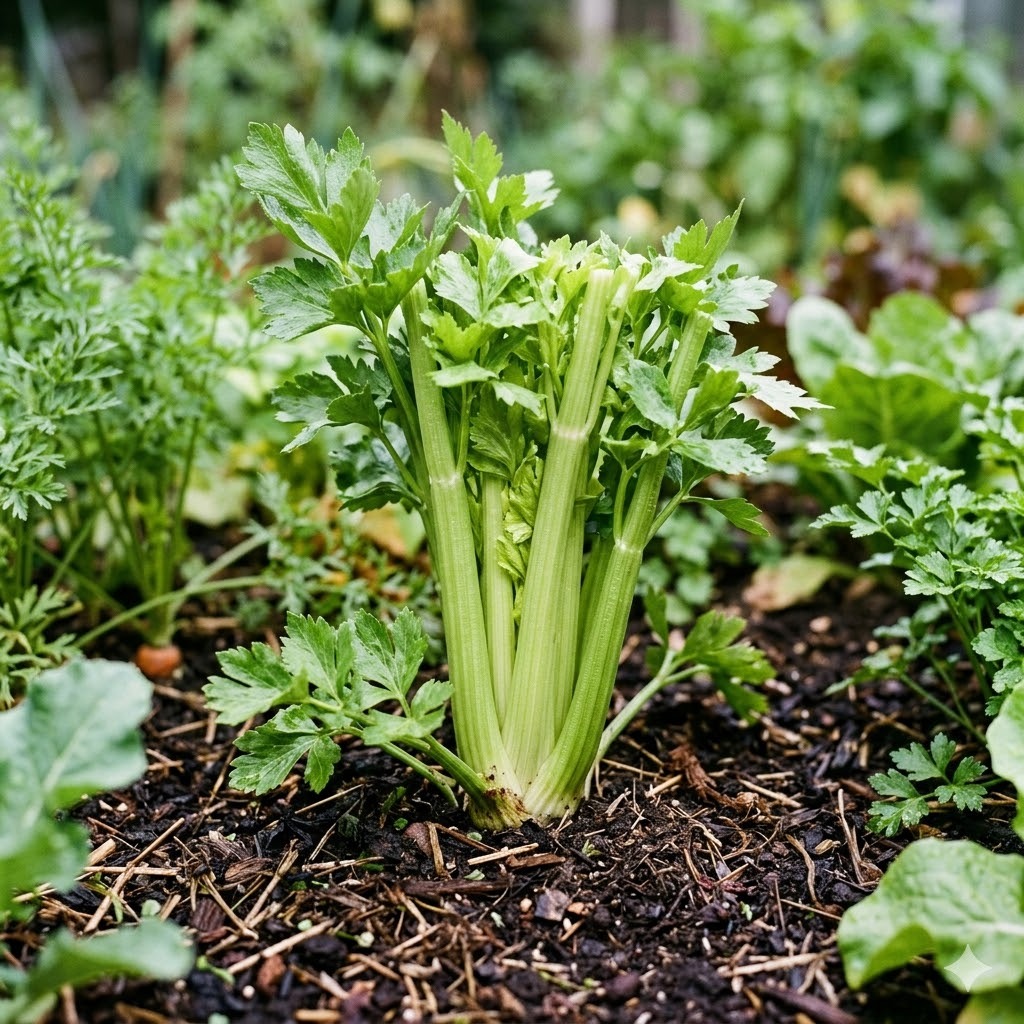
Self-blanching celery is the sensible modern choice for most home growers. These varieties naturally have paler, more tender stems and, crucially, do not need to be earthed up or wrapped to blanch them. You grow them in a block rather than a row, so the plants shade each other's stems, and that shading does the blanching for you. This is far, far easier than the old method and is what almost everyone should start with.
Trench celery is the traditional kind, grown in a trench and progressively earthed up or collared to exclude light from the stems. It can produce superb, long, well-blanched stalks, but it is a lot more work and best left until you have succeeded with the self-blanching sort.
There are also green or "leaf" celery types grown mainly for their leaves and thinner stems, used like a herb for flavouring, which are more forgiving and worth knowing about.
For a first attempt, choose a self-blanching variety, full stop. It removes an entire layer of difficulty from an already demanding crop.
Sowing and starting off
Celery is started early, indoors, because it has a long season and needs warmth to germinate.
Sow the seed in late winter to early spring in a greenhouse, propagator or on a warm windowsill. The seed is tiny, so sow it on the surface of moist compost and barely cover it, if at all, because celery seed needs light to germinate. Keep it warm and moist, and be patient - germination can be slow and uneven.
Once the seedlings are big enough to handle, prick them out into modules or small pots and grow them on somewhere light and frost-free. Never let them dry out at this stage, or even as young plants they can be checked in a way that leads to bolting later.
Harden the plants off carefully before planting out, and do not rush them outside. Celery is sensitive to cold, and young plants exposed to a spell of chilly weather can bolt, running to seed instead of building good stems. Wait until the risk of cold snaps has passed before planting out, usually in early summer.
Where to grow
Celery is grown outdoors for the main crop, but its needs shape where you put it. Choose your richest, most moisture-retentive ground - the sort of spot that stays damp - because that is exactly what celery wants. A bed dug through with plenty of well-rotted organic matter before planting holds water far better and gives the crop a real head start.
A greenhouse or covered space is useful for raising the young plants early in the year, and that is its main role. You can grow celery under cover to protect a late crop, but the bulk of the season is spent outside.
Plant self-blanching types in a close block rather than a single row, spacing the plants fairly tightly so they shade one another. That mutual shading is what blanches the stems, so the block arrangement is not optional for these varieties - it is the whole method.
Day-to-day care
This is the heart of growing celery, and it comes down to one word: water. Celery is a marsh plant at heart, and it wants the soil constantly damp. The most common cause of failure is letting it dry out. Dry spells make the stems stringy, tough and bitter, and can trigger bolting. So water generously and regularly, and in hot weather that may mean a thorough soak every day. Do not let it go dry, ever. Mulching around the plants after watering helps lock that moisture in and is well worth doing.
Celery is also hungry. It grows fast and wants plenty of nutrients, so feed regularly through the season with a balanced liquid feed, or grow it in ground enriched heavily with organic matter beforehand. Steady feeding plus constant water is what produces plump, sweet, tender stems.
Keep the block weeded, particularly early on, so the plants are not competing for water and nutrients.
With self-blanching types, the mutual shading in the block does the blanching. Some growers tuck straw or loose material around the outermost plants of the block to blanch their exposed sides too, but you do not earth them up the way you would trench celery.
Common problems and pests
Bolting is the most common disappointment, and it usually traces back to a check in growth - a cold spell after planting out, or a period of drought. The fixes are to avoid planting out too early into cold weather and, above all, to never let the plants go dry.
Slugs and snails love the damp, sheltered conditions celery creates, and they will hide in the crowded block and chew the stems. Because you are deliberately keeping the ground moist, this is a constant background battle, so check regularly and deal with them by your preferred method.
Celery leaf miner, sometimes called celery fly, tunnels inside the leaves, causing pale, dried-out blotches. Pick off and destroy affected leaves, and covering the crop with fine mesh helps keep the adult flies off.
Celery leaf spot is a fungal disease showing as brown spots on the leaves and stems, worse in wet, crowded conditions. Using clean seed, giving the plants a little air, and removing badly affected foliage all help. Slug damage and rot at the base can also let disease in, so keeping the crowded block reasonably tidy matters.
Harvesting
Self-blanching celery is generally ready from late summer into autumn, once the plants have built up a good clump of stems.
To harvest, you can either cut individual outer stems as you need them, letting the plant keep growing from the centre, or lift the whole plant at once by loosening it with a fork and easing it out, roots and all. For a steady supply, taking outer stems as needed works well; when you want the whole head, lift it complete.
The important thing with self-blanching celery is to use it before the first hard frosts. Unlike trench celery, the self-blanching types are not frost-hardy, so plan to clear the crop before the cold sets in properly. A light frost may be tolerated, but a hard freeze will damage the stems.
Harvest in the morning if you can, when the stems are at their crispest, and use them promptly for the best flavour and crunch.
Storing and preserving
Celery does not have a long natural storage life, so it is best eaten fresh, but there are a few ways to keep it going.
Whole heads or cut stems keep for a couple of weeks in the fridge if wrapped to stop them drying out and going limp. Standing cut stems in a little water can also revive them for a while.
For longer storage, celery freezes, but it loses its crispness completely, so frozen celery is only good for cooking - stocks, soups and stews. Chop it, blanch it briefly, cool, drain and freeze. It will add flavour to cooked dishes but will never be crunchy again, so do not expect salad celery from the freezer.
You can also dry celery leaves and use them as a herb, and the trimmings and leaves make an excellent addition to a stock pot, so little of the plant need go to waste.
Is it worth it?
Honestly, for most people, only sometimes. Celery is the most demanding crop in this set by a clear margin. It wants constant water, steady feeding, careful timing to avoid bolting, and vigilance against slugs and disease. If you cannot commit to keeping it damp every single day through summer, you will end up with tough, bitter, stringy stems, and you would have been better off growing something forgiving.
But if you love celery, you have grown a few easier crops already, and you are up for the challenge, well-grown home celery is a real prize - crisp, sweet and full of flavour in a way the shop version simply is not. Start with a self-blanching variety, grow it in a block, keep it wet, and treat it as the advanced project it genuinely is. Get it right and it is deeply satisfying. Just go in with your eyes open.