How to Grow Cherries: A Real Option for Small Gardens Now Dwarf Trees Exist
A practical guide to growing sweet and acid cherries in a small garden or large pot, from choosing a self-fertile dwarf tree to netting the whole thing against the birds.
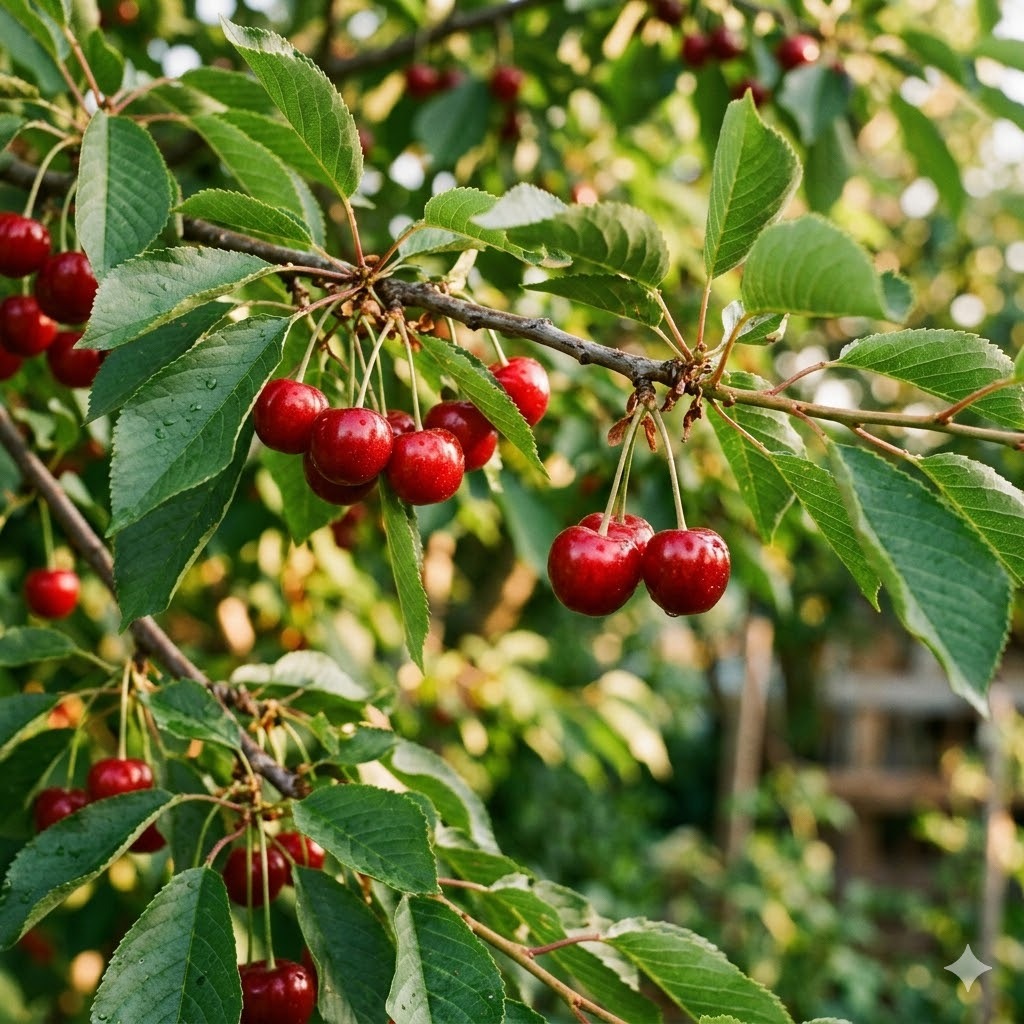
Cherries used to be a fruit for people with orchards and ladders. A traditional cherry tree grew huge, cropped far out of reach, and needed a second tree nearby for pollination - not much use in a small back garden. That has changed. Modern dwarfing rootstocks and self-fertile varieties mean a cherry tree can now be a genuinely sensible thing to grow in a small plot or even a large pot, cropping at a height you can actually reach and net.
Cherries sit a notch above plums in difficulty, mostly because of one relentless problem: birds love ripe cherries at least as much as you do. Solve that, and a dwarf cherry is a beautiful, productive tree for a small space.
Why grow cherries
The honest reason is that cherries are expensive to buy and glorious to grow. A bowl of your own cherries, picked sun-warm and eaten straight off the tree, is one of the real luxuries of a home garden, and it costs a fraction of the shop price once the tree is established. Home-grown fruit is picked perfectly ripe rather than firm-for-transport, so the flavour is fuller and the texture better.
The reason it is now practical is the rootstock revolution. Dwarfing rootstocks such as Gisela 5 hold a cherry to a small, manageable size - a tree you can prune, pick and, crucially, net without a ladder. Grow one in the ground and it stays compact; grow one in a large pot and you can even move it or bring the blossom under cover in a cold spring. Combined with self-fertile varieties, this turns cherries from an orchard crop into a small-garden crop.
There is also a lovely bit of choice here, because there are two quite different kinds of cherry to grow. Sweet cherries are the ones you eat fresh, dark and juicy off the tree. Acid or sour cherries, of which Morello is the best known, are too sharp to enjoy raw but magnificent cooked - and, handily, they tolerate shade and a north-facing wall, so they will crop in a spot where nothing else fruit-bearing would. Between the two, most gardens have somewhere a cherry could go.
Choosing a variety
Three things to sort out: sweet or acid, the variety, and the rootstock.
The rootstock decides the size, and for a small garden you want a dwarfing one. Gisela 5 is the modern standard for garden cherries, keeping the tree compact and pickable and suiting both open forms and pots. It is the rootstock that makes small-garden cherries possible, so look for it when you buy.
Then choose your type and variety:
- Stella - the go-to sweet cherry for a single tree. It is self-fertile, so it crops on its own without a partner, dependable and a sensible first choice.
- Sunburst - another good self-fertile sweet cherry, producing large, dark, richly flavoured fruit.
- Morello - the classic acid cherry. Self-fertile, tart, brilliant for cooking, jam and pies, and tolerant of shade and a cold north or east-facing wall where sweet cherries would sulk.
For most small gardens, a self-fertile sweet cherry like Stella on Gisela 5 is the natural start. If your only spare spot is shady, a Morello turns that disadvantage into a crop.
Planting and starting off
Plant a cherry during the dormant season, from late autumn to early spring, while it is leafless. Bare-root trees planted then establish well and cost less; container-grown trees can go in at other times but need attentive watering.
Dig a hole wider than the roots but no deeper, setting the tree at the depth it grew before - the old soil mark on the stem should sit level with the surface. Planting too deep sets a tree back badly. Firm the soil around the roots, water it in, and stake a dwarf tree well, because those small rootstocks give little wind resistance for the first few years.
If you are growing in a pot, use a large, heavy container of soil-based compost, sit it somewhere sunny and sheltered, and be ready to water regularly, as pots dry out fast. A wall-trained fan is also an excellent form for cherries, spreading the tree flat where it is easy to reach and, importantly, easy to net.
Where to grow
Sweet cherries want sun and shelter. A warm, sunny, sheltered spot ripens the fruit well and protects the early blossom from frost and cold winds, so a south or west-facing wall or a warm corner is ideal. As with plums, cherries flower early, and a hard late frost on open blossom can cost you the crop, so avoid frost pockets at the bottom of a slope.
Acid cherries are the exception that widens your options. A Morello will crop happily in partial shade and even on a cold north or east-facing wall, so it earns its place in exactly the difficult, sunless spot most fruit refuses. If you have a shady wall crying out for something productive, an acid cherry is often the answer.
Whatever the type, the soil should be fertile, moisture-retentive and well drained. Cherries dislike waterlogged ground, so improve heavy, wet soil with compost before planting, and make sure a potted cherry has good drainage holes so it never sits in standing water.
Day-to-day care
A dwarf cherry is not demanding, but a few habits keep it healthy and cropping.
Water matters most in the first couple of years, in dry spells, and for potted trees, which can dry out quickly and drop fruit if they go short at the wrong moment. A mulch of compost over the roots in spring feeds the tree slowly and helps hold moisture; keep it clear of the trunk.
Pruning cherries, as with plums, is strictly a summer job - and the reasons are the same, covered in the next section. Keep it light: form a good open shape while the tree is young, then mainly remove dead, damaged or crossing wood. Fan-trained trees need a little more regular tying-in and shortening of new growth to keep them flat and tidy against the wall.
The big seasonal job, though, is not pruning or watering. It is defending the crop from birds, and it is worth treating as the main task of the cherry-growing year.
Common problems and pests
The number one problem with cherries is not a disease or an insect - it is birds. Blackbirds, pigeons and others will strip a ripening cherry tree with astonishing speed, and they seem to know the exact day the fruit is worth taking. There is really only one reliable answer: net the whole tree as the fruit begins to colour up. This is precisely why dwarf trees matter so much - a small tree can actually be covered with netting, where a full-sized one cannot. Get the net on early, secure it so birds cannot get underneath and trapped, and take it off after harvest.
The second recurring problem is splitting. Cherry skins can split when heavy rain follows a dry spell and the fruit swells suddenly, and split cherries quickly rot. There is no perfect cure, but keeping the water supply as even as you can - steady watering and a good mulch rather than a drought-then-deluge pattern - reduces it, and picking promptly as they ripen gets the fruit off before the weather turns.
As with plums, prune only in summer to guard against silver leaf and bacterial canker, two serious diseases whose spores are active in cold, wet weather and which enter through fresh pruning cuts. Never prune a cherry in winter. Watch too for brown rot, the fungus that turns fruit soft and mouldy, especially where skins have split - remove and dispose of affected fruit promptly. Aphids may curl the new spring leaves, but a healthy tree generally copes.
Harvesting
Cherries are ready when they are fully coloured, glossy and sweet - for sweet cherries, taste is the real test, so try one and pick when they are properly ripe and no longer sharp. They do ripen on the tree, so the aim is to catch them at their peak and get them off before the birds, the rain-splits and the brown rot claim them.
Pick with the stalks on wherever you can, snipping or lifting them off carefully rather than pulling, as tearing the fruit spur can harm next year's crop and the fruit keeps better with the stem attached. A tree usually ripens over a week or two rather than all at once, so go over it several times, taking the ready fruit each visit.
Acid cherries like Morello are picked when fully coloured and richly dark, even though they stay too tart to eat raw - that sharpness is exactly what makes them so good cooked, so pick for the pot, not for the palate.
Storing and preserving
Fresh cherries do not keep long. A few days in the fridge is about the limit for sweet cherries before they soften and lose their shine, so they are best eaten fresh, fast, or preserved promptly. Acid cherries are grown to be cooked, so preserving is the whole point with them.
Ways to keep a crop:
- Freezing - stone the cherries and freeze them on a tray before bagging, ready for pies, crumbles and sauces through the year.
- Jam - both sweet and acid cherries make excellent jam and conserve, though sweet cherries are low in pectin and may need a little help to set.
- Bottling - cherries in syrup keep for months and are lovely spooned over puddings.
- Cooking down - Morellos in particular reduce into a superb dark, tart sauce or pie filling that freezes well.
If you grow acid cherries at all, plan to preserve most of them - they come into their own in the kitchen, not the fruit bowl.
Is it worth it?
Yes, now that dwarf trees make it realistic. A self-fertile sweet cherry on a dwarfing rootstock, in a sunny sheltered spot, gives a small garden something that used to be off-limits: fresh cherries within reach, on a tree small enough to prune, pick and net. And an acid cherry turns a shady, awkward wall into a productive corner for cooking fruit.
The honest catch is the birds. If you are not prepared to net the tree as the fruit colours, you may grow a beautiful cherry and never taste a single one - the birds will simply have them all. But netting a dwarf tree is a straightforward job, splitting can be eased with steady watering, and the summer-only pruning rule is easy to keep. For a small-garden grower who is happy to defend the crop, a cherry is a genuine pleasure and no longer the orchard-only fruit it once was.