How to Grow Chives: The Easiest Herb You Can Grow and Almost Never Kill
A beginner's guide to growing chives, the tidy perennial allium that gives you mild onion leaves all season and edible purple flowers the bees adore.
When to sow & harvest
A rough guide for a temperate climate - shift it to your own zone and last-frost date. Greenhouse growing stretches both windows earlier and later.
Chives are the herb to grow if you have ever managed to kill everything else. They are the easiest of all the onion family, a neat little clump of hollow, mild-flavoured leaves that comes back year after year with almost no help from you. Plant one pot and you have a supply of oniony snippings for the kitchen from spring to autumn, plus a burst of purple pompom flowers in early summer that the bees cannot leave alone.
Why grow chives
The honest reason to grow chives is that they are the perfect low-effort return. Shop chives come in flimsy little packets that cost more than they should and slump in the fridge within days. A single chive plant, by contrast, sits quietly in a pot or a corner of the bed and gives you fresh leaves whenever you want them, for years. You snip what you need, the plant carries on, and you almost never have to think about it.
They are also genuinely useful in the kitchen in a way that suits their gentle flavour. Chives are the mild end of the onion family, so you can scatter them raw over eggs, potatoes, soups and salads without the harshness of a raw onion. Because the flavour is soft, you add them at the end rather than cook them, which makes them one of the quickest ways to lift a plain dish.
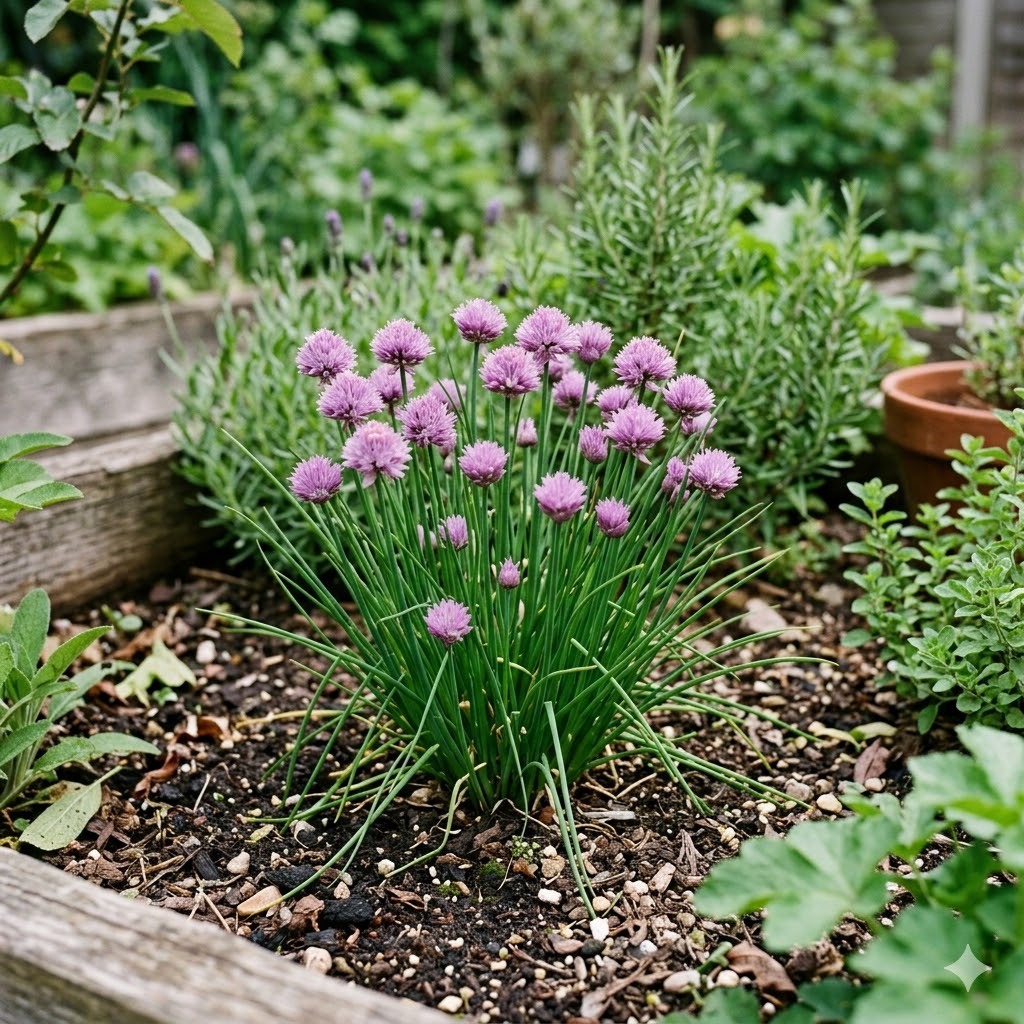
Then there are the flowers. In early summer a chive clump throws up round purple pompoms that look lovely, pull in the bees, and are themselves edible - pull the little florets apart over a salad for a mild oniony bite. Few herbs earn their keep in the kitchen, the border and the pollinator patch all at once.
Choosing a variety
For most people, ordinary chives are all you need. This is the classic clump of thin, hollow, tube-like leaves with the mild onion taste, and it is the one that does everything asked of it. If you grow just one allium herb, grow this.
There is one cousin well worth knowing, though:
- Garlic chives - a flat-leaved relative, sometimes sold as Chinese chives, with a mild garlic taste rather than an onion one. The leaves are broader and flatter, and the flowers are white and starry rather than purple. They are lovely in stir-fries and anywhere you want a soft garlic note, and they grow just as easily as ordinary chives.
Beyond those two, you will sometimes see named ornamental forms sold mainly for showier flowers. They are pleasant, but for the kitchen the plain and garlic types are the ones that matter, and a beginner rarely needs more than one clump of each.
Sowing and starting off
You have two easy routes into chives, and both work well. The quickest is simply to buy a small plant or a pot from a garden centre or even a supermarket, and pot it on. A crowded supermarket pot of chives is a bargain if you tip it out, tease it into two or three clumps, and pot each on into fresh compost with a little room to grow. Given space, those tired seedlings bulk up into strong plants fast.
If you would rather grow from seed, chives are obliging. Sow indoors in spring in a small pot of moist seed compost, scattering the seed thinly and covering it lightly. They germinate happily at normal room warmth, without the heat that a tender herb demands, and come up as fine grassy threads. Sow a little pinch in each cell or pot rather than one seed at a time - chives look and grow best as a clump, so you want a tuft, not a single blade.
Once seedlings are a few centimetres tall and the weather has warmed, harden them off and plant the clumps out into their final home. Space clumps a little apart if you want several, water them in, and leave them to settle. Being a perennial, a chive plant is slow to reach full size in its first year but comes back stronger each spring after that.
Where to grow
Chives are relaxed about where they live, which is a large part of their charm. They are happy in an open, sunny spot in a border, in a pot on the patio, or on a bright windowsill indoors. Full sun gives you the lushest, most upright growth, but they will tolerate a bit of shade and still crop perfectly well.
A pot suits them beautifully. Because the clump stays neat and compact, a single container by the back door keeps chives within snipping reach of the kitchen and easy to keep tidy. Any decent multipurpose compost and a pot with drainage holes will do; there is no need for anything special.
The one thing they appreciate is not being left to dry out completely. Unlike the Mediterranean herbs that want it hot and dry, chives prefer a soil that stays reasonably moist, so a pot in blazing sun may need watering more often. Give them sun, ordinary soil and a drink when the surface dries, and they will thank you.
Day-to-day care
The good news is that day-to-day care for chives is barely a chore. Keep the compost or soil from drying out completely, especially for plants in pots during a hot spell, and that is most of the job done. They are not fussy feeders, though a clump in a pot will crop better for the odd feed through the growing season.
The single most useful habit is to keep cutting. Chives respond to regular snipping by pushing up fresh leaves, so a plant you harvest often stays greener and more productive than one left alone. If a clump starts to look tired, tatty or yellow partway through the season, do not be gentle - cut the whole thing back hard to a few centimetres above the ground, water it, and it will send up a fresh flush of clean new leaves within a couple of weeks.
Decide, too, how you feel about the flowers. Left to bloom, chives put up their purple pompoms and the leaves nearby can turn a little tougher and more onion-strong as the plant focuses on flowering. If you want the tenderest leaves for the kitchen, snip the flower buds off before they open. If you want the flowers for the bees or the salad bowl, let some bloom and simply cut those stems back once they fade so the plant does not exhaust itself setting seed everywhere.
Every few years, in spring or autumn, a well-established clump is worth lifting and dividing. Dig it up, pull or chop the mass into several smaller clumps, and replant them with fresh soil. This keeps the plant vigorous and gives you free extra plants into the bargain.
Common problems and pests
Chives are about as trouble-free as herbs get, and most of what does go wrong is cosmetic rather than fatal. Being an onion relative, they carry a natural pungency that puts off a lot of pests, which is part of why they are so easy.
Yellowing or tatty leaves partway through the season are usually just a tired clump rather than a disease. The fix is the hard cutback described above: shear it low, water it, and let it regrow clean.
Rust can show up as small orange or brown spots and streaks on the leaves, particularly in a damp season or on a crowded, congested clump. Cut affected growth away and bin it rather than compost it, improve the airflow by dividing an overcrowded clump, and the fresh regrowth usually comes back clean.
Rot is the main way to actually lose a chive plant, and it comes from being waterlogged. A pot standing in a saucer of water, or heavy soil that stays sodden all winter, can rot the base. Grow in something that drains, and do not let a pot sit in a puddle. Aside from the odd aphid on soft new growth in spring, which you can rinse or rub off, there is not much else to watch for.
Harvesting
Harvest chives with scissors, and harvest them often. Rather than plucking a leaf here and there, gather a small bunch and snip it cleanly a couple of centimetres above the base. Take the leaves from the outside of the clump and work inwards, leaving the young central growth to carry on - this keeps the plant tidy and gives it something to grow from.
You can start snipping as soon as a plant has a decent tuft of leaves and carry on right through the season. Regular cutting is not just how you harvest, it is how you keep the clump productive, so do not be shy. Cut leaves are best used fresh and soon; snip what you need for a meal rather than harvesting a pile to sit in the kitchen.
Do not forget the flowers when they come. Pick the pompoms just as they open, pull the individual florets apart, and scatter them for a mild oniony flavour and a splash of colour. Both leaves and flowers are best added to a dish near the end, since heat quickly dulls their gentle taste.
Storing and preserving
Fresh chives do not keep for long. Cut leaves wilt within a few days even in the fridge, so the honest answer is to grow enough that you can snip fresh as you need it rather than trying to stockpile them. For short-term storage, stand a bunch in a glass of water like flowers, or wrap it loosely in a damp cloth in the fridge, and use it within a couple of days.
For the longer term, freezing is far better than drying:
- Chopped and frozen - snip the leaves small, spread them on a tray to freeze loose, then tip them into a tub or bag. You can drop the frozen snippings straight into eggs, soups and sauces without thawing.
- Frozen in ice-cube trays - pack chopped chives into the cells of an ice-cube tray, top with a little water, and freeze into ready portions to drop into cooking.
Drying is possible but disappointing. Chives lose much of their mild, fresh flavour when dried, ending up as pale flakes with little punch, so freezing is almost always the better route. If you want to preserve the flowers, they make a pretty flavoured vinegar - steep the purple florets in white vinegar for a week or two, strain, and you get a mild oniony, softly pink vinegar for dressings.
Is it worth it?
Absolutely, and with fewer conditions than almost any herb. Chives ask very little - a pot of ordinary compost, a sunny or lightly shaded spot, a drink when they dry out, and an occasional hard cut back - and in return they give you fresh oniony leaves for years on end. As a perennial, you plant once and harvest for seasons to come, which makes them one of the best-value things a beginner can grow.
If you are just starting out and want a quick, forgiving win, chives are close to the perfect first herb. They are hard to kill, endlessly useful in the kitchen, and they throw in a flush of bee-friendly purple flowers as a bonus. For very little effort, they earn their place several times over.