How to Grow Coriander: Two Crops in One From a Single Sowing
A beginner-friendly guide to growing coriander for both its fresh leaf and its spice seed, sowing little and often to stay ahead of its habit of bolting in the heat.
When to sow & harvest
A rough guide for a temperate climate - shift it to your own zone and last-frost date. Greenhouse growing stretches both windows earlier and later.
Coriander has a reputation for being tricky, but it is really just misunderstood. People treat it like a leafy herb they can keep on the windowsill all year, then feel cheated when it shoots up, flowers and goes to seed within weeks. The plant is not failing you. That is simply what coriander does, and once you stop fighting it and start working with it, it becomes one of the easiest and most generous herbs a beginner can grow. Better still, you get two crops from the same plant: the fresh leaf that gets called cilantro, and the round seed that dries into the warm, citrusy spice.
Why grow coriander
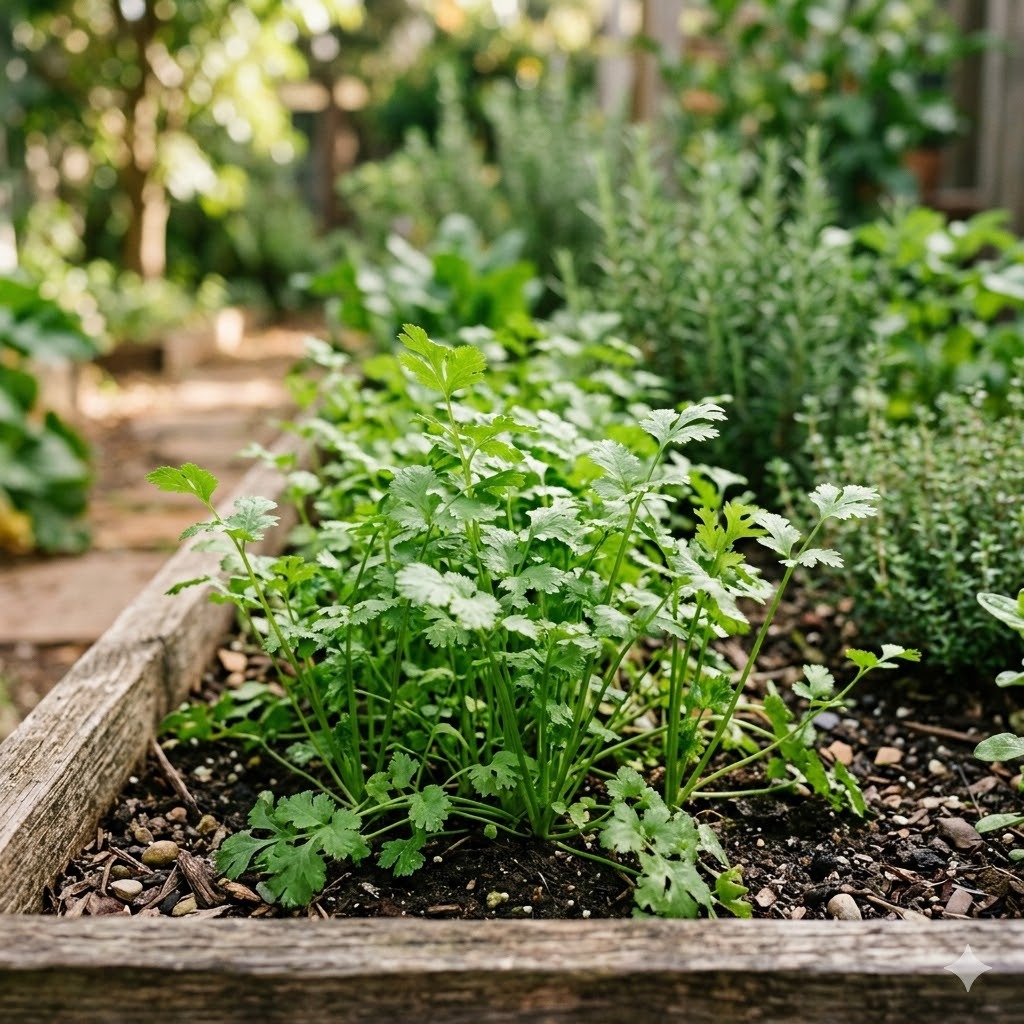
The first reason is the same one that applies to most fresh herbs - the shop-bought stuff is a poor imitation. Cut coriander wilts almost as fast as basil, and those bagged bunches often smell of nothing much by the time they reach your kitchen. A handful of leaves snipped straight from a pot has a bright, green, almost soapy-fresh punch that packs into curries, salsas and noodle bowls in a way the tired supermarket version never manages.
The second reason is the one people forget. Coriander is two ingredients in one plant. Let it grow, use the young leaves, and if you let some plants run on and flower, they set seed that you can dry and store as a spice. Home-grown coriander seed, lightly toasted and crushed, is a world away from the dusty jar at the back of the cupboard. Growing a herb that also hands you a pantry spice is genuinely good value.
It also asks very little. Coriander is happy sown straight into the ground or a pot, does not need heat to germinate, and grows fast. The one thing it will not tolerate is being fussed over, and that suits a beginner nicely.
Choosing a variety
For fresh leaf, look for varieties bred to be slow to bolt, because bolting - running to flower - is the whole battle with coriander. Named types such as Calypso and Confetti are sold specifically as leaf varieties that stand longer before shooting up, which buys you more picking time in warm weather. If your main aim is a steady supply of leaf, these are worth seeking out over generic packets.
If you are growing chiefly for the spice, the picture flips. You actually want a variety that flowers and seeds readily, and here the ordinary types, sometimes sold as Moroccan coriander, do the job well. They bolt sooner, which is exactly what you want when the seed is the point.
For most beginners, the honest advice is to grab a slow-bolt leaf variety, sow it repeatedly through the season, and simply let the last sowing or two run on to seed. That way one packet gives you both crops without any special planning.
Sowing and starting off
Here is the single most important thing to know: coriander hates being transplanted. It puts down a long taproot early, and disturbing that root sends the plant into a sulk that usually ends in it bolting straight to flower. So skip the seed trays and the potting on. Sow coriander exactly where you want it to grow, whether that is a bed or a pot, and leave it be.
Sow thinly, about a centimetre deep, into moist ground or compost, and water gently. Germination takes a couple of weeks and does not need warmth, so you can start outdoors from mid-spring once the worst of the cold has passed and keep going through the season. The seeds are actually little fruits containing two seeds each, so they can come up in pairs - thin the seedlings to give the strongest ones room.
The real trick, and it cannot be overstated, is to sow little and often. A single big sowing gives you a glut followed by nothing, because it all bolts at once. Instead, sow a short row or a small pot every two or three weeks. That steady succession keeps young, leafy plants coming while the older ones are running to seed, and it is the difference between an endless supply and one frustrating flush.
Where to grow
Coriander is not fussy about its home, which is part of its charm. A patch of ordinary garden bed suits it fine, as does a decent-sized pot or trough on a patio or balcony. Because you sow it in place, the main thing to get right is a spot with reasonable soil that does not bake bone dry, and a container deep enough for that taproot - a shallow tray will have it bolting in no time.
In the heat of summer, coriander actually appreciates a little afternoon shade rather than a full-sun roasting. Strong heat is what triggers bolting fastest, so a spot that gets morning sun and some relief later in the day will keep leaf plants standing longer. This is the opposite of what a sun-lover like basil wants, and worth remembering.
A greenhouse or cold frame is a useful bonus rather than a requirement. Under cover you can start a little earlier in spring and squeeze a late sowing in at the tail of the season, extending your leaf supply at both ends. A windowsill will do for a small pot too, though coriander grown indoors tends to run up leggy and bolt sooner, so outdoors is usually the happier home.
Day-to-day care
Coriander is refreshingly low-maintenance, but it does like steady moisture. Dry spells stress the plant, and a stressed coriander plant reaches for the sky and flowers, so keep the soil consistently damp without waterlogging it. Regular watering in warm weather is the single best thing you can do to hold off bolting.
Beyond water, it barely needs feeding. Rich soil or heavy feeding pushes soft, floppy growth and does not stop the plant doing its thing, so ordinary ground or compost is plenty. Thin the seedlings early so the ones you keep have space and air around them, which keeps them healthier and less prone to mildew.
And then, mostly, leave it alone. Coriander does not want pinching out and shaping the way basil does. Your job is simply to keep it watered, pick it regularly, and have the next sowing coming along behind. Fussing over it tends to do more harm than good.
Common problems and pests
The biggest "problem" with coriander is not a pest at all - it is bolting, and it is entirely natural. Heat, dry soil, root disturbance and simple age all send the plant to flower. You cannot stop it forever, so the answer is to accept it, keep sowing fresh batches, and let the bolted plants go on to give you seed rather than treating them as failures.
For actual troubles, keep an eye out for aphids, which cluster on soft new shoots and the flowering stems. A blast of water or a wipe with your fingers usually deals with small numbers before they build up. Slugs and snails will happily mow down young seedlings overnight, so protect emerging rows if you have a slug-heavy plot.
In damp, crowded conditions coriander can suffer powdery mildew or general fungal problems, showing as pale or dusty leaves. Good spacing, decent airflow and watering the soil rather than the foliage all help. And if plants suddenly wilt and keel over, suspect cold, wet soil or root disturbance rather than any disease.
Harvesting
For leaf, start picking once plants are a decent size, and pick young and pick hard. Snip the outer leaves and stems from the base of the plant, taking the older growth first and letting the young centre keep coming. Cutting a plant back by up to a third encourages a fresh flush of tender leaves, so regular harvesting actually keeps it productive. Young leaves have the best flavour, so do not wait for it to get big and old.
When a plant bolts and throws up its flower stems, do not pull it out. Let the delicate white flowers set into small green seed heads, then leave the plant to carry on. This is where your second crop comes from. You can even snip the flowering stems for the kitchen, as coriander flowers are edible and pretty in a salad.
For the spice, wait until the seed heads turn from green to pale brown and the seeds feel hard, but harvest before they scatter themselves everywhere. Cut the whole stems, pop them upside down in a paper bag, and leave them somewhere dry for a week or two so the seeds finish ripening and drop into the bag.
Storing and preserving
Fresh coriander leaf, like most soft herbs, does not keep long. In the fridge it wilts and yellows within days, so it is best used fresh from the plant. If you must hold it a little, stand the cut stems in a glass of water like a small bunch of flowers, loosely cover the leaves, and keep it in the fridge for a few days at most.
For longer storage, freezing works better than drying. Chop the leaves, pack them into ice-cube trays, top up with a little water or oil, and freeze into ready portions to drop straight into curries and sauces. The frozen leaf loses its fresh crunch but keeps plenty of flavour for cooking. Drying coriander leaf, by contrast, is disappointing - it fades to a papery ghost of itself and is rarely worth the effort.
The seed is the opposite story and stores beautifully. Once your harvested seed heads are fully dry, rub the round seeds free of the chaff and keep them in an airtight jar. Whole coriander seed holds its warm, citrusy aroma for a long time, and you toast and grind it fresh as you need it. Set a few seeds aside and you also have next year's sowing for free.
Is it worth it?
Yes, and especially so once you let go of the idea that coriander should behave like a tidy, long-lasting pot herb. It will not. It is a fast, generous plant that races through its life, and the whole knack is sowing little and often so there is always a young batch coming while the old one runs to seed. Do that and you will rarely be short of fresh leaf through the growing season.
The bonus of the spice tips the balance firmly in coriander's favour. Few herbs hand you both a fresh ingredient and a stored pantry staple from one cheap packet of seed, sown straight where it grows with almost no fuss. For a beginner willing to keep a little succession going, coriander is one of the most rewarding herbs in the garden.