How to Grow Cucumbers: Crisp, Cool Fruit from Greenhouse and Garden
A practical, honest guide to growing cucumbers at home, with clear advice on greenhouse smooth types versus tougher outdoor ridge varieties.
When to sow & harvest
A rough guide for a temperate climate - shift it to your own zone and last-frost date. Greenhouse growing stretches both windows earlier and later.
Why grow cucumbers
There is a real difference between a cucumber picked ten minutes ago and one that has spent a week in a supermarket fridge. Home-grown fruit is crisp, cool and faintly sweet, with none of that waxy skin or slight bitterness you sometimes get from shop-bought. That flavour, plus the sheer productivity of a healthy plant, is why cucumbers earn their space.
Cucumbers are also genuinely rewarding for beginners. Given warmth, water and something to climb, a single plant can hand you fruit steadily from midsummer into autumn. They are not fussy about being fancy - they just want to be warm and never thirsty. The main thing to get right is matching the type of cucumber to where you plan to grow it, because a greenhouse cucumber and an outdoor one are quite different plants with different needs.
They are listed as a beginner crop for good reason. The failures people have with cucumbers almost always come down to sowing too early into cold conditions, or letting the plants dry out. Avoid those two mistakes and you are most of the way there.
Choosing a variety
Cucumbers split into two broad camps, and choosing the right one is the single most important decision you will make.
Greenhouse cucumbers are the long, smooth, thin-skinned fruit most of us picture. Modern greenhouse varieties are almost always all-female (or F1 "all-female") types, which means they set fruit without pollination and give you seedless, non-bitter cucumbers. These are the ones to grow under glass or in a polytunnel. They love heat and humidity and sulk in cool, exposed conditions. Popular reliable choices include all-female types bred specifically for indoor growing.
Outdoor or ridge cucumbers are shorter, often knobbly or slightly spiny, with tougher skin. They are hardier and far more forgiving of cooler, changeable weather, which makes them the sensible pick for an open garden bed. Ridge types are traditionally pollinated by insects, so both male and female flowers are needed and normal here. Some newer outdoor varieties are described as suitable for both greenhouse and garden, which is handy if you are undecided.
There are also compact and patio cucumbers bred for containers, and small snacking or gherkin types if pickling is your goal. If you are buying seed for the first time, read the packet carefully: the words "all-female" and "greenhouse" or "ridge" and "outdoor" tell you almost everything you need to know.
Sowing and starting off
Warmth is everything with cucumber seed. The seeds need soil at around 20C or more to germinate reliably, and the plants hate any check from cold. This is why the most common cucumber failure is sowing too early - eager gardeners start in a chilly March windowsill and end up with sad, stalled seedlings.
Sow indoors in late spring, roughly late April into May, or into early June for outdoor crops. Sow seeds on their side, about a centimetre or two deep, in small pots of moist multipurpose compost. On their side is a small traditional trick that reduces the chance of the seed rotting. Keep them somewhere warm - a heated propagator, an airing cupboard, or a warm windowsill - and they usually pop up within a week.
Once seedlings have a couple of true leaves, pot them on into slightly larger pots and keep them growing on in good light and warmth. Do not rush them outside. Harden off outdoor plants gradually over a week or two, and only plant them out once all risk of frost has passed and the soil has warmed, usually late May or June depending on where you are.
If you have no heat at all for germinating, it is honestly better to wait a few weeks than to sow into cold conditions and fight a losing battle.
Greenhouse or garden - where to grow
This is where cucumbers really divide, so it is worth being clear.
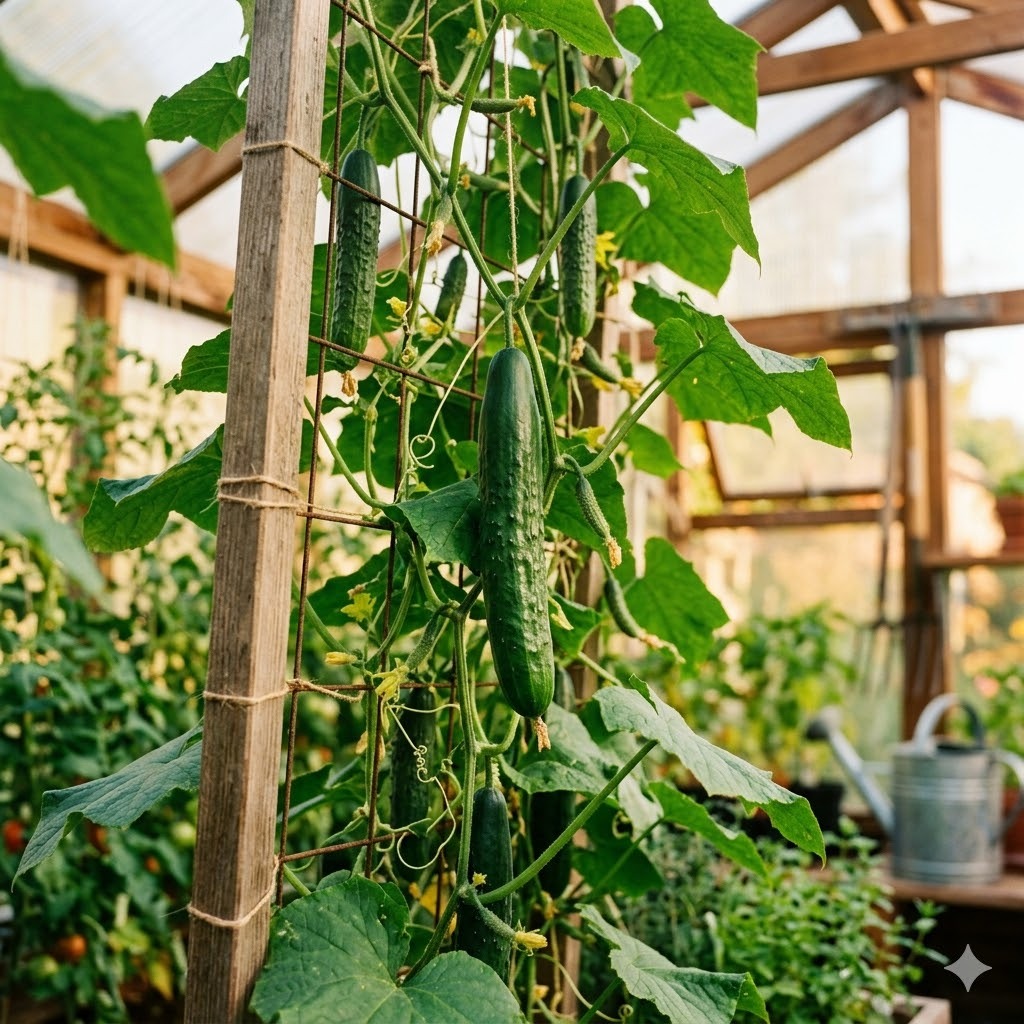
In a greenhouse or polytunnel, grow the all-female smooth types. Plant into large pots, grow bags or a border enriched with plenty of compost or well-rotted manure. Cucumbers under glass want it warm and humid - they thrive in the muggy, jungle-like conditions that would make many other plants unhappy. Give them a vertical string, cane or wire to climb, and tie or twist the main stem in as it grows. The warmth and shelter of a greenhouse gives you longer, cleaner, more reliable fruit, but it comes with a catch: hot dry air invites red spider mite, so you must keep the humidity up (more on that below).
Outdoors in a garden bed, grow ridge types. Choose a warm, sheltered, sunny spot and improve the soil first with plenty of organic matter, because cucumbers are hungry and thirsty. You can let outdoor ridge cucumbers scramble along the ground over straw, or train them up a trellis, netting or wigwam of canes to save space and keep fruit clean. Outdoor plants cope with cooler, more variable weather far better than greenhouse types, but they will still stall in a cold, wet summer.
If you have a greenhouse, use it for the smooth types and grow ridge cucumbers outside as a backup - between the two you will rarely be short.
Day-to-day care
Cucumbers are simple to look after once you know their three loves: warmth, water and feeding.
Water consistently and generously. Cucumbers are mostly water, and a plant that dries out will drop flowers, produce bitter fruit or simply stop. Keep the soil or compost evenly moist, never waterlogged and never bone dry. In hot weather, greenhouse plants may need watering daily. Try to water the soil rather than splashing the leaves.
Humidity matters under glass. Damp down the greenhouse floor on hot days and mist around (not soaking) the plants to keep the air humid. This keeps the plants happy and, importantly, discourages red spider mite.
Feeding kicks in once the first fruit starts to form. Give a high-potassium liquid feed (a tomato feed works well) every week or two through the main cropping season. Plants in pots and grow bags need this more than those in rich garden soil.
Support and training: guide climbing stems up their support and pinch out the growing tip once the plant reaches the top of its frame, which encourages side shoots and more fruit.
One job specific to all-female greenhouse types: remove any male flowers. Even all-female varieties occasionally throw up male flowers, and if these pollinate the fruit, the cucumbers can turn bitter and swollen at one end. Male flowers grow on a thin stalk with no baby cucumber behind them; female flowers have a tiny cucumber shape at the base. Pinch off the males. On outdoor ridge cucumbers you do the opposite - leave the males alone, because those plants need pollination to fruit.
Common problems and pests
Cucumbers are fairly robust, but a few issues come up often enough to know in advance.
Powdery mildew is the classic. It shows as a white, dusty coating on the leaves, usually later in the season and worse when plants are dry at the roots or crowded with poor airflow. Keep plants well watered, give them space and air, and remove badly affected leaves. It rarely kills a plant outright but weakens cropping.
Red spider mite is the greenhouse gardener's headache. These tiny mites thrive in hot, dry air and cause fine mottling and pale speckling on leaves, sometimes with delicate webbing. The single best defence is humidity - keep the greenhouse damped down and misted. Dry heat is what lets them explode in numbers.
Bitter fruit usually traces back to two causes: inconsistent watering (letting plants dry out then flooding them) or, on greenhouse all-female types, accidental pollination by male flowers. Fix your watering routine and remove male flowers.
Poor fruit set or dropped flowers on outdoor plants often means it has simply been too cold, or pollinating insects have been scarce in a wet spell. Warm weather usually sorts it out.
Slugs and snails enjoy young plants and low-hanging outdoor fruit, so protect seedlings and consider training fruit off the ground.
Harvesting
Pick early and pick often - this is the golden rule. Cucumbers are ready far sooner than beginners expect, usually while still glossy and firm rather than at maximum size. Greenhouse fruit is best cut young and smooth; ridge cucumbers are picked small, before the skin toughens and the seeds develop.
The crucial point is that regular picking keeps the plant cropping. Every fruit you leave to grow huge signals the plant to slow down and start setting seed, and production tails off. If you keep cutting fruit as it reaches usable size, a healthy plant will keep producing for weeks. Cut with a knife or snips rather than tugging, to avoid damaging the stem.
At the height of summer you may be picking every couple of days. If you go away, ask someone to keep harvesting, or you will come back to a plant full of oversized, seedy fruit and not much interest in making more.
Storing and preserving
Fresh cucumbers do not keep for long - a week or so in the fridge is realistic, wrapped loosely to stop them drying out or turning slimy. They do not freeze well as fresh fruit because of their high water content, so if you have a glut, preserving is the answer.
Pickling is the classic and the reason cucumbers have been grown for centuries. Small ridge cucumbers and gherkins pickle beautifully in a spiced vinegar brine, giving you crunchy jars that last for months. Quick "fridge pickles" are ready in a day and need no special equipment, while traditional processed pickles store in the cupboard.
Fermenting is the other great route. Salt-brined fermented cucumbers - the deli-style sour pickle - are made simply with salt, water, spices and time, and give you a tangy, probiotic-rich result without vinegar. It is genuinely one of the easiest ferments to start with.
Both methods turn a summer flood of fruit into something you can enjoy through winter, which is a satisfying way to make the most of a productive plant.
Is it worth it?
Honestly, yes - cucumbers are one of the better-value crops for the effort. A single healthy plant can hand you dozens of fruit over a season, the flavour genuinely beats shop-bought, and they are forgiving enough for a first-time grower to succeed with. The main investments are warmth at the start and steady watering through summer, neither of which is hard once you have the routine.
The one caveat is that they need attention in the heat of summer - miss a few waterings or stop picking, and cropping suffers. But if you can pass by the plant every day or two with a watering can and a pair of snips, cucumbers reward you generously. Grow the smooth all-female types under glass, the tougher ridge types outdoors, and you will have crisp fruit from midsummer well into autumn.