How to Grow Dill: The Feathery Partner Your Cucumbers and Pickle Jars Have Been Waiting For
A beginner-friendly guide to growing dill in beds or pots for two harvests from one plant - soft leaves for the kitchen and seed heads for every jar of pickles you make.
When to sow & harvest
A rough guide for a temperate climate - shift it to your own zone and last-frost date. Greenhouse growing stretches both windows earlier and later.
Why grow dill
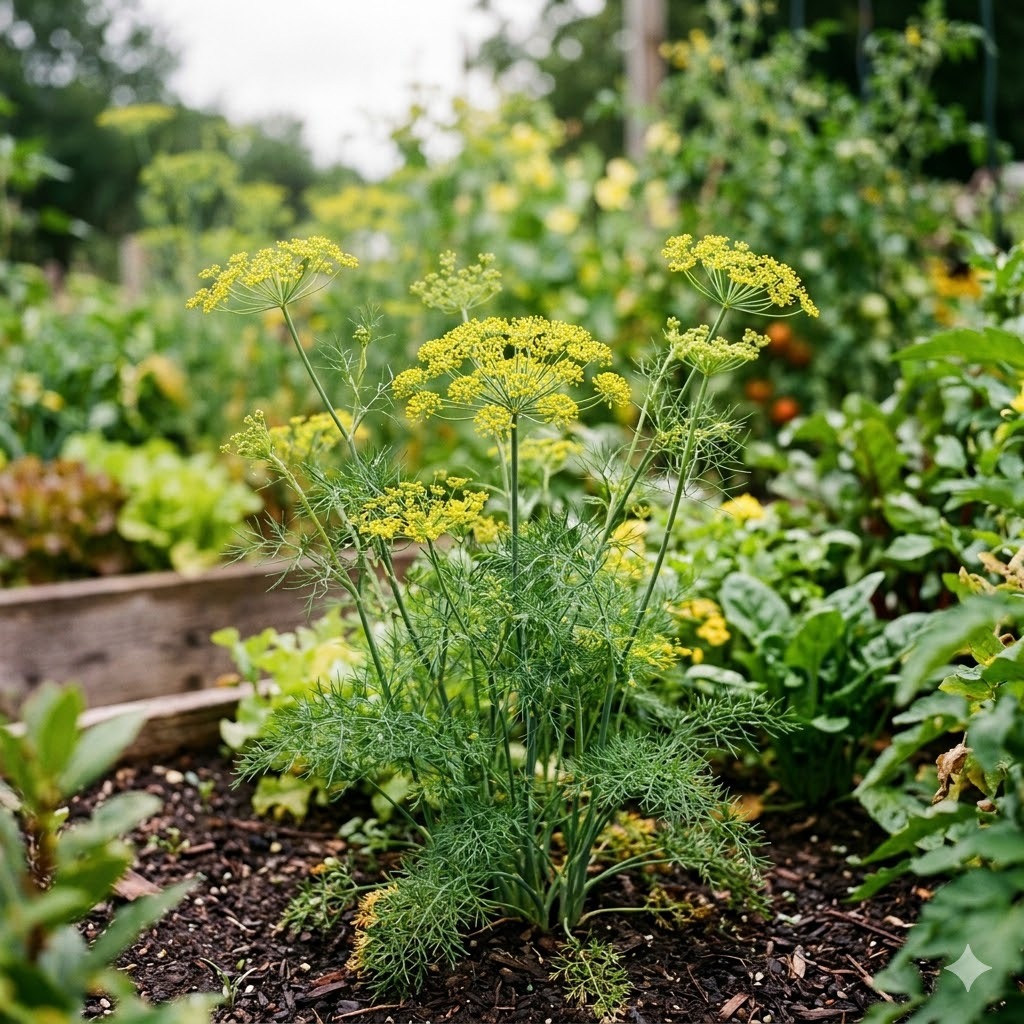
Dill is the classic partner to cucumbers and the pickling jar, and once you have grown a row of it you will understand why so many gardeners tuck it in every year. Those soft, feathery leaves go straight into salads, on top of new potatoes, and alongside almost any fish you can name. Then, later in the season, the flat golden seed heads arrive, and those flavour every jar of pickles, every batch of cured cucumbers, and plenty of loaves of rye bread too.
The real appeal for a beginner is that you get two harvests from one plant: leaf first, then seed. That is unusual value from a single sowing. Dill is cheap to grow from seed, it does not need any special kit, and it grows happily outdoors in a bed or a large pot. It also brings hoverflies, lacewings, and other helpful insects into the garden when it flowers, which is a quiet bonus for everything growing nearby.
It is not a completely hands-off plant - dill likes to bolt to flower quickly, and you will need to work with that rather than against it. But once you understand its habits, it is one of the easiest and most rewarding herbs a beginner can grow.
Choosing a variety
For most gardeners, the choice comes down to what you want more of: leaf or seed.
Standard dill (often just sold as "dill" or "common dill") does everything. It gives you leaves early and then runs up to flower and set seed. If you mainly want pickling seed and do not mind the plant flowering quite soon, standard dill is fine and usually the cheapest option.
If you want more foliage before the plant flowers, look for the slow-to-bolt leaf types. Varieties like 'Dukat' and 'Fernleaf' have been selected to hold their leaf longer and resist bolting, which means a bigger, longer picking window of that soft feathery growth before the plant switches to flowering. 'Fernleaf' is also more compact, which makes it a good pick for pots and windowsills.
A practical plan for a beginner is to grow both: a leaf variety like 'Dukat' or 'Fernleaf' for a steady supply of soft foliage for the kitchen, and a little standard dill left to flower and set seed for your pickles. That way you cover both harvests without compromise.
Sowing and starting off
The single most important rule with dill is this: sow it direct, where it is going to grow. Dill forms a taproot and genuinely dislikes being transplanted or having its roots disturbed. Modules and pots of seedlings often bolt straight to flower once moved, giving you a stringy plant and very little leaf. So skip the seed trays and sow into the ground or into the final pot.
Prepare the soil by raking it to a fine, crumbly texture, then sow the seeds thinly in shallow drills about 1 cm deep. Water gently and keep the surface from drying out while the seeds germinate, which usually takes one to three weeks depending on warmth. Once the seedlings are up, thin them so plants stand roughly 20-25 cm apart. Do not be tempted to lift and replant the thinnings - just remove the extras.
The other key idea is successional sowing. Because dill bolts to flower fairly quickly, especially in heat or dry spells, a single big sowing will not give you leaf all summer. Instead, sow little and often - a short row every three or four weeks from spring right through summer. This staggered approach keeps a fresh supply of young, tender leaf coming, because there is always a younger batch of plants coming up behind the ones that are starting to run to flower.
Greenhouse or garden - where to grow
Dill is an outdoor crop, and that is where it performs best. It does not need a greenhouse, and in fact a hot, still greenhouse tends to push it into flowering even faster, which is the opposite of what you want if you are after leaf.
Choose a sunny, sheltered spot with well-drained soil. Dill will grow in a fair range of soils but dislikes sitting in cold, wet ground. In a bed, that sunny position gives you strong, upright plants; the taller standard types can reach chest height when in flower, so a little shelter from strong wind helps, or a discreet cane or two for support.
Pots work well too, particularly for the compact leaf varieties. Use a pot at least 20-25 cm deep to give that taproot room, fill it with a free-draining multipurpose compost, and stand it somewhere sunny. Pots dry out faster than open ground, so you will need to keep an eye on watering to stop the plant bolting early.
One planting note worth remembering: do not grow dill right next to fennel. The two are close relatives and can cross-pollinate, which can muddy the flavour of any seed you save and give you oddly intermediate plants. Keep them well apart in the garden and you avoid the problem entirely.
Day-to-day care
Dill is not demanding once it is up and growing, and the main job is simply keeping it watered. Consistent moisture is the single best thing you can do to delay bolting - a plant that gets dry, hot, or otherwise checked will rush to flower and stop making leaf. So water regularly in dry spells, especially plants in pots, and try to avoid letting them wilt.
You do not need to feed dill heavily. Rich, over-fed soil tends to give soft, floppy growth, so a reasonable soil and steady water are usually enough. If you are growing in pots for a long stretch, an occasional weak liquid feed keeps the leaf coming, but go easy.
Keep the area weeded while plants are small so they are not competing for water and light. Tall plants in flower may lean or flop after wind or rain, so stake the standard types loosely if they need it. And here is a nice trick that costs nothing: let a few plants run right through to flower and set seed. Not only does this give you pickling seed, but dill will often self-seed and pop up on its own next year, effectively sowing your next crop for free.
Common problems and pests
Dill is generally trouble-free, but a few things are worth knowing.
Bolting is the big one, and it is not really a pest - it is the plant's natural response to heat, dry soil, or any check to growth such as transplanting or drought. You cannot stop it forever, but you can delay it by keeping plants watered, growing slow-to-bolt varieties for leaf, and sowing successionally so there is always young growth coming.
Aphids can gather on the soft growing tips, especially in warm weather. A blast of water or a squash between finger and thumb usually deals with small outbreaks, and the hoverflies that dill's flowers attract will help keep them down.
You may occasionally find plump green-and-black striped caterpillars munching the foliage - these are the larvae of swallowtail-type butterflies, which favour dill and its relatives. There are rarely many of them, and given how welcome those butterflies are, many gardeners simply move the caterpillars to a plant they can spare rather than kill them.
Finally, damping off can strike very young seedlings, causing them to keel over at soil level. It is caused by overly wet, cold conditions, so sow thinly, avoid overwatering, and make sure the soil drains well to keep seedlings healthy.
Harvesting
You get two harvests from dill, and timing is everything.
For leaf, start picking young and pick often. Snip the soft feathery foliage from the top and outer growth once the plant is a decent size, and keep coming back regularly. Frequent picking of young leaf actually encourages more tender growth and slows the plant's rush to flower a little. Young leaf has the best flavour, so do not wait for the plant to get big and coarse.
For seed, let some plants flower and then watch the seed heads. The flat clusters of tiny yellow flowers will fade and the seeds will begin to swell and turn from green to pale brown. Cut the whole seed head as it turns brown but before the seeds start dropping on their own - just as they are drying is the moment. Snip the head with a good length of stem so you have something to hold and hang.
Because your leaf plants and your seed plants are effectively doing two different jobs, this is another reason to grow a few of each, or to let your later successional sowings run to seed once you have had your fill of leaf.
Storing and preserving
Dill leaf is best used fresh, but it does not keep well once cut and it dries very poorly - dried dill leaf loses most of its aroma and turns to dull hay. So for the leaf, freezing is by far the best method. Chop the fresh foliage and freeze it in bags, or pack it into ice cube trays topped up with a little water, then freeze and pop the cubes straight into soups, sauces, and fish dishes through winter. The frozen leaf keeps far more of its true flavour than anything dried.
The seed is a different story and stores beautifully. Once you have cut the browning seed heads, hang them upside down inside a paper bag in a dry, airy spot for a week or two. The seeds will finish drying and drop into the bag. Rub off any remaining seeds, remove the bits of stem and chaff, and store the clean dry seed in an airtight jar somewhere cool and dark. Kept dry, dill seed holds its flavour for a good year or more, ready for every jar of pickles you make, plus breads, cabbage dishes, and cooking through the year.
Is it worth it?
For a beginner, dill is very much worth growing. It is cheap and easy from seed, needs no special equipment, and delivers two useful harvests - soft leaf for the kitchen and seed for the pickle jar - from a single sowing. The habit of bolting quickly is really its only quirk, and once you meet that with steady watering, slow-to-bolt leaf varieties, and a little-and-often sowing routine, you will have dill on hand all season.
Add in the fact that it feeds beneficial insects, often self-seeds itself for next year, and pairs so naturally with the cucumbers most gardeners are already growing, and it earns its place easily. Sow a short row this spring, keep it watered, let a few plants go to seed, and you will likely never buy a jar of dried dill again.