How to Grow Endive: A Hardy, Bittersweet Salad to Fill the Autumn Gap
A practical guide to growing endive from a summer sowing to autumn and winter harvests, including how to blanch the heart pale and sweet when lettuce is long gone.
When to sow & harvest
A rough guide for a temperate climate - shift it to your own zone and last-frost date. Greenhouse growing stretches both windows earlier and later.
Endive is the salad leaf that steps up just as lettuce is bowing out. It is hardier, more resilient and slightly bitter, and it comes into its own in autumn and early winter when most other salad crops have either bolted or given up. If you have ever wished for something fresh and leafy to pick when the year is winding down, endive is the answer, and it is a crop that far too few gardeners bother with.
There is a knack to getting the best from it, which is why it sits at the intermediate level rather than the beginner's bench. Left to its own devices, endive can be quite bitter, but with a simple blanching trick - covering the heart to shut out light for a week or two - you can turn it pale, tender and mild. Combine the right sowing time with that finishing touch and you get a genuinely useful, weather-hardy salad. This guide walks through the whole season.
Why grow endive
The main reason is timing. Endive fills the autumn salad gap beautifully. You sow it in summer, it grows on through the warmth, and it stands ready to harvest through autumn and into the cold months, exactly when lettuce is finished and fresh leaves are scarce. That off-season supply is its whole point, and it is a real asset for keeping a salad bowl going late in the year.
The second reason is hardiness. Endive shrugs off cool weather and light frosts that would flatten a lettuce, so it keeps giving long after tender salads have collapsed. With a little protection it stands into proper winter, extending your fresh-salad season by months.
Finally, there is that distinctive flavour. Endive has a pleasant, slightly bitter edge that adds real character to a salad, a welcome change from bland leaves. Blanch the heart and you soften that bitterness into something mild and sweet, giving you two textures and flavours from one plant: crisp bitter outer leaves and a tender, pale, sweet centre.
Choosing a variety
Endive splits into two main types, and it is worth growing both for variety and to spread the season.
Frisée, or curled endive, has finely cut, frilly, deeply divided leaves that form a loose, lacy rosette. It tends to be the more delicate and decorative of the two, with a distinct bitter tang, and is often used blanched to soften its bite. It is generally sown for late summer and autumn eating.
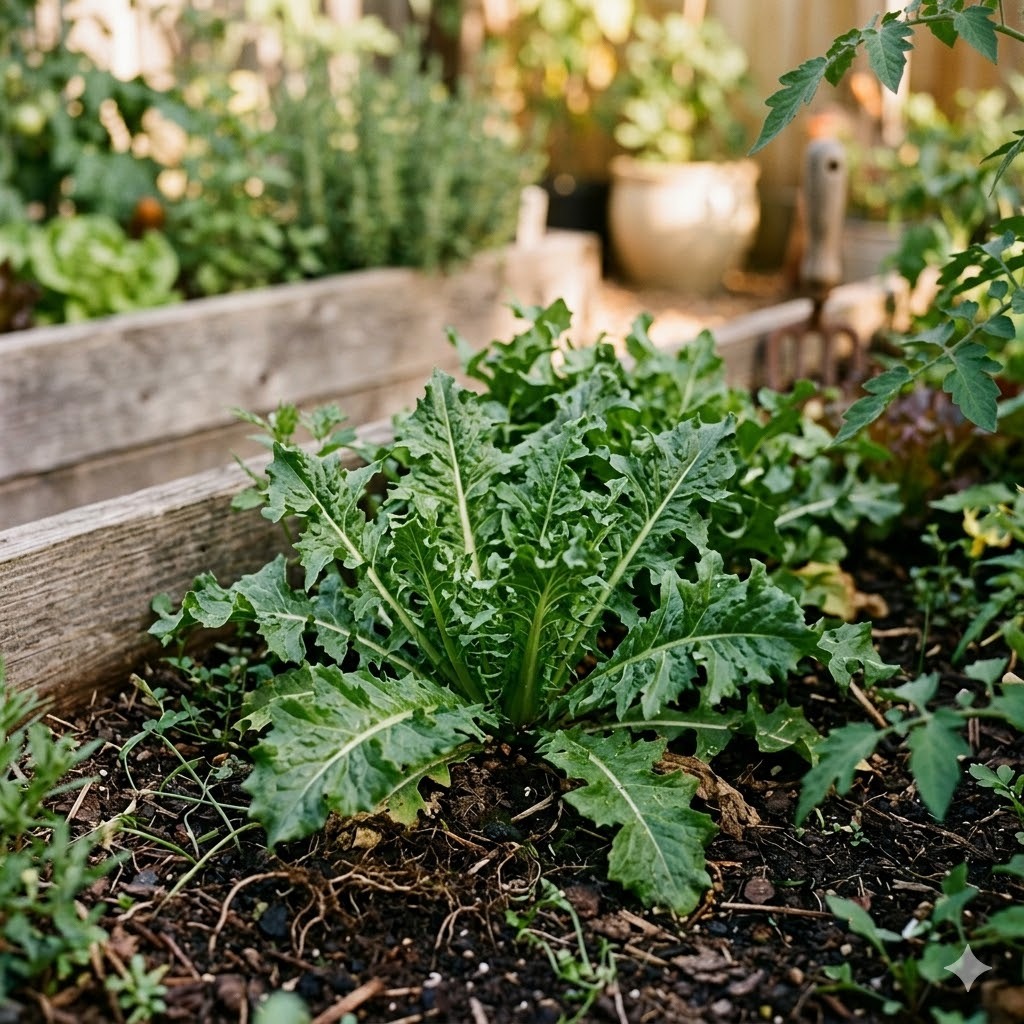
Batavian, or broad-leaved endive, sometimes called escarole, has smooth, broad, flatter leaves that form a fuller, more heart-like head. It is hardier and tougher than frisée, standing better into cold weather, and its broad leaves blanch well by covering. This is the type to lean on for the coldest end of the season.
A good plan is to grow a frisée type for autumn and a hardy Batavian type to carry you into winter. Between them they give you fresh salad across a long stretch, with the broad-leaved sort doing the heavy lifting once the frosts arrive.
Sowing and starting off
Timing is the thing to get right with endive, because it is a summer-sown, autumn-harvested crop. Sow too early in spring and hot weather can push it straight to flower; sow in summer and it grows steadily into the cooler months, which is exactly what you want.
Sow from early to mid-summer, roughly June to August, for autumn and winter harvests. You can sow direct into a finely raked bed, drawing out shallow drills about a centimetre deep and thinning the seedlings as they grow, or sow in modules and transplant the young plants once they are big enough to handle. Modules give you neat, evenly spaced plants and let you fill gaps left by other crops as they finish.
Space or thin the plants to around 30cm apart each way, since a mature endive makes a decent-sized rosette and needs room to develop a full head. Crowded plants stay small and are harder to blanch.
Keep the seedbed moist while the seed germinates and the young plants establish. Endive germinates readily in warm summer soil, so you should see seedlings within a week or so. Because you are sowing in the heat of summer, pay attention to watering, as dry, stressed young plants are more likely to bolt rather than settle into steady growth.
Where to grow
Endive is an outdoor crop, well suited to open ground, raised beds and large containers. Through summer and early autumn it grows happily in a sunny or lightly shaded spot, and as it is a cool-season leaf, a little shade in warm weather actually suits it and reduces the risk of bolting.
Any reasonable, moisture-retentive soil serves it well. Because it is often following an earlier crop that has finished, endive is a useful way to keep a bed productive into the back end of the year rather than leaving it bare.
There is no need for a greenhouse to grow the crop, but protection genuinely helps at the cold end of the season. A cloche, cold frame or fleece thrown over the plants as hard frosts arrive keeps the leaves in good condition and stretches the harvest further into winter. Grown against a sheltered wall or under a low tunnel, hardy Batavian types in particular can stand a surprisingly long time. So grow it outdoors, but be ready to throw a cover over it when the weather turns bitter.
Day-to-day care
Endive is not demanding once it is up and growing, but a few things keep it in good shape.
Water regularly, especially through the warm weeks after a summer sowing. Steady moisture keeps the plants growing without check, and it is a check - from drought or heat stress - that most often triggers premature bolting. Even, unhurried growth gives you a fuller, milder head.
Keep the plants weeded while they are young, as small endives do not compete well with vigorous weeds. Once they bulk up and their leaves knit together, they largely shade out competition themselves.
The signature job with endive is blanching, and it is optional but transformative. Left unblanched, the heart is markedly bitter. To sweeten and tenderise it, wait until the plant is well grown, make sure the leaves are dry to avoid rot, then exclude light from the centre. The simplest way is to cover the plant with an upturned plate, bucket or pot, or to gather the outer leaves up over the heart and tie them loosely. Leave it covered for one to two weeks. Deprived of light the inner leaves lose their green and their bitterness, turning pale, crisp and sweet. Blanch only a few plants at a time as you need them, since a blanched heart does not hold as long and is more prone to rotting in wet conditions.
Common problems and pests
Endive is fairly robust, but watch for a handful of issues.
Slugs and snails are the most persistent nuisance, especially in the damp autumn weather when endive is maturing, and doubly so once you begin blanching, since the covered, sheltered heart is exactly the sort of dark, moist hiding place they love. Check under covers regularly, clear away hiding places, and use your preferred slug measures around vulnerable plants. Blanching in dry conditions and lifting covers to inspect helps keep them at bay.
Rot in the heart is the other main risk, and it goes hand in hand with blanching. If you cover leaves that are wet, or blanch during a very wet spell, the enclosed heart can turn slimy and rot rather than sweeten. Always blanch dry plants, choose a drier period if you can, and do not leave the cover on longer than needed.
Aphids can gather on the leaves, particularly on autumn growth, and are best dealt with by rinsing them off or squashing colonies, since you will be eating the leaves.
Bolting, or running to flower, is more a matter of timing and stress than a pest. Sowing in the heat of early summer, or letting plants dry out and overheat, encourages it. Correct summer timing and steady watering are the best prevention.
Harvesting
Endive is ready to harvest through autumn and into winter, giving you a long picking window that is its whole reason for being.
You can harvest in two ways. For a full head, cut the whole plant at the base with a knife once it has made a decent-sized, well-filled rosette - this is the usual method for blanched plants, which you cut and use soon after uncovering. Alternatively, treat it as a cut-and-come-again crop, picking outer leaves as you need them and leaving the plant to keep producing, which stretches the harvest from each plant over a longer period.
If you have blanched the heart, harvest it within a few days of uncovering, while it is at its pale, sweet, tender best and before it has a chance to rot or turn green again in the light.
Because endive is hardy, you can leave plants standing in the ground and pick as required through the cold months, especially the tough broad-leaved types under a little protection. Take what you need and let the rest hold in the garden.
Storing and preserving
Endive is grown as a fresh salad leaf, and it is not a crop for long-term storage, so the best approach is to leave hardy plants standing in the ground and harvest them as you want them, treating the bed as your store through autumn and winter.
Once cut, a whole head or a handful of leaves keeps for several days in the fridge. Wrap it loosely to stop it drying out, and keep it cool. Blanched hearts are more perishable than the green outer leaves, so use those promptly rather than trying to hold them.
Endive does not freeze well as a salad leaf, since the tissue softens and collapses once thawed. If you find yourself with more than you can use fresh, the better route is to cook it, as endive and escarole hold up well braised or wilted in the pan. Cooking tames the bitterness and gives you another way to use a surplus, and cooked endive can be frozen in portions if you really need to keep it, though most of the time simply harvesting from the standing crop as needed makes storage unnecessary.
Is it worth it?
Yes, and it deserves to be grown far more than it is. Endive's great virtue is timing: it hands you fresh, characterful salad leaves through autumn and into winter, precisely when lettuce has given up and the salad bowl looks bare. For extending your salad season it is genuinely hard to beat.
It asks a little more know-how than a beginner's lettuce - the right summer sowing time, steady watering to avoid bolting, and that optional blanching trick to sweeten the heart - which is why it sits at the intermediate level. But none of it is difficult once you understand the plant. Grow a frisée type for autumn and a hardy Batavian to carry you into the cold, blanch a few hearts as you fancy them, and you will have a fresh, bittersweet salad standing in the garden long after everything else has stopped.