How to Grow Fennel: The Tall Aniseed Herb That Feeds You and the Beneficial Insects
A beginner's guide to growing herb fennel for its feathery aniseed leaves and seeds, with honest advice on giving it room, full sun, and stopping it self-seeding.
When to sow & harvest
A rough guide for a temperate climate - shift it to your own zone and last-frost date. Greenhouse growing stretches both windows earlier and later.
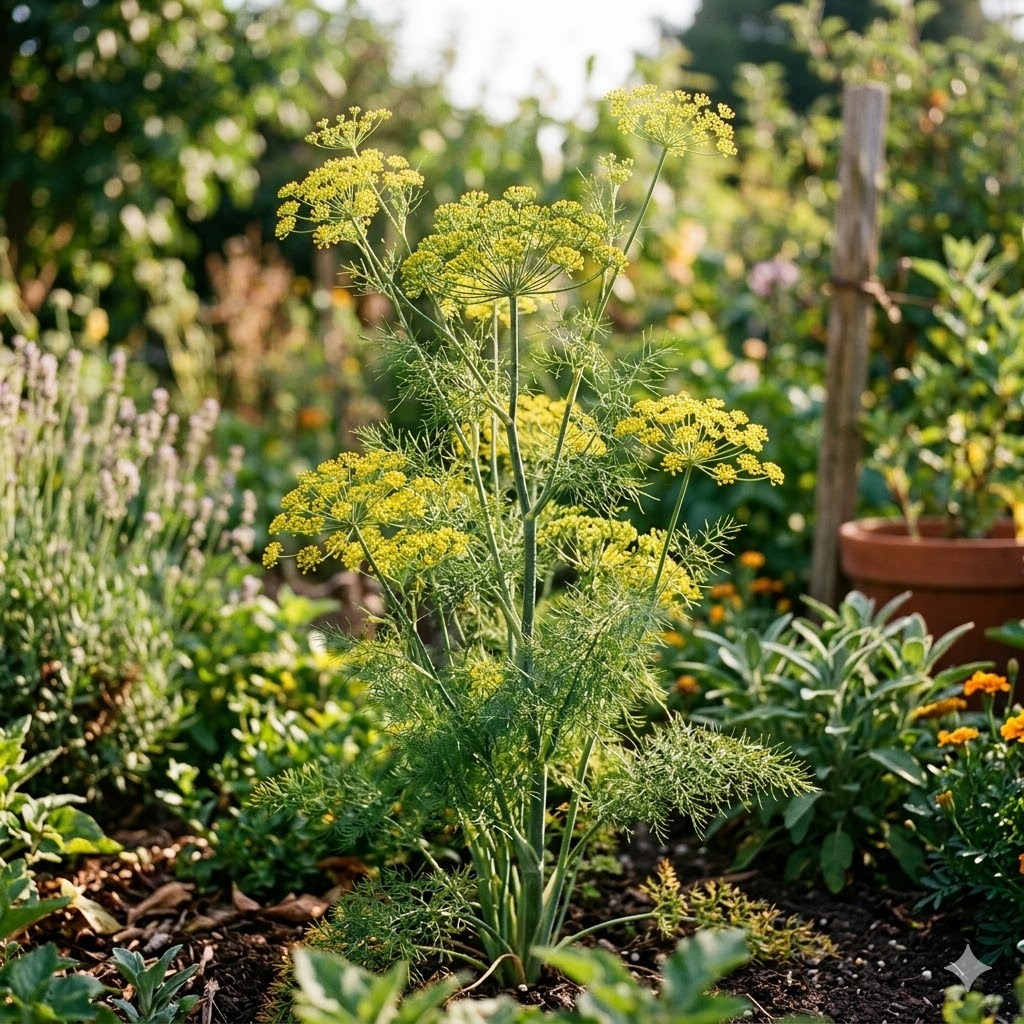
Fennel is a herb that earns its place twice over. Grown for its feathery, aniseed-scented leaves and its aromatic seeds, it is also one of the most beautiful things you can put at the back of a border, tall and airy and topped with wide golden flower heads. Those flowers are a genuine magnet for beneficial insects, so a clump of fennel works for you long before you ever pick a leaf. It is easy, hardy and perennial, coming back year after year. The one thing to get right is giving it space, sun, and a bit of management so it does not seed itself all over the garden.
A quick point of clarity first, because the name causes confusion. This is herb fennel, sometimes called common fennel, grown for its leaves and seeds. It is not the same as Florence fennel, the bulb vegetable you slice into salads. Herb fennel does not form a swollen bulb - it grows tall and feathery and is treated as a permanent plant in the border rather than a vegetable to lift.
Why grow fennel
The honest reason to grow herb fennel is that it gives you two harvests from one easy plant. The soft, thread-like leaves bring a fresh aniseed note to fish, salads and dressings through the summer, and later the same plant produces aromatic seeds you can gather and use in cooking. For very little effort you get a herb that keeps giving from spring through to autumn.
It is also, frankly, a lovely plant to look at. Fennel grows tall and graceful, with clouds of fine foliage and flat heads of tiny yellow flowers held high, and it looks wonderful at the back of a border where its height can shine. Few edible plants are as ornamental, which makes it easy to justify a spot even in a garden grown mainly for beauty.
Best of all, those flower heads are a magnet for beneficial insects. Hoverflies, lacewings and other helpful visitors flock to fennel's open flowers, and those insects are exactly the ones that keep pests like aphids in check elsewhere in the garden. Growing fennel is one of the simplest ways to bring more of the good insects in, so the plant works for the whole garden, not just your kitchen.
Choosing a variety
For most people, plain green herb fennel is the one to grow. It gives you the classic feathery leaves and the aniseed seeds, it is hardy and perennial, and it is exactly what you want if flavour is your main aim. If you only grow one, grow this.
The main alternative worth knowing is bronze fennel:
- Bronze fennel - an ornamental type with dusky, coppery-purple foliage that is genuinely striking, especially with the light behind it. It is still edible and used just like green fennel, but it is grown mostly for its looks, and it makes a beautiful feature plant. If you care about how the border looks as much as what ends up on the plate, bronze fennel is a lovely choice.
Both types behave the same way in the garden - tall, perennial, and keen to self-seed - so the choice really comes down to whether you want plain green foliage or the ornamental bronze. Beginners do well with either. Many gardeners end up growing both, the green for the kitchen and the bronze for the show.
Planting and starting off
Fennel is easy to raise from seed, and this is the usual way to start it. Sow in spring, either where it is to grow or in pots to plant out later. Because fennel forms a long taproot and does not love being moved once it is established, sowing directly into its final position, or transplanting while plants are still small, tends to work best.
To sow, scatter or space the seeds thinly in well-prepared soil in a sunny spot, cover lightly, and keep the ground moist until the seedlings appear. Thin them out so each plant has plenty of room, because a mature fennel is a big, tall thing and crowded seedlings never do well. If you started them in pots, plant them out while young and settle them in with a good watering.
You can also buy a young plant if you would rather skip the seed stage, and one plant is often plenty to start with given how readily fennel seeds itself. However you begin, remember that fennel is a perennial: once established it comes back year after year from the same crown, getting a little bigger and stronger each season.
Where to grow
Fennel wants two things above all: full sun and room. It is a sun-lover that grows best in a bright, open position, and it grows tall and wide, so it needs space to spread out without crowding its neighbours or being shaded by them. The classic home for it is the back of a border, where its height is an asset and its airy foliage sets off shorter plants in front.
Give it a well-drained soil and that sunny spot and it is not otherwise fussy. It copes with ordinary garden conditions and, once its deep taproot is down, it stands up well to dry spells. What it will not thrive in is a cramped, shady corner, so resist the temptation to squeeze it in somewhere tight - a stunted, sun-starved fennel is a poor thing compared to a plant given the room it wants.
One companion-planting point is worth flagging honestly: fennel does not like being grown right next to dill. The two are close enough relatives that they can cross-pollinate if they flower side by side, which can affect the seed you save and the character of both plants. It is not a catastrophe, but if you grow dill as well, keep the two well apart in the garden rather than as neighbours.
Day-to-day care
Herb fennel is genuinely low-maintenance once it is established, which is part of its appeal. A settled plant with its deep taproot largely looks after itself, needing watering mainly in prolonged dry weather and little in the way of feeding in reasonable soil. For much of the season your main job is simply to enjoy it.
The one bit of active management that matters is dealing with the seed heads, and it is the single most useful habit to get into. Fennel self-seeds with real enthusiasm, and if you let those flower heads ripen and scatter their seed, you will find fennel seedlings coming up all over the garden the following year. To keep it in check, cut off the seed heads before they scatter - either take what seed you want to keep and remove the rest, or simply cut the heads off once flowering is over. This keeps the plant where you want it and saves you weeding out unwanted seedlings later.
Because fennel grows tall, plants in an exposed spot can occasionally flop or need a little support, though at the back of a border they usually lean on their neighbours quite happily. In late autumn or winter you can cut the old, dying stems back to the ground, and the plant will send up fresh growth again in spring. That is very nearly the whole of the care fennel asks for.
Common problems and pests
Fennel is one of the more trouble-free herbs, and its own flowers help keep it that way by drawing in the very insects that control common pests. Serious problems are uncommon, and the plant's vigour usually carries it through minor setbacks.
The most likely nuisance is aphids, which can cluster on soft new growth and the flower heads. The good news is that fennel's flowers attract hoverflies and lacewings, whose larvae are hungry aphid-eaters, so an aphid outbreak on fennel often sorts itself out as the beneficial insects move in. If you want to help, you can rinse aphids off with a jet of water or rub them off by hand while numbers are low.
The other thing gardeners sometimes notice is caterpillars feeding on the foliage, since fennel is a food plant for the caterpillars of certain butterflies. Many gardeners are happy to share a few leaves with these, given how much the plant produces and how welcome the butterflies are. If they are stripping too much, pick them off by hand and move them elsewhere. Beyond these, fennel's main "problem" is really just its enthusiasm for self-seeding, which is a management job rather than a pest.
Harvesting
Fennel gives you two distinct harvests, and knowing when to take each is the key. The feathery leaves can be picked through the growing season, snipping fresh fronds as you need them for the kitchen. The youngest, softest foliage has the best flavour and texture, so pick from the fresh growth rather than the older, tougher stems, and take a little at a time from a plant that is producing plenty.
For seeds, you wait until later in the year. Let the flowers fade and the seed heads develop, then watch as the seeds ripen and begin to turn from green to brown. Harvest the seed heads once the seeds are formed and starting to dry but before they scatter themselves - cut the whole head and finish drying it somewhere airy indoors, then rub the seeds free. This is the same cut that keeps the plant from self-seeding, so harvesting your seed and managing the plant are conveniently the same job.
Between the leaves through summer and the seeds in autumn, a single established fennel keeps you supplied generously across much of the year, all from a plant that mostly grows itself.
Storing and preserving
The leaves and the seeds keep in different ways, and each has a sensible method.
For the feathery leaves, use them fresh where you can, as their delicate aniseed flavour is at its best straight from the plant. When you have more than you need:
- Freezing - chop the fronds and freeze them, either loose or in ice-cube trays topped with a little water, to drop into dishes later. This keeps more of the fresh character than drying, since the fine leaves lose a lot of their flavour and body when dried.
For the seeds, drying is exactly right and easy:
- Drying seeds - once you have gathered the seed heads, spread them out or hang them somewhere warm and airy until fully dry, then rub the seeds off and store them in an airtight jar out of the light. Dried fennel seed keeps its aroma well for a long time and is ready whenever a recipe calls for it.
So the general rule is simple: freeze the leaves, dry the seeds. Between the two, you can bank a good part of a fennel plant's output for use through the rest of the year.
Is it worth it?
Yes, and on several counts at once. Herb fennel gives you fragrant aniseed leaves through the summer and a jar of aromatic seeds in the autumn, from a hardy perennial that comes back every year and asks almost nothing of you once it is settled. Few herbs give so much for so little ongoing work.
On top of the harvests, it earns its keep as one of the most beautiful plants you can grow, tall and airy at the back of a border, and as a genuine draw for the hoverflies and lacewings that help protect the whole garden. The honest conditions are straightforward: give it full sun and plenty of room, keep it away from dill, and cut off the seed heads before they scatter so it does not colonise the garden. Meet those, and fennel is a generous, good-looking, beginner-friendly herb that works for you long after the leaves are picked.