How to Grow Figs: The Warm-Wall Fruit That Crops Best When You Starve Its Roots
An honest guide to growing figs against a hot, sheltered wall, where the trick to good fruit is restricting the roots and protecting the tiny embryo figs through winter.
When to sow & harvest
A rough guide for a temperate climate - shift it to your own zone and last-frost date. Greenhouse growing stretches both windows earlier and later.
A ripe fig, picked warm off the plant and eaten on the spot, is one of the great rewards of a sunny garden. It is soft, honeyed and nothing like the firm, under-ripe things sold in shops, which are picked early because a proper fig is too tender to travel. Grow one against a hot, sheltered wall and you can have that experience every summer, from a plant that is tougher and longer-lived than its exotic reputation suggests.
There is a catch, and it is the one thing that separates a fruiting fig from a disappointing one. A fig given rich soil and free root run will reward you with a huge, handsome, leafy tree and almost no fruit. To crop well, a fig needs its roots restricted. Understand that, and figs become one of the easiest fruits a warm garden can grow.
Why grow figs
The honest reason is flavour, because a home-grown fig is a genuinely different fruit from the shop version. A fig will not ripen once it is picked, so any fig sold in a supermarket has been harvested firm and unripe to survive the journey. Grow your own and you can leave the fruit hanging until it is soft, drooping and split with sweetness - the point at which it is far too delicate to sell, and at its absolute best.
Figs are also surprisingly tough and forgiving once you know their quirks. They cope with poor, stony soil, they shrug off drought better than most fruit, and a well-placed fig will crop reliably for many years with very little fuss. The plant that looks so exotic in leaf is actually one of the more low-maintenance fruits you can grow, provided you get its two key needs right.
And a fig earns its place as a plant, not just a crop. The big, hand-shaped leaves are handsome against a sunny wall, they cast pleasant shade, and a mature fig gives a garden a warm, Mediterranean feel that few other hardy plants manage. It is a fruit that looks the part as well as tasting it.
Choosing a variety
For most gardens in a cool climate, the choice is simple and reassuring: pick a hardy, reliable variety and you are most of the way to success. Brown Turkey is the classic recommendation and a genuinely good one - it is tough, dependable, and crops well against a wall even in an unremarkable summer. If you only grow one fig, this is a safe and rewarding choice.
There are other hardy types worth knowing once you have the knack, offering different skin colours and flavours, but the sensible starting point is a variety already proven in cooler conditions rather than a tender one bred for hot climates. A tough variety in a good spot will always beat a temperamental one struggling in the wrong place.
It is worth knowing that the hardy figs grown in cool gardens are self-fertile - they set their edible fruit without pollination and without any need for the specialist wasp that some wild figs depend on. So you do not need a partner plant or anything exotic; one well-sited tree of a reliable variety will fruit happily on its own.
Planting and starting off
Plant a fig in spring once the worst of the cold has passed, giving it a full season to settle before its first winter. This is also the moment to do the single most important thing for future crops: restrict the roots.
A fig with free root run grows huge and leafy and barely fruits, so the standard advice is to confine its roots deliberately. The two proven methods are:
- A large pot or container - the simplest approach. Grown in a big, sturdy pot, the roots are naturally contained, which keeps the plant compact and pushes it towards fruiting rather than endless growth.
- A paved planting pit - dig a hole against the wall, line the sides with slabs or paving to box the roots in, and put a layer of rubble or hardcore in the base for drainage. The roots are then confined to a limited volume of soil, exactly as the plant likes.
Whichever you choose, do not plant a fig into rich, open ground and expect fruit - it will grow into a monster instead. Set it against your warmest wall, keep the drainage sharp, and resist the urge to give it a generous root run.
Where to grow
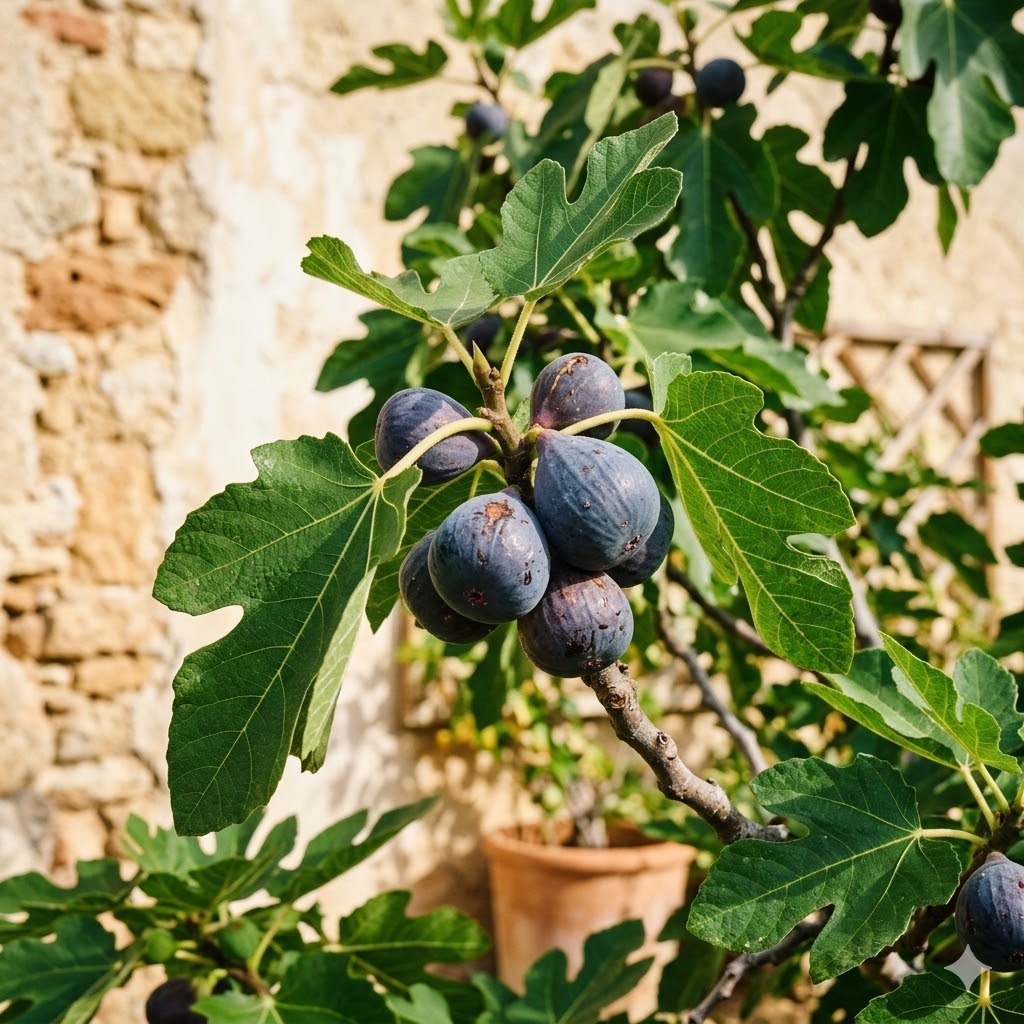
A fig wants heat, shelter and sun, and it will pay you back most against a hot wall that faces the midday and afternoon sun. Brick and stone soak up warmth and radiate it back, ripening the fruit and helping the plant survive winter, so a south- or west-facing wall is close to ideal. Shelter matters too: a spot protected from cold wind lets the plant hold its embryo fruit safely through winter and get away strongly in spring.
Because figs grow so well in containers, they suit patios and courtyards beautifully. A fig in a large pot on a warm, paved terrace has its roots naturally restricted and sits in a sun-trap of reflected heat - two of its favourite things at once. Container growing also lets you move a plant into a bit more shelter over winter if your garden is on the cold side.
Avoid cold, shady corners and open, windy sites. A fig planted in the wrong place will grow leaf but never ripen decent fruit, and its overwintering embryo figs are far more likely to be lost. Warmth and shelter are not luxuries for a fig - they are the difference between a crop and none.
Day-to-day care
A fig in the open ground rarely needs watering once established, but a fig in a pot or a confined pit is a different matter and will need regular watering through the growing season, especially in hot spells, or the developing fruit will drop. Keep it evenly moist while it is carrying fruit, but never waterlogged. Feed sparingly; a light potash-rich feed while fruiting helps, but too much rich food just brings on more leaf at the expense of figs.
The most important seasonal habit in a cool climate is understanding the plant's fruiting rhythm, because it decides which figs you will actually eat. In cooler gardens, the figs that ripen and crop are the tiny, pea-sized embryo figs that form near the tips of the shoots late in the season and overwinter on the plant. These little figs sit through the winter and swell to ripeness the following summer. So:
- Protect the small embryo figs over winter - they are your next crop. Choose a sheltered wall, and in a hard climate you can protect the tips with fleece or straw during severe cold.
- Remove the larger unripe figs in autumn - any fig bigger than a pea that has not ripened by the end of the season will not make it through winter and will only rot on the plant. Pick these off so the tree puts its energy into the tiny embryo figs that matter.
Pruning is light. Shape the plant in spring, thinning out crowded, crossing or frost-damaged branches to keep the middle open and let light reach the fruit. The goal is an open, well-lit framework against the wall, not a dense thicket.
Common problems and pests
Figs are refreshingly free of the pest and disease troubles that plague many fruits, and most failures come down to the wrong site or the wrong root treatment rather than any bug. A fig that grows lots of leaf and no fruit is almost always a fig with too free a root run and too much rich feeding, not a diseased one.
The main losses in a cool climate come from cold rather than pests. A hard winter can kill the overwintering embryo figs, or even damage the branches of a plant in an exposed spot, which is why shelter and a warm wall matter so much. Late frosts can nip young spring growth too.
Ripe fruit attracts attention as it sweetens: birds and wasps will both go for a soft, splitting fig, so pick promptly once fruit ripens and net or protect a heavy crop if birds are a problem in your garden. Under glass or in very dry conditions you may occasionally meet red spider mite, but outdoors a well-grown fig is one of the least troublesome fruits you can keep.
Harvesting
A fig is ready when it tells you so, and it is worth learning the signs because a fig will not sweeten further once picked. A ripe fig hangs down rather than sticking out, feels soft to a gentle squeeze, and often shows a bead of nectar at the eye or a little split in the skin. The colour deepens too. When a fig droops and softens like this, it is at its peak - and only ever so briefly.
Pick gently, cradling the fruit and easing it from the stem; a truly ripe fig comes away with barely any pull. Handle it as little as you can, because ripe figs bruise at a touch. This is genuinely a fruit to eat within a day of picking, warm from the wall, which is exactly why you can never buy one this good.
Because figs ripen a few at a time rather than all at once, harvesting is a pleasant daily browse through the warm weeks rather than a single big pick. Check the plant every day or two once the crop starts to turn.
Storing and preserving
Fresh figs do not keep, and there is no getting around it - a ripe fig is at its best straight off the plant and goes over within a day or two. Keep any you cannot eat immediately in the fridge and use them fast, but the honest truth is that figs are a fruit to enjoy in season rather than store fresh.
For a glut, preserving is the answer and figs take to it well:
- Dried figs - the classic. Split, gentle heat and slow drying concentrate the sweetness into a fruit that keeps for months in the store cupboard.
- Fig jam - figs cook down into a rich, honeyed preserve that captures a summer's crop in a jar and pairs beautifully with cheese.
- Poached or in syrup - firmer or slightly under-ripe figs can be poached gently and kept in syrup, softening and sweetening in the process.
Freezing is possible for figs destined for cooking; they lose their shape and turn soft on thawing, so they are no good eaten fresh but fine for jam or baking later.
Is it worth it?
Yes, provided you can give a fig what it needs. This is not a fruit for a cold, shady, exposed corner, and it is not a fruit that rewards planting into rich open ground and walking away. In the wrong spot, or with an unrestricted root run, you will get a big leafy tree and precious little to eat.
But get the two key things right - a hot, sheltered wall and firmly restricted roots - and a fig is one of the most rewarding and least demanding fruits a warm garden can grow. It crops for years, asks little in the way of care, and gives you something you simply cannot buy: a soft, sweet, sun-warmed fig eaten the moment it is ripe. For a sunny wall or a big pot on a warm patio, it is well worth it.