How to Grow Garlic: The Plant-It-and-Forget-It Crop
Push a few cloves into the ground in autumn, leave them over winter, and lift fat storing bulbs the following summer with almost no work in between.
When to sow & harvest
A rough guide for a temperate climate - shift it to your own zone and last-frost date. Greenhouse growing stretches both windows earlier and later.
Why grow garlic
If you want one crop that gives you a huge return for barely any effort, garlic is it. You plant it in autumn, walk away, and pull up bulbs the next summer. There is no sowing under lights, no pricking out, no fussing over tender seedlings. The cloves go in, sit through the cold and wet of winter, and quietly do their thing.
The other big draw is storage. A row of homegrown garlic, properly dried, will keep you going for most of the year in the kitchen. Shop garlic is fine, but it is usually one or two bland varieties flown in from the other side of the world. Grow your own and you get a choice of flavours - from mild and sweet to hot and punchy - and you get them fresh, at their best, and free of the sprouting that afflicts old supermarket bulbs.
It is also genuinely hard to fail with. Garlic asks for sun, decent drainage, and a bit of weeding in spring. That is close to the whole job.
Choosing a variety
The first thing to know is that garlic splits into two families, and picking the right one matters more than the specific named variety.
Hardneck garlic produces fewer but bigger cloves, generally has the better, more complex flavour, and is hardier in cold winters. It also throws up a flower stalk in early summer called a scape, which is edible and worth having (more on that later). The trade-off is that hardneck bulbs do not store as long - think several months rather than the best part of a year.
Softneck garlic gives you more cloves per bulb, stores much longer, and has the soft, pliable neck that lets you plait bulbs into those attractive strings. It tends to do better in milder climates. Most supermarket garlic is softneck.
For a cold or exposed garden, lean hardneck. For a mild garden and long storage, lean softneck. Many gardeners grow a bit of both and get the best of each.
One rule matters above all else: plant certified seed garlic, not a bulb from the supermarket. Seed garlic is grown and inspected to be free of the diseases that can quietly wreck your soil for years, white rot in particular. Supermarket garlic is also often a variety suited to a warmer climate, and some of it is treated to stop it sprouting - which is the opposite of what you want. Buy seed garlic once from a reputable supplier, and in future years you can save your own best bulbs to replant.
Sowing and starting off
Garlic is not sown from seed in the usual sense. You break a bulb apart into individual cloves and plant those.
Split the bulb only when you are ready to plant, and keep the papery skin on each clove. Pick out the fattest, healthiest cloves for planting and set the small inner ones aside for the kitchen - a big clove makes a big bulb. Discard anything soft, mouldy, or damaged.
Plant each clove pointy end up, blunt (root) end down. This matters - a clove planted upside down will still grow but wastes energy righting itself and gives a poorer bulb. Push each one in so the tip sits about 5cm below the surface, and space cloves roughly 15cm apart in the row, with a similar gap between rows. Firm the soil back over them and water in if the ground is dry.
The main planting time is autumn. Getting cloves in before the ground gets cold gives them a settling-in period and, crucially, exposes them to the cold spell they need. If you miss autumn, you can also plant in late winter, though autumn-planted garlic almost always gives the bigger bulbs.
That cold requirement is worth understanding. Garlic needs a period of chilling - called vernalisation - to trigger a single clove to divide and form a full bulb. Without enough cold, you can end up with a plant that just swells into one big round clove instead of a proper segmented bulb. This is exactly why autumn planting suits garlic so well: winter does the chilling for you.
Greenhouse or garden - where to grow
Garlic is an outdoor crop, and that is where it belongs. It actively wants the cold of winter, so there is no benefit to coddling it under glass - a heated greenhouse would rob it of the vernalisation it depends on.
What it does want outdoors is a sunny, open spot and, above everything else, good drainage. Garlic sitting in cold, waterlogged soil over winter is the single most common way to lose a crop; the cloves simply rot. If your soil is heavy clay, either improve it with plenty of organic matter and grit or grow garlic in raised beds or deep containers where the water can drain away.
The soil should be firm rather than freshly dug and fluffy - garlic roots grip better in settled ground. A bed that had a well-fed crop the previous season is ideal; you rarely need to pile on extra feed. Avoid planting where you have recently grown onions, leeks, or shallots, as they share diseases with garlic.
If you have no garden at all, garlic grows perfectly well in a large, deep pot outdoors on a sunny patio, as long as the drainage holes are clear and it never sits in a saucer of water.
Day-to-day care
The beauty of garlic is how little day-to-day care it needs. Once the cloves are in, most of winter is a matter of leaving them alone.
Come spring, the two jobs that matter are weeding and watering. Garlic has thin, upright leaves and does not compete well with weeds, so keep the bed clear, ideally by hand or with a hoe rather than deep digging that could disturb the shallow roots. In dry spring spells, water steadily - this is when the plant is building the bulb and needs moisture.
Then, as the bulbs approach maturity in early summer, do the opposite: stop watering. Dry conditions in the final few weeks help the bulbs ripen and cure properly and reduce the risk of rot at harvest. Watering right up to lifting can give you soft, poor-keeping bulbs.
If you are growing hardneck garlic, watch for the scape - the curling flower stalk it sends up in early summer. Snap or cut it off while it is still tender. Left on, the plant pours energy into flowering instead of bulbing, and you get a smaller bulb. The bonus is that the scapes themselves are delicious - mild, garlicky, and good chopped into stir-fries, pesto, or scrambled eggs. So you get a free extra harvest and a better bulb from the same job.
Common problems and pests
Garlic is robust, but a few things crop up.
Rust is the most common. You will see orange or rusty pustules on the leaves, usually in a damp season. It looks alarming, but garlic often shrugs it off - the crop usually survives and still produces a decent bulb, especially if the leaves stay green long enough to finish bulbing. Good spacing and airflow reduce it. Rust in leeks and onions can spread to garlic, so keeping the alliums apart helps.
White rot is the serious one. It causes yellowing, wilting leaves and a fluffy white fungus with tiny black dots around the base and roots. There is no cure, and worse, it lingers in the soil for many years. This is precisely why certified seed garlic and crop rotation matter so much - never grow garlic (or onions) in the same ground two years running, and if you get white rot, move your alliums to a completely fresh bed.
Birds can be a nuisance early on, tugging newly planted cloves clean out of the ground before they have rooted. A little netting or a covering of fleece over the bed for the first few weeks after planting sorts this out.
Beyond that, the main causes of failure are soggy soil (rot) and not enough cold (single round bulbs) - both dealt with by the growing conditions above rather than any spray or treatment.
Harvesting
Timing the harvest is the one thing beginners tend to get wrong, so it is worth getting right.
Do not wait for all the leaves to die down. The signal to lift is when the lower leaves have turned yellow and started to brown, but several upper leaves are still green. Each green leaf corresponds to a layer of protective skin around the bulb; if you leave garlic until everything has withered, those wrappers rot away and the bulb splits apart, which ruins its keeping quality.
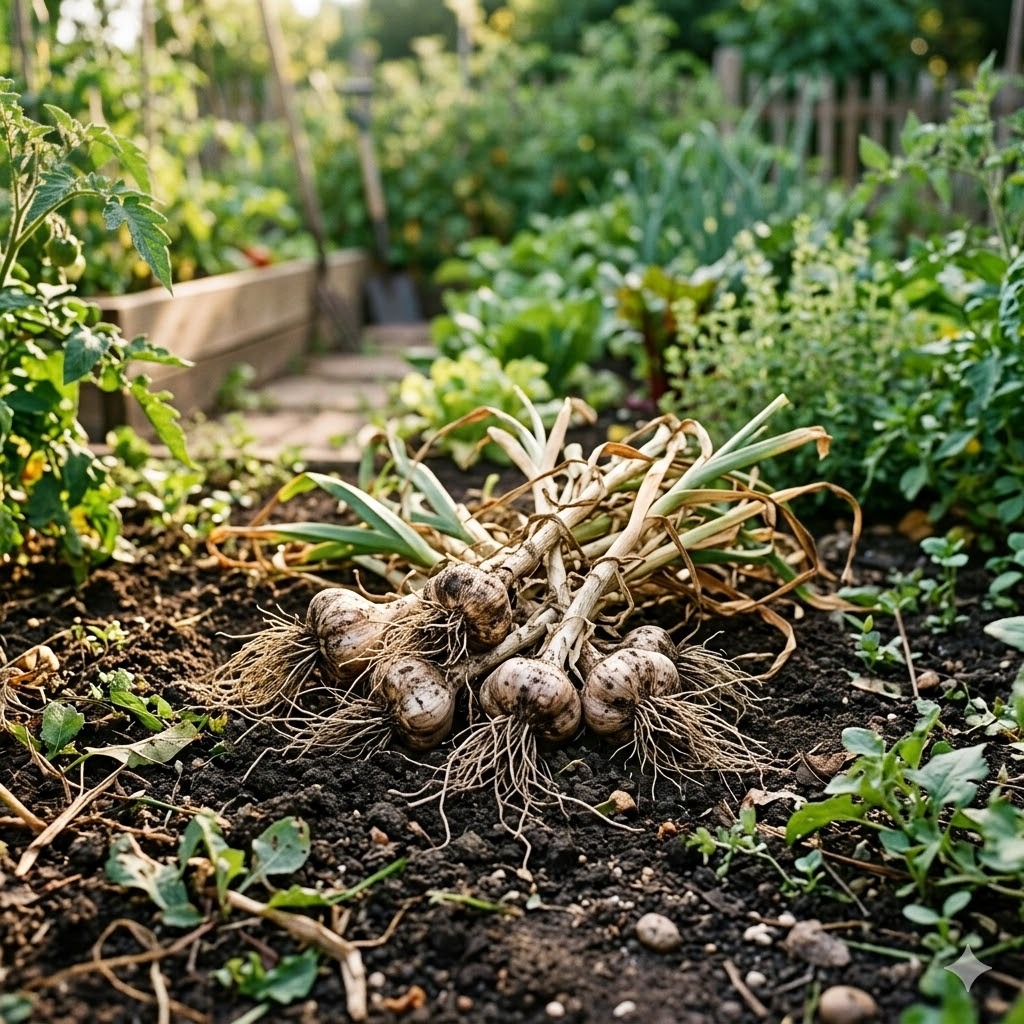
When that point comes, usually early to mid summer for autumn-planted garlic, gently ease the bulbs out with a fork rather than yanking them by the stem, which can snap off and bruise the bulb. Loosen the soil first, then lift.
Do not wash them. Brush off the worst of the soil and move straight to curing.
Storing and preserving
Freshly lifted garlic is not ready to store - it needs curing first. Lay the bulbs out somewhere warm, dry, and airy with the leaves still attached, out of direct sun and rain. A shed, porch, greenhouse bench, or airy shelf all work. Leave them for a couple of weeks or more, until the necks are fully dry and papery and the outer skins have set. Curing is what lets garlic keep for months instead of days.
Once cured, trim off the roots and cut back the stems (or, with softneck garlic, plait the soft necks into a string). Store the bulbs somewhere cool, dry, and dark with good airflow - not the fridge, which is too damp and encourages sprouting. Kept well, softneck garlic will last most of the year and hardneck several months.
When you have more than you can use fresh, there are good ways to preserve it. You can peel and freeze cloves, whole or as a paste blended with a little oil and frozen in small portions. And if you fancy something special, garlic can be turned into black garlic - cured slowly over weeks at low, steady warmth until it turns soft, dark, and sweet with a mellow, almost molasses flavour. Do remember to hold back your best bulbs to replant in the autumn.
Is it worth it?
For the effort involved, garlic is one of the best-value crops you can grow. You plant it once in autumn and, aside from some spring weeding and watering, you barely touch it again until you are lifting fat bulbs the next summer. There is no delicate seedling stage to babysit and very little that reliably goes wrong once the drainage is sorted.
You also get a crop that stores for most of the year, so a single planting keeps your kitchen supplied long after harvest - something few homegrown vegetables manage. Add the scapes from hardneck types, the choice of proper flavours you will never find in a supermarket, and the ability to save your own seed for free year after year, and the case makes itself.
If you only have space to grow a handful of things, garlic earns its place easily. Get certified seed garlic, pick a variety suited to your climate, plant it pointy end up in a sunny, well-drained spot this autumn, and let winter do most of the work.