How to Grow Hazelnuts: The Easiest Nut Tree for a Home Garden
A practical guide to growing hazelnuts and cobnuts from a bare-root planting in winter to an autumn harvest, including why you must plant two varieties and how to beat the squirrels to the crop.
When to sow & harvest
A rough guide for a temperate climate - shift it to your own zone and last-frost date. Greenhouse growing stretches both windows earlier and later.
If you have ever fancied growing your own nuts but assumed it meant a lifetime's wait and a small orchard's worth of space, the hazel is the plant to change your mind. It is easily the most forgiving nut you can grow: a tough, adaptable shrub-tree that crops within a few years rather than a decade, copes with most soils and situations, and bounces back cheerfully even if you cut it hard to the ground. In a good year a single mature bush can hand you kilos of sweet, fresh nuts.
The one thing you cannot do is plant a lone hazel and expect a decent crop. Hazels are wind-pollinated and, in practice, need a second, different variety nearby to set nuts reliably. Get that right and the rest is genuinely easy. This guide walks through the whole thing, from choosing your bushes and planting bare-root in winter, to keeping the squirrels off, to gathering ripe nuts in autumn.
Why grow hazelnuts
The headline reason is speed and ease. Most nut trees are a long-term gamble, but a hazel bought as a young bush will often give you a first handful of nuts within three or four years, and a proper crop not long after. For a nut, that is quick. And unlike a walnut or a chestnut, a hazel stays a manageable size, so it suits an ordinary garden rather than a country estate.
Hazels are also remarkably tolerant plants. They shrug off cold, they grow in sun or light shade, and they cope with heavy clay, chalk and everything in between, provided the ground is not permanently waterlogged. They are hardy natives at heart, so they are not remotely fussy about the weather.
Then there is the flavour. A cobnut eaten fresh off the bush in early autumn, while the shell is still pale and the kernel is milky and sweet, is a completely different thing from a dried supermarket hazelnut. Most people have never tasted one, and it is one of the real quiet luxuries of growing your own.
Finally, hazel is a genuinely useful garden plant beyond its nuts. It coppices brilliantly, meaning you can cut stems right back and they regrow, giving you a steady supply of pea sticks, bean poles and plant supports. The catkins are a cheerful sight in late winter, and the whole plant is a magnet for wildlife.
Choosing a variety
The nuts you buy in shops and the ones you grow are all forms of the same plant, but the named garden types are worth knowing. Cobnuts and filberts are simply selected hazelnuts, bred over the years for bigger, better kernels. Cobnuts tend to have a shorter husk that the nut sits within, while filberts have a longer husk that fully wraps the nut, but for eating purposes the distinction barely matters.
The single most important rule when choosing is this: buy two different varieties, not two of the same. Hazels are wind-pollinated in late winter, when the dangling yellow catkins release pollen to fertilise the tiny red female flowers. The trouble is that a hazel is largely unable to pollinate itself, partly because its male and female flowers on the same bush often open at slightly different times. A lone bush, or two bushes of one variety, will flower beautifully and set almost no nuts. Plant two or more different varieties whose flowering overlaps and they pollinate each other, and the crop follows.
Good, widely grown varieties include Kentish Cob, a reliable heavy cropper despite the name being a filbert, and Cosford, which is a good pollinator with a thin shell. Others such as Butler, Ennis, Webb's Prize Cob and the purple-leaved Red Filbert are all worth looking at. A nurseryman selling nut trees will usually tell you which varieties pollinate each other well, so ask if you are unsure. If space is tight, two bushes of different varieties planted close together is the minimum you should aim for.
Planting and starting off
Hazels are almost always planted in the dormant season, and the cheapest and best way to buy them is bare-root, which means lifted from the field without soil and sold from late autumn through winter. Bare-root plants establish quickly and cost far less than potted ones. Container-grown hazels can be planted at any time the ground is workable, but winter is still the ideal window.
Prepare the ground by clearing weeds and, if it is poor, forking in some garden compost. Dig a hole wide enough to spread the roots comfortably and no deeper than the plant sat before, which you can see from the soil mark on the stem. Plant at that same depth, firm the soil gently around the roots with your heel, and water in well even in winter. If your garden is windy or exposed, a stake for the first couple of years keeps the young plant steady while the roots take hold.
Spacing depends on how you want to grow them. As free-standing bushes for nuts, allow around 4 to 5 metres between plants so each has room to spread and catch the wind for pollination. In a smaller garden you can plant closer, at 3 metres or so, and simply keep the bushes pruned to size. If you are growing hazel as a productive hedge, closer spacing is fine.
A mulch of compost or bark over the root area after planting keeps weeds down and moisture in while the young bush settles. Keep the base clear of grass and weeds for the first few years, as hazels dislike competition when young.
Where to grow
Hazels are outdoor plants through and through, and they are not remotely demanding about position. For the heaviest crops, give them a spot in full sun, as good light ripens the wood and encourages plenty of flowers and nuts. That said, they tolerate light or dappled shade better than most fruiting plants, so a slightly shaded corner will still give you a useful crop, just a lighter one.
The ideal soil is a well-drained loam, but hazels are famously easy-going and grow happily on clay, chalk and sandy ground alike. The one thing they will not accept is permanently waterlogged soil, so avoid boggy hollows where water sits after rain.
Because pollination depends on wind carrying pollen from one bush to another in late winter, it helps to plant your different varieties reasonably close and in open positions rather than tucked behind solid walls where the air is still. A little air movement is your friend here. An exposed, blustery site is fine for the plants themselves, which are tough, and actually aids pollination.
Day-to-day care
One of the joys of hazel is how little it asks once established. For the first couple of years, keep the area around the base weed-free and water in dry spells, as young plants can struggle in drought before their roots go deep. After that, a mature hazel largely looks after itself.
Feeding is rarely necessary on decent soil. A mulch of compost each spring is plenty, and heavy feeding, especially with nitrogen, tends to produce lush growth at the expense of nuts, so go easy.
The main ongoing job is pruning, and hazels are pruned in a slightly unusual way. The bulk of pruning is done in late winter, but this is also when the catkins are shedding pollen, so a light touch is best then to avoid removing too much of the flowering wood. The traditional method for cobnuts is to keep the bush as an open, goblet-shaped framework of six or so main stems, removing crowded, crossing and inward growth to let light and air in. Suckers, which are shoots coming up from the base around the plant, should be pulled or cut away regularly, or the bush turns into a dense thicket.
Some growers also practise a summer technique called brutting, where the long, whippy new side shoots are broken by hand and left half-hanging in late summer. This checks their vigour and encourages the formation of flower buds for next year's crop. It is optional, but it can improve cropping on an established bush.
Because hazel coppices so willingly, an old, overgrown or unproductive bush can be cut hard back close to the ground in winter and it will regrow vigorously, giving you a fresh start. You lose a year or two of nuts, but the plant is rejuvenated.
Common problems and pests
The single biggest problem, by a wide margin, is squirrels. Grey squirrels will strip a hazel of its entire crop, and their most infuriating habit is taking the nuts while they are still green and unripe, well before you would think to harvest. They can clear a bush in days. There is no easy cure. Netting the bushes as the nuts approach ripeness helps if the plants are small enough to cover. Otherwise, the practical answer is to watch the crop closely and pick promptly, gathering nuts as soon as they are mature rather than leaving them on the bush for the squirrels to find. On a bad squirrel site, growing hazels can become a battle, and it is worth being honest with yourself about that before planting.
The nut weevil is the next most common pest. This little beetle lays eggs in developing nuts, and the grub eats the kernel from inside, leaving a neat round exit hole in the shell. Affected nuts are hollow. Good garden hygiene, clearing fallen nuts and debris, reduces the population over time, but a few weeviled nuts each year is normal and rarely a disaster.
Hazels are otherwise healthy plants. They can occasionally suffer from powdery mildew on the leaves in a dry summer, which is largely cosmetic, and from various leaf-spotting fungi that do little real harm. A bacterial condition and a fungal dieback can affect stems, but on a well-grown bush in a garden these are seldom serious. On the whole, hazel is one of the least troublesome edible plants you can grow, with squirrels being the exception that proves the rule.
Harvesting
Hazelnuts ripen in autumn, usually from late summer into October depending on the variety and the season. You have two choices about when to pick, and they give quite different results.
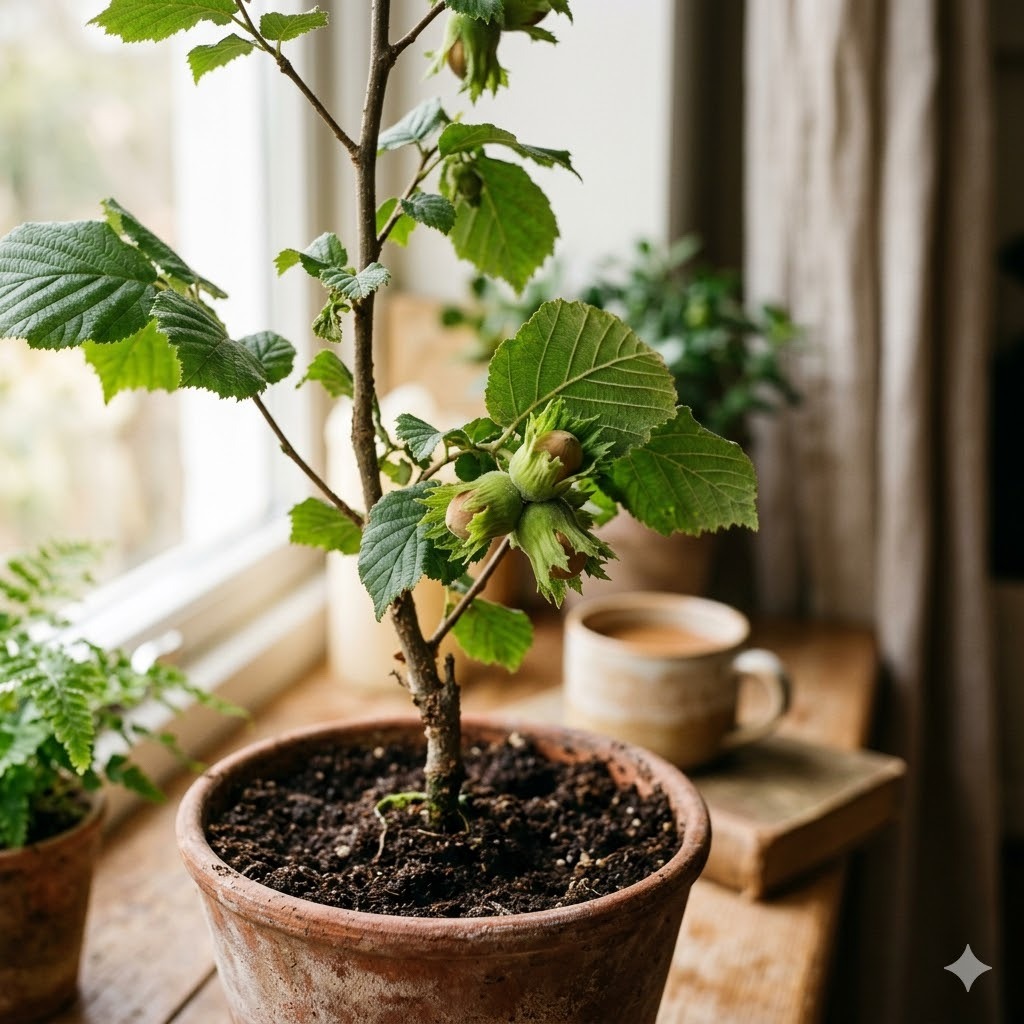
For eating fresh as green cobnuts, pick while the husks are still green and the shells are pale and soft. At this stage the kernel is milky, sweet and juicy, more like a fresh vegetable than a dried nut. This is a delicacy you will almost never find in shops, and it is one of the best reasons to grow your own. Simply pull the nuts from the bush when they have filled out but before the husk browns.
For storing, wait until the nuts are fully ripe, when the husks and shells have turned brown and the nuts begin to loosen and drop. At this point you can pick them from the bush or, easier still, gather them from the ground beneath, ideally daily so the squirrels and mice do not get there first. Give a branch a gentle shake and the ripe ones will fall.
The great practical difficulty, as ever, is that squirrels tend to harvest for you a good deal earlier than you would like. If you find nuts vanishing while still green, pick everything that has filled out, even if not perfectly ripe, and let the borderline ones finish indoors. A slightly under-ripe home crop beats an empty bush.
Storing and preserving
Fresh green cobnuts do not keep. They are at their best within a few days of picking, so enjoy them straight away as a seasonal treat. They will sit in the fridge for a week or so, but their sweet, milky character fades quickly.
Ripe brown nuts, by contrast, store beautifully, which is the whole point of a nut. First they need drying, or curing. Spread the ripe nuts in a single layer somewhere dry, airy and out of direct sun, such as a shed, spare room or airing cupboard, for a couple of weeks. Turn them occasionally. You can leave the husks on or remove them first. Properly dried nuts have hard, glossy shells and kernels that rattle slightly.
Once cured, hazelnuts in their shells keep for many months in a cool, dry, airy place, ideally in netting or slatted trays rather than a sealed container that traps moisture and encourages mould. Check them over now and then and discard any that feel light or look mouldy.
Shelled kernels do not keep as long, as the oils in the nut eventually turn rancid, but they freeze extremely well. Shell the nuts, pack the kernels into bags or tubs, and freeze. They keep for a year or more this way and are ready for baking, roasting or eating whenever you want them.
Is it worth it?
For most gardens, yes, and more easily than almost any other nut. The hazel's great virtues are that it crops quickly for a nut tree, it stays a sensible size, it tolerates poor soil and cold weather without complaint, and it gives you a genuine delicacy, the fresh green cobnut, that money can barely buy. On top of the nuts you get pea sticks, catkins in winter and a wildlife-friendly plant that regrows even if you cut it to the ground.
The honest caveat is twofold. You must plant two different varieties or you will get catkins and no nuts, so this is not a single-plant project. And on a bad squirrel site you may find yourself in a losing race for the crop every autumn. Weigh that up before you plant. But if you have room for a pair of bushes and a plan for the squirrels, the hazel is the friendliest introduction to nut growing there is, and one of the few that rewards the patient gardener within just a few years rather than a lifetime.