How to Grow Kohlrabi: The Fast, Crisp Brassica Beginners Overlook
A practical guide to growing kohlrabi, a quick and easy brassica whose swollen stem is crisp and mild like a sweet turnip, picked young before it turns woody.
When to sow & harvest
A rough guide for a temperate climate - shift it to your own zone and last-frost date. Greenhouse growing stretches both windows earlier and later.
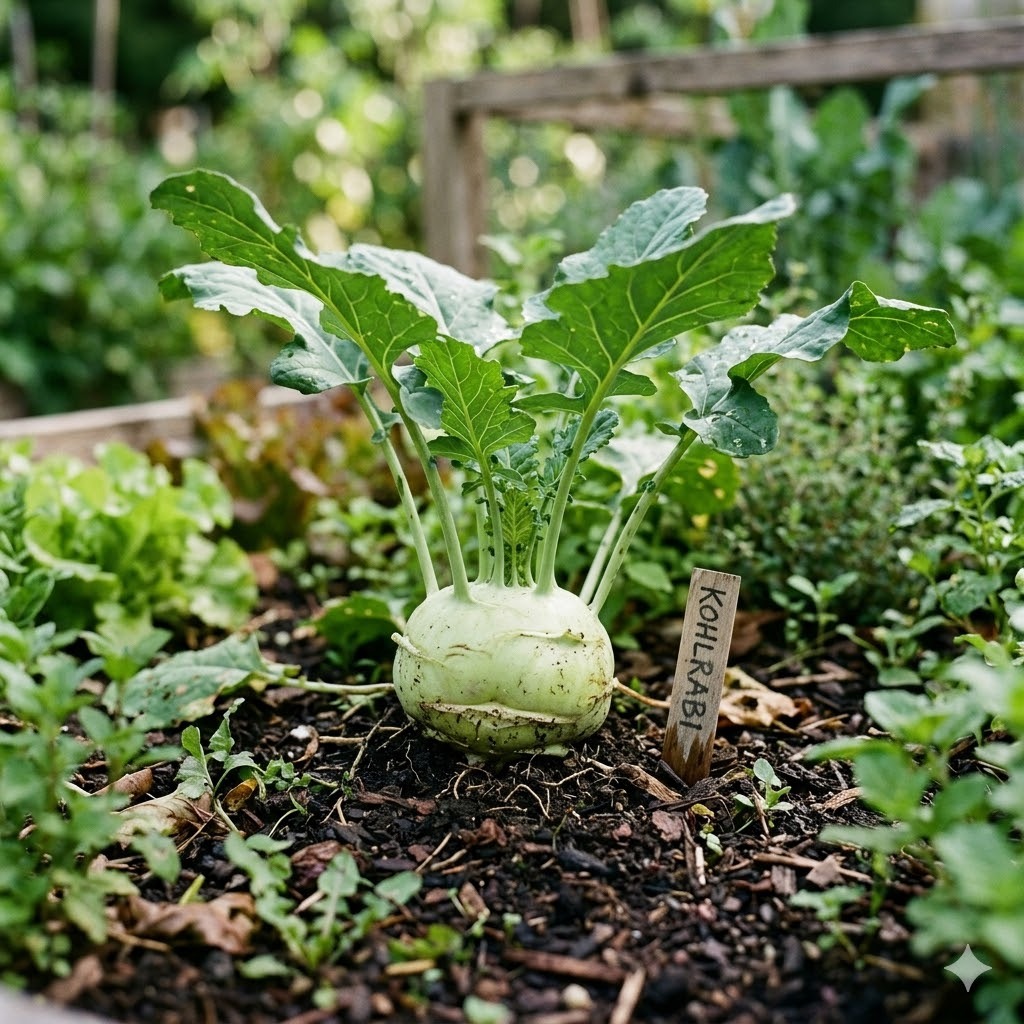
Kohlrabi is one of the most underrated vegetables you can grow, and one of the easiest. It looks slightly odd - a swollen ball of stem sitting on the soil surface with leaves sprouting from it like a little green satellite - but underneath that strange shape is a crop that is fast, forgiving and genuinely delicious. Crisp and mild, somewhere between a sweet turnip and a cabbage heart, it can be eaten raw in slices or cooked, and it grows from seed to plate in as little as eight weeks.
For a beginner, kohlrabi is a brilliant choice. It is quick, so you get results fast and stay motivated. It does not need staking, blanching, deep soil or any special tricks. The main thing to learn is one simple rule about timing, which is knowing when to pick. Get that right and you will wonder why more people do not grow it. This guide covers the whole crop from sowing to storing.
Why grow kohlrabi
The first reason is speed. Kohlrabi is one of the faster vegetables in the garden, ready in around eight to ten weeks from sowing. That quick turnaround makes it perfect for filling gaps between slower crops and for keeping a bed productive.
The second is that it is easy. As brassicas go, kohlrabi is low-fuss. It does not need firm soil like brussels sprouts, deep soil like parsnips, or constant water like celery. It just needs reasonable ground, steady moisture and a bit of protection from the usual brassica pests.
The third is that it is a lovely thing to eat and hard to buy in good condition. Shop kohlrabi is often oversized, woody and tired. Home-grown, picked young and small, it is crisp, sweet and mild - excellent raw in salads and slaws, or lightly cooked. It is also a good crop for smaller gardens, since each plant sits neatly in a modest space.
Choosing a variety
Kohlrabi comes in two main colours and, more usefully, in earlier and later types.
Green (or pale) varieties have light green skin and are typically the quicker, more tender types, ideal for early and successional sowings through the warmer months.
Purple varieties have striking purple-red skin with the same pale, crisp flesh inside. They tend to be a little hardier and are often chosen for later sowings and autumn cropping, though the colour is only skin deep.
Beyond colour, look at maturity. Some varieties are bred to be especially fast and tender for summer eating, while others are slower-growing types that stand better into autumn without turning woody as readily. If you plan to grow kohlrabi over a long stretch, a fast type for summer and a hardier type for autumn is a good combination.
Whatever you choose, the key is that these are crops to eat young, so do not be seduced by varieties boasting huge size unless you specifically want them - the small, tender stage is the tasty one.
Sowing and starting off
Kohlrabi is easy to start and can be sown either direct or in modules.
For direct sowing, wait until the soil has warmed a little in spring, then sow thinly into shallow drills about a centimetre deep, and thin the seedlings to give each plant room to swell. Direct sowing suits kohlrabi well because it grows fast and does not resent being left where it germinated.
For an earlier or more controlled start, sow in modules, a seed or two per cell, and transplant the young plants out while they are still small. Unlike root crops, kohlrabi transplants happily, so this is a good way to raise sturdy plants and get ahead in spring.
The golden rule with kohlrabi is to sow little and often. Because each plant gives you one swollen stem and because they are best eaten young, a single big sowing gives you a glut followed by nothing. Sow a short row or a few modules every few weeks from spring through summer, and you will have a steady run of tender kohlrabi rather than a wall of them all at once, half of which go woody before you can eat them.
Where to grow
Kohlrabi is an outdoor crop and does not need protected growing to do well. Give it an open, sunny position in reasonable, moisture-retentive soil, and it will get on with the job.
A greenhouse or cloche has only a minor role: an early sowing under cover in late winter can bring the first kohlrabi forward by a few weeks, and a late sowing under protection can extend picking into cooler weather. Beyond stretching the season at either end, there is nothing to be gained by growing kohlrabi under glass, and the space is better used for tender crops.
As a brassica, kohlrabi fits into your brassica rotation, so avoid growing it in the same ground where you recently grew cabbages, sprouts or other members of the family, to help keep soil-borne problems down.
Day-to-day care
Kohlrabi is not demanding, but two things keep it tender and stop it turning woody.
The first is steady moisture. Like most fast crops, kohlrabi wants even, consistent watering. If it dries out and is then soaked, or if it is checked by drought, the swollen stem can turn tough, stringy and woody, and growth stalls. So water regularly in dry spells to keep it growing steadily and smoothly. Even growth is tender growth.
The second is spacing and weeding. Give each plant enough room to swell without crowding, and keep the bed weed-free so the kohlrabi is not competing for water and light. On poorer soil, a little feed helps keep growth moving, but on decent ground kohlrabi rarely needs much.
That is genuinely most of the care. There is no earthing up, no staking, no blanching. Keep it watered, keep it weeded, protect it from pests, and pick it on time.
Common problems and pests
Kohlrabi is a brassica, so it shares the family's pests, and two are worth particular attention.
Flea beetle is the classic problem for young brassica seedlings. These tiny beetles pepper the leaves with small round holes and can seriously check or even kill young plants in dry weather. The best defences are to keep seedlings well watered, which helps them grow through the damage, and to cover them with fine insect mesh from the moment they emerge, which keeps the beetles off entirely.
Cabbage white butterflies are the other major nuisance. Their caterpillars can strip the leaves quickly, and while kohlrabi is grown mainly for its swollen stem, badly eaten plants suffer. Netting the crop with fine mesh from early on stops the butterflies laying, which is far easier than picking off caterpillars later.
Other brassica issues such as cabbage root fly, whitefly and, in acidic soils, clubroot can affect kohlrabi too. Good rotation, fine mesh covers, and not growing brassicas in the same spot repeatedly all reduce the risk. Fortunately, because kohlrabi is such a fast crop, it often reaches picking size before problems build up too far.
Harvesting
Timing is the one thing you really must get right with kohlrabi, and the rule is simple: pick it young. The swollen stem is at its best when it is roughly the size of a tennis ball, or even smaller. At that stage it is crisp, mild and sweet.
Left too long, kohlrabi turns woody, tough and fibrous, and no amount of cooking will bring the tenderness back. So do not be tempted to let them grow on to an impressive size - bigger is not better here. As soon as they reach that tennis-ball stage, start using them.
To harvest, cut through the stem just below the swollen ball, or pull the whole plant and trim it. The leaves are edible too and can be cooked like other brassica greens, so they need not go to waste.
Because they are best small and mature quickly, a bed of kohlrabi is ready more or less all at once, which is exactly why sowing little and often matters so much - it spreads that harvest window across the season.
Storing and preserving
Kohlrabi is best eaten fresh and young, but it does keep reasonably well for a root-like crop.
Harvested kohlrabi will hold in the fridge for a couple of weeks if the leaves are trimmed off and the swollen stems are kept somewhere cool and slightly humid so they do not shrivel. Trimming the leaves stops them drawing moisture out of the stem.
For longer storage, the hardier autumn types can sometimes be left in the ground a little longer in milder areas, lifted as needed before hard frost, though they are less reliably hardy than turnips or parsnips, so do not count on standing them all winter.
Kohlrabi also freezes if you want to keep a surplus. Peel it, cut it into chunks, blanch briefly in boiling water, cool quickly, drain and freeze. Frozen kohlrabi softens and loses its raw crunch, so it is best used cooked afterwards rather than in salads.
Is it worth it?
For a beginner especially, kohlrabi is very much worth it. It is fast, so you are rewarded quickly. It is easy, with none of the staking, blanching or deep-soil demands of fussier crops. It fits neatly into small spaces and gaps in the bed. And it gives you a crisp, mild, sweet vegetable that is genuinely hard to buy in good condition.
The only real skills to learn are sowing little and often, and picking young before the swollen stem turns woody. Master those two habits, keep the flea beetles and cabbage whites off with a bit of mesh, and kohlrabi will reward you again and again through the season. If you have written it off as a strange-looking oddity, give it one row - it may well become a fixture in your garden.