How to Grow Lemon Balm: The Easy Lemon-Scented Herb That Will Take Over If You Let It
A beginner's guide to growing vigorous, lemon-scented balm for teas and cordials, with honest advice on keeping this enthusiastic mint relative in its place.
When to sow & harvest
A rough guide for a temperate climate - shift it to your own zone and last-frost date. Greenhouse growing stretches both windows earlier and later.
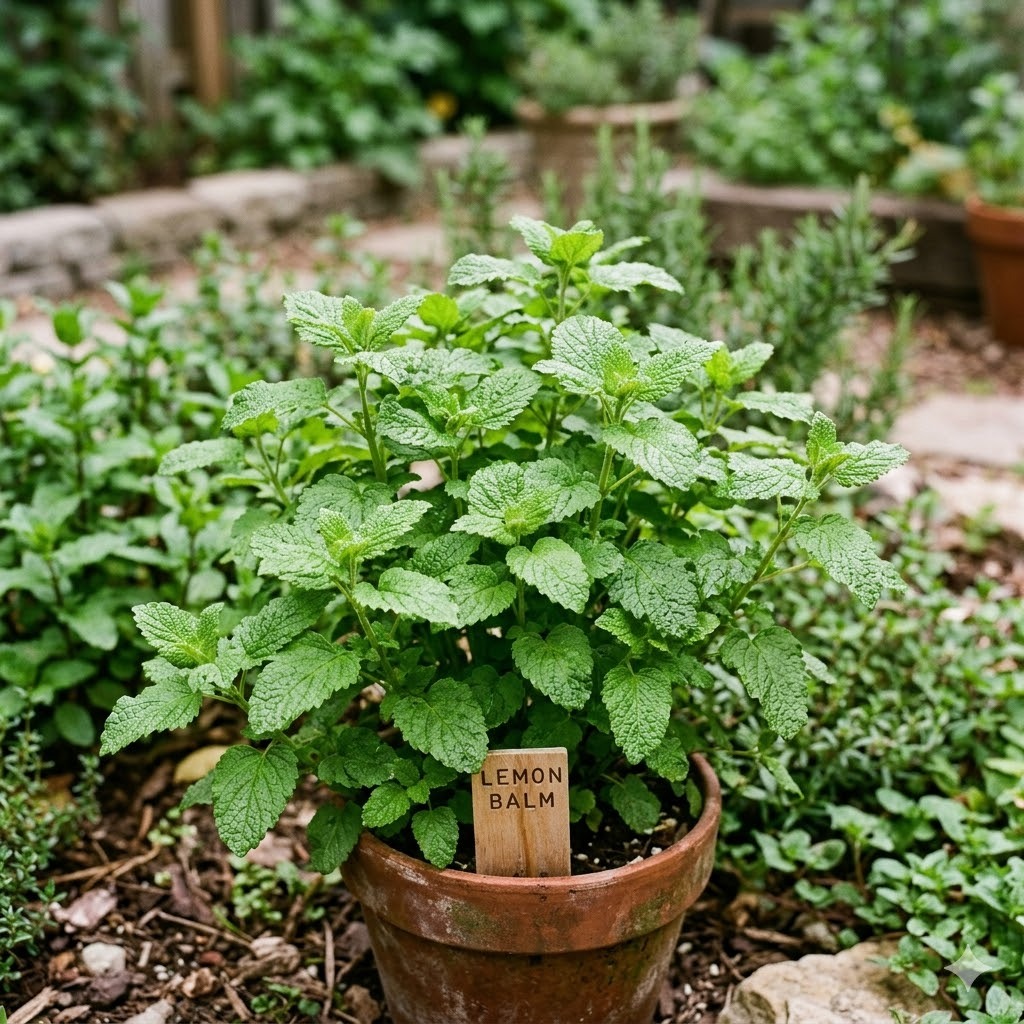
Lemon balm is one of the most forgiving herbs a beginner can grow. Brush past it and the whole plant releases a soft lemon scent, and a handful of leaves makes a gentle, fragrant tea or a summery cordial. It is a hardy perennial that comes back year after year with almost no effort from you. The only real thing to know before you plant it is that lemon balm is a member of the mint family, and it shares mint's enthusiasm for spreading and seeding itself around. Grow it with that in mind and it is close to unkillable.
Why grow lemon balm
The honest reason to grow lemon balm is that it gives you fresh, fragrant leaves for months with barely any work. This is not a fussy herb. It shrugs off neglect, comes back reliably every spring, and produces far more leaf than one household can use. If you like the idea of a lemony tea from the garden or a jug of homemade cordial in summer, a single plant will keep you supplied and then some.
It is also a herb you use fresh and by the handful rather than the sprig. A few leaves in a mug topped with hot water makes a light, fragrant drink, and the same leaves work in cold drinks, fruit salads and cordials through the summer. Because it is so vigorous, you can pick generously without ever setting the plant back.
The one honest caveat is its vigour. Lemon balm is as keen as mint to spread, both by creeping and by self-seeding, and left alone in a border it will pop up in places you never planted it. That is not a disaster - it is easy to pull up - but it is the thing to plan around from the start rather than discover later.
Choosing a variety
For most people, plain common lemon balm is the one to grow, and it is what you will usually find on sale. It has the classic soft green leaves and the strong lemon scent, and it is as tough and easy as the herb gets. If you only want one, this is it.
Beyond the common form, there are a couple worth knowing:
- Golden or variegated lemon balm - the leaves are splashed or edged with yellow, which makes a brighter plant for a pot or the front of a border. The flavour is much the same, and it is grown mostly for looks.
- Lime-scented or extra-lemony selections - some named forms are sold for a stronger or slightly different citrus scent. These are a nice extra once you have the basic plant, rather than a first choice.
Beginners rarely go wrong starting with common lemon balm. It is cheap, widely available, and grows so readily that you will soon have more than enough to divide and share.
Planting and starting off
You can grow lemon balm from seed, from a small plant, or from a division of someone else's clump, and all three are easy. The simplest route for a beginner is to buy a small pot-grown plant in spring and put it straight out, because one plant quickly becomes plenty.
If you want to sow from seed, do it in spring. Scatter the small seeds thinly on the surface of moist seed compost and press them in lightly rather than burying them, as they germinate better with some light. Keep the compost just moist and somewhere warm, and seedlings usually appear within a couple of weeks. Prick them out into their own small pots once they are big enough to handle, then grow them on before planting out.
The easiest route of all is division. If a friend or neighbour grows lemon balm, ask for a spade-sized chunk of an established clump in spring or autumn. Split it into pieces, each with roots and a bit of top growth, and plant them straight out. They establish quickly and you will have a full plant in no time.
Where to grow
Lemon balm is not fussy about position, which is part of its charm. It grows happily in full sun or partial shade, in most ordinary soils, and copes with conditions that would sulk many herbs. A spot in a little afternoon shade often keeps the leaves fresher and greener through high summer.
The real decision is not sun or shade but pot or ground. Because lemon balm spreads and seeds so freely, growing it in a large pot or container is the tidiest way to keep it under control. In a pot it stays where you put it, and any seedlings that appear are easy to spot and remove. Grown in an open border it will still behave, but expect to be pulling up stray seedlings and keeping an eye on the spreading clump.
If you do plant it in the ground, choose a spot where a bit of spreading will not matter - a rough corner, a wildlife patch, or somewhere you do not mind it filling out. Wherever it goes, give it soil that does not stay waterlogged, and it will settle in fast.
Day-to-day care
The single most useful habit with lemon balm is cutting it back. This one job does two things at once: it keeps a steady supply of fresh, tender leaves coming, and it stops the plant flowering and setting seed all over the garden. Trim the plant back hard a couple of times through the season, taking off the top third or more, and it responds with a flush of new growth.
Timing matters for the seeding side. If you cut the plant back before it flowers, you prevent it from setting seed, which is by far the easiest way to stop it turning up everywhere. Once you see flower buds forming, that is your cue to get the shears out. A good cut back also refreshes a plant that has started to look tired and leggy by midsummer.
Beyond cutting back, care is minimal. Water a pot-grown plant when the compost starts to dry, and water border plants in a long dry spell, but otherwise lemon balm looks after itself. It dies back in winter and returns from the base each spring. Every few years you can dig up an established clump, split it, and replant a fresh piece to keep it vigorous.
Common problems and pests
Lemon balm is remarkably trouble-free, which is one of the best things about it. Pests and diseases rarely bother it seriously, and most of the "problems" people have with it are really just its vigour.
The main issue is spreading and self-seeding. Left to flower, it scatters seed and you find seedlings coming up around the parent plant and beyond. This is easily managed by cutting it back before it flowers and by pulling up any seedlings while they are small, but if you ignore it for a season you can end up with lemon balm in places you never intended.
Damp, crowded plants can sometimes pick up powdery mildew, showing as a dusty white coating on the leaves, usually late in the season on tired growth. The cure is a good hard cut back, which removes the affected leaves and lets fresh, clean growth come through with better airflow. Occasionally you might see a few aphids on soft new shoots, but they rarely build up enough to matter and are easily rubbed or hosed off.
Harvesting
Harvest lemon balm the same way you keep it tidy - by picking generously and often. Snip off sprigs or whole stems from the top, or run your fingers down a stem to strip the leaves. Because the plant is so vigorous, you can pick as much as you like without setting it back, and regular harvesting keeps the fresh new growth coming.
The best leaves for flavour and scent are the young ones on new growth, so a plant that is regularly cut back and picked over gives better leaves than one left to grow old and woody. Pick in the morning if you can, when the scent is strongest. Through the growing season you can harvest from the same plant again and again, right up until it dies back for winter.
Storing and preserving
Lemon balm is best used fresh, and happily the plant gives you fresh leaves for months, so there is less need to store it than with some herbs. Picked leaves wilt fairly quickly, so use them soon after cutting rather than leaving them lying around.
When you have more than you can use fresh, there are a few good options:
- Freezing - chop the leaves and freeze them in ice-cube trays topped with a little water, ready to drop into cold drinks or cordials. This keeps far more of the fresh lemon character than drying does.
- Cordials and syrups - lemon balm makes a lovely summer cordial, and bottling the flavour into a syrup is one of the best ways to capture a glut for later.
Drying is possible and the traditional way to keep leaves for winter tea. Hang small bunches somewhere warm and airy, or dry the leaves on a rack, then store them in a jar out of the light. Be honest with yourself about the result, though: dried lemon balm loses a good deal of its fresh scent and ends up much milder than the living leaf, so freezing or making cordial is often the more rewarding choice.
Is it worth it?
Yes, and it is one of the easiest yeses in the herb garden. Lemon balm asks almost nothing of you - it is hardy, forgiving, happy in sun or part shade, and comes back every year on its own. For a beginner who wants a fragrant, useful herb without a fussy routine, it is hard to beat.
The one honest condition is that you plan for its vigour from the start. Grow it in a pot or in a spot where spreading does not matter, and cut it back before it flowers, and you have a generous, trouble-free plant. Ignore that side of it and you will spend a while pulling up seedlings. Manage it, though, and lemon balm rewards you with lemon-scented leaves for teas and cordials all summer long, for years on end.