How to Grow Lettuce: The Fastest, Easiest Salad You Can Grow
A beginner-friendly guide to growing lettuce in beds, pots, or a greenhouse - from choosing bolt-resistant varieties to picking outer leaves for a steady supply all season.
When to sow & harvest
A rough guide for a temperate climate - shift it to your own zone and last-frost date. Greenhouse growing stretches both windows earlier and later.
Why grow lettuce
If you only ever grow one salad crop, make it lettuce. It is genuinely the quickest and easiest leafy vegetable for a beginner, and it rewards you fast. Sow a row of loose-leaf lettuce and you can be picking baby leaves in around three to four weeks, and full-sized plants in six to eight. Very few edible crops turn a packet of seed into a plate of food that quickly.
Lettuce is also forgiving about where it grows. A raised bed, a grow bag, a window box, a few old pots on a balcony - it will crop happily in all of them, as long as it has decent compost and steady moisture. It does not need staking, pollinating, or much feeding. And because a single lettuce from the shop can cost more than a whole packet of seed, the maths tends to work firmly in your favour.
The one honest caveat: lettuce does not store. There is no drying, freezing, or bottling that keeps it worth eating. That shapes the whole way you grow it, and we will come back to it. But for fresh, crunchy leaves through spring, summer, and autumn, it is hard to beat.
Choosing a variety
Lettuce comes in a few broad types, and they are not equally easy. Picking the right one for your first attempt matters more than picking the "best" one.
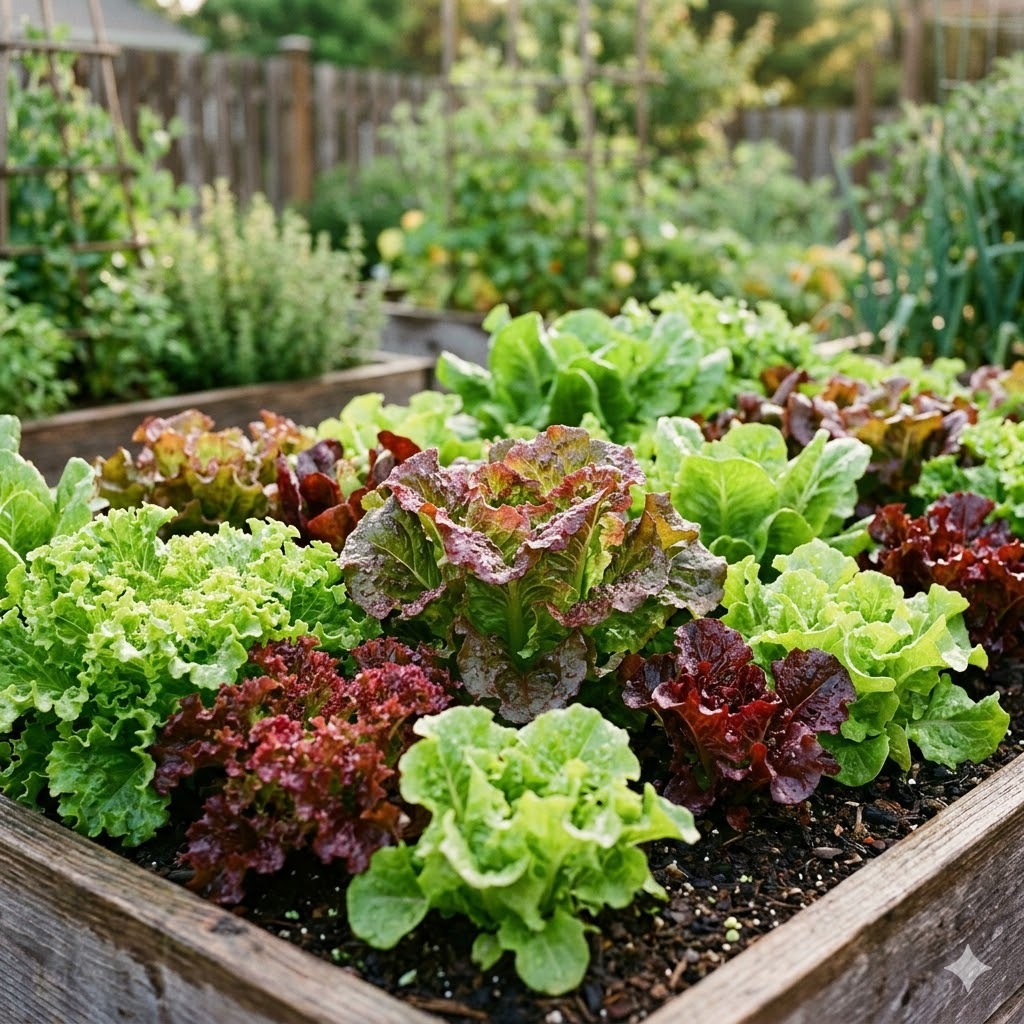
- Loose-leaf and cut-and-come-again types are the easiest by a clear margin. They do not form a tight heart, so you can pick a few outer leaves at a time and the plant keeps growing. Varieties like "Salad Bowl", "Lollo Rossa", and "Oakleaf" fall here. Start with these.
- Butterhead types form a soft, loose head with tender leaves. They are still fairly easy and quick, and cope reasonably with cooler weather.
- Cos (also called romaine) types grow upright with crisp, sweet leaves and stand up well to summer. A good step up once you have the basics.
- Crisphead and iceberg types form the dense, crunchy ball you see in shops. They are the hardest and slowest, fussier about heat and water, and the most likely to disappoint a beginner. Leave these until you have a season under your belt.
Whatever type you choose, look for the words "bolt-resistant" or "slow to bolt" on the packet, especially for summer sowings. Bolting is when the plant runs to seed and turns bitter, and heat triggers it - so bolt-resistant varieties buy you real breathing room. It is one of the most useful things you can pay attention to when buying seed.
Sowing and starting off
Lettuce seed is small and cheap, which is good news because the winning strategy is to sow little and often. This is called successional sowing, and it is the single most important habit for a steady supply. Instead of sowing a whole packet at once (and ending up with forty lettuces ready in the same week), sow a short row or a small tray every two to three weeks through the season. That way something is always coming ready and nothing bolts before you can eat it.
You have two main ways to start:
Sow direct. Draw out a shallow drill about 1 cm deep in prepared soil, sprinkle the seed thinly along it, cover lightly, and water gently. Once seedlings are up and big enough to handle, thin them so plants stand roughly 15 cm apart for loose-leaf and up to 30 cm for larger hearting types. Do not skip thinning - overcrowded lettuce stays small and stringy and competes for water. The thinnings themselves are edible as baby leaves, so nothing is wasted.
Sow in modules or trays. Sow a few seeds per cell of a module tray filled with seed compost, thin to the strongest seedling, and grow on until they have a few true leaves before planting out. This gives you more control, protects tender seedlings from slugs early on, and makes it easy to slot young plants into gaps as other crops finish.
One quirk worth knowing: lettuce seed can go dormant and refuse to germinate in high heat (above roughly 25 C). In a hot spell, sow in the cool of the evening, sow in a shadier spot, or start in modules somewhere cooler.
Greenhouse or garden - where to grow
Lettuce is listed as "greenhouse optional" for a good reason - it does not need one, but cover genuinely extends what you can do.
Outdoors is the default for spring, summer, and autumn. Lettuce is happy in the open garden or in pots on a patio for most of the growing season. It prefers an open, reasonably sunny spot in spring and autumn.
A greenhouse, polytunnel, or cold frame earns its keep at the shoulders of the year. Under cover you can sow the first lettuces several weeks earlier in late winter and early spring, and keep hardy winter varieties (look for types bred for overwintering) cropping through the colder months when outdoor lettuce has given up. Even a simple cloche or a sheet of horticultural fleece over an outdoor bed does much of the same job.
The one time cover works against you is high summer, when a greenhouse can get too hot and push lettuce straight into bolting. In peak summer, most people move lettuce outdoors and give it a little afternoon shade instead.
Day-to-day care
The good news is that day-to-day lettuce care comes down to one word: water. Lettuce is mostly water itself, has shallow roots, and hates drying out. Dry, stressed plants turn bitter and bolt early. Keep the soil consistently moist - not waterlogged, but never bone dry - and water in the morning where you can. Pots and grow bags dry out fastest and will need checking daily in warm weather.
The second thing is shade in summer heat. Lettuce is a cool-season crop at heart, and once temperatures climb it starts to struggle. A spot that gets some afternoon shade, or the dappled shade cast by taller crops like beans or sweetcorn, keeps it cooler and slows bolting noticeably. This is one case where a slightly less sunny corner is an advantage.
Feeding is largely optional in good compost. If plants in pots look pale or slow, a weak general-purpose liquid feed every couple of weeks helps, but rich soil rarely needs it. Keep the bed weeded so young lettuce is not fighting for light and moisture, and that is genuinely most of the job.
Common problems and pests
Lettuce is easy, but it has three predictable troublemakers. Knowing them in advance is half the battle.
- Bolting is the big one. In heat or drought, the plant sends up a flower stalk, the leaves turn bitter, and it is essentially over. You cannot reverse it. Prevent it by choosing bolt-resistant varieties, sowing in cooler conditions, keeping plants well watered, and providing summer shade. If a plant bolts, pull it and sow more.
- Slugs and snails adore lettuce, and seedlings are their favourite meal - they can clear a freshly sown row overnight. Starting in modules and planting out sturdier young plants helps a lot. Beyond that, evening patrols, beer traps, copper barriers around pots, or wildlife-friendly slug controls all reduce the damage. This is the number one reason direct-sown seedlings vanish.
- Aphids (greenfly) cluster on leaves and in the hearts of plants, weakening them and leaving sticky residue. A strong jet of water knocks them off, and encouraging ladybirds and other natural predators keeps numbers down. Check the undersides of leaves and the centre of hearting types where they like to hide.
You may also see grey mould (botrytis) in damp, crowded conditions, and downy mildew as pale patches on leaves. Both are mostly prevented by good spacing, airflow, and watering the soil rather than the foliage.
Harvesting
How you harvest depends on the type, and this is where loose-leaf lettuce really pays off.
For loose-leaf and cut-and-come-again types, pick a few of the outer leaves from each plant whenever you want salad, leaving the centre to keep growing. A single plant will crop this way for weeks, and a short row keeps a household in leaves without ever forming a whole head to cut. This is the most efficient, waste-free way to grow lettuce.
For hearting types (butterhead, cos, crisphead), you cut the whole head at the base with a knife once it has firmed up and feels solid. Harvest in the cool of the morning when the leaves are crisp and full of water, rather than in the wilting heat of the afternoon. Once a hearting lettuce is cut, that plant is done, which is exactly why successional sowing matters so much for these types.
A useful trick: even hearting varieties can be treated as cut-and-come-again if you harvest them young as baby leaves, snipping across the plant and letting it regrow once or twice before it gives up.
Storing and preserving
Here is the honest part: lettuce does not store, and it does not preserve. There is no freezing, drying, or bottling that keeps it worth eating - it turns to limp, brown mush. Anyone who tells you otherwise has not tasted the results. This is simply the nature of a crop that is almost entirely water and delicate leaf.
What you can do is keep freshly picked lettuce crisp for a few days in the fridge. Pick in the morning, wash and dry the leaves, and store them loosely wrapped in a slightly damp cloth or a container with a sheet of kitchen paper in the salad drawer. Handled that way, cut-and-come-again leaves will hold for several days, and a whole head a little longer.
But the real "storage" strategy for lettuce is not preservation at all - it is successional sowing. Because you cannot bank a glut for later, you plan for a steady trickle instead: a little sowing every two to three weeks so there is always a fresh plant coming ready. Think of the seed packet, not the fridge, as your store cupboard. Get into that rhythm and you effectively have "stored" lettuce spread across the whole season, always at its freshest.
Is it worth it?
For a beginner, lettuce is one of the most worthwhile crops you can grow. It is fast, cheap, forgiving, and productive in the smallest of spaces, and it turns a few pence of seed into salad that would cost real money bag by bag at the shop. The flavour and crunch of a leaf picked minutes before eating is genuinely better than anything that has spent days in transit and plastic.
The honest trade-off is that it asks for attention rather than skill. You have to keep it watered, keep the slugs off the seedlings, and above all keep sowing little and often, because you cannot store a glut for later. Do those three things and lettuce delivers reliably from spring right through to autumn - and, with a bit of cover, nudges into winter too. For the effort involved, few crops give back so much, so fast. It is an easy yes.