How to Grow Mint: The One Herb You Have to Keep in a Pot
A beginner's guide to growing mint, a near-unkillable herb that gives endless leaves from spring to autumn but must be contained in a pot before it takes over your whole garden.
When to sow & harvest
A rough guide for a temperate climate - shift it to your own zone and last-frost date. Greenhouse growing stretches both windows earlier and later.
Mint is the herb that beginners cannot fail with. Give it a bit of soil, a little water and a spot that gets some sun, and it will grow with the kind of enthusiasm that borders on menace. That is the joke and the warning rolled into one. The problem with mint is never getting it to grow - it is stopping it. Plant it loose in a border and within a couple of seasons it will have crept, rooted and colonised the ground for a metre in every direction, muscling out whatever you actually wanted there. So the single rule that matters is this: grow mint in a pot, always, and it will reward you with more leaves than you know what to do with.
Why grow mint
The obvious reason is the sheer supply. From spring right through to autumn, a single mint plant throws out a steady stream of fresh, aromatic leaves. Cut it back and it simply grows again, faster than before. For anyone who likes mint in cooking, in drinks or in a pot of tea, having your own means you are never buying those tired, overpriced supermarket sprigs again.
There is also a range of flavour that shop mint never shows you. The plastic packet is nearly always plain spearmint, but grown at home you can have peppermint, apple mint, chocolate mint and more, each with its own character. Growing your own is the only easy way to taste the difference between them, and that variety is one of mint's real pleasures.
And it is forgiving to the point of being foolproof. Mint tolerates poor soil, partial shade, forgetful watering and hard cutting back, then bounces straight back. If you have killed herbs before and lost heart, mint is the plant to rebuild your confidence on. It practically grows itself.
Choosing a variety
Start with spearmint, the classic garden mint and the one most recipes mean when they just say "mint". It is the workhorse for new potatoes, peas, lamb, salads and mint sauce, and it is vigorous and easy. If you grow only one, grow this.
Beyond spearmint there is a whole family worth exploring:
- Peppermint - stronger, cooler and more intense than spearmint, with a real menthol kick. This is the one for tea, drinks and anything where you want that clean, sharp mintiness.
- Apple mint - softer, rounder and gentler in flavour, with slightly downy leaves. Many people find it the nicest for cooking and for mint sauce.
- Chocolate mint - a peppermint type with a faint chocolatey note that is lovely in puddings, drinks and teas, and a fun one to grow for anyone who likes a novelty that actually tastes good.
There are plenty more, from ginger mint to Moroccan mint, but a beginner does well to start with spearmint plus one other and go from there. One tip worth knowing: keep different mints in separate pots. Grown together they cross-flavour and the distinctions blur.
Planting
Mint is almost always grown from a young plant or a rooted cutting rather than from seed, and that is the easy route. A single plant from a garden centre, or a sprig begged from a friend and stood in water until it roots, is all you need to get started. It really is that simple.
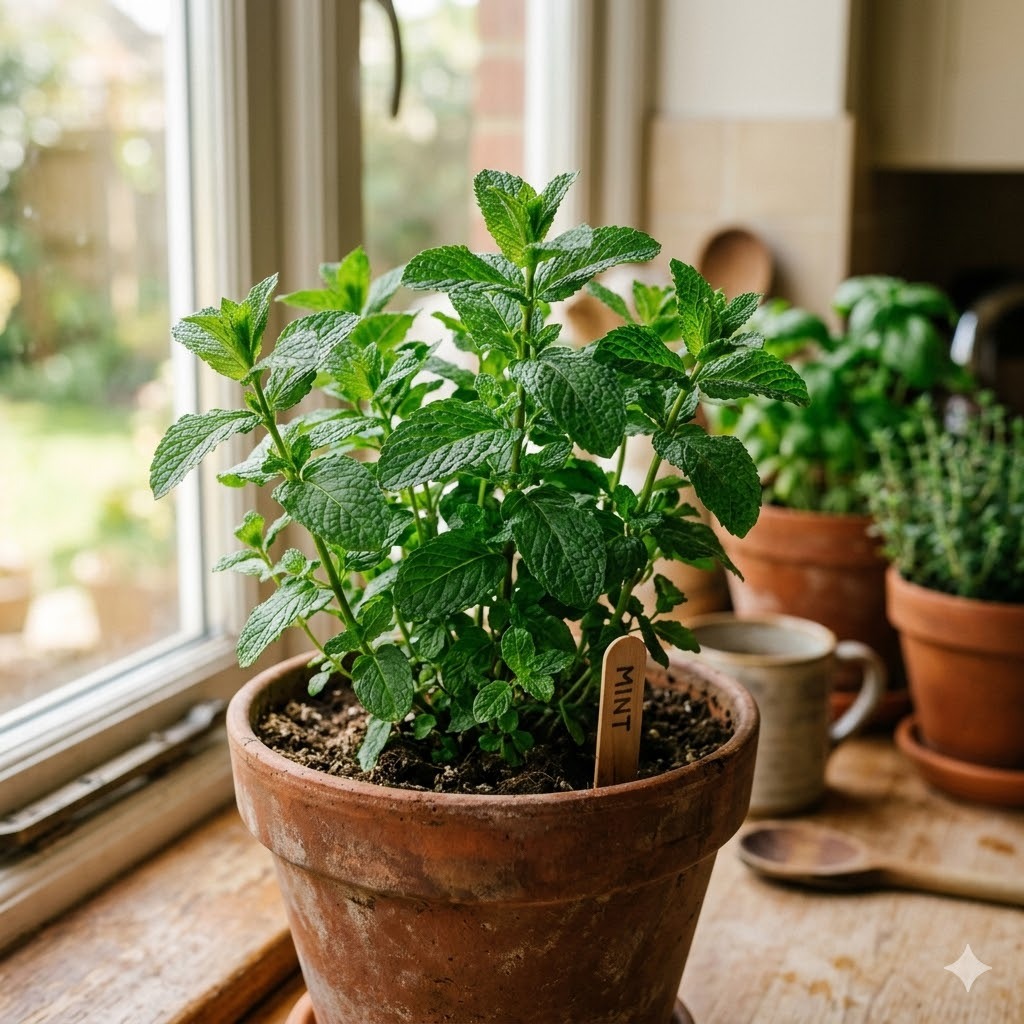
The one instruction that matters more than any other is to plant it in a container. A pot, a trough, an old bucket with holes punched in the bottom - anything that keeps the roots confined. Mint spreads by underground runners that shoot out sideways and root as they go, which is exactly how it invades a border, and a pot stops that cold. If you are set on growing it in the ground, sink a bottomless pot or bucket into the soil and plant into that, so the runners are boxed in below ground as well as above.
Fill the pot with ordinary multipurpose compost, settle the plant in at the depth it was already growing, water it well, and that is the hard part done. Mint is not fussy about soil and will get going quickly. Within weeks a single sprig can fill a decent pot with fresh growth.
Where to grow
Mint is relaxed about position. It grows happily in full sun or partial shade, which makes it one of the few herbs you can tuck into a spot that is too shady for the sun-lovers. A patio, a balcony, a doorstep or a bright windowsill all suit a pot of mint fine. If anything it prefers not to be baked in the hottest, driest sun all day, since it likes its roots on the moist side.
A container is the right home whatever your setup. Outdoors, a pot keeps the runners in check while letting the plant sprawl and bush out on top. Indoors, a pot on a kitchen windowsill puts fresh leaves within arm's reach of the kettle, though windowsill mint tends to grow a little leggier reaching for the light, so give it the brightest spot you have and turn it now and then.
The main thing mint dislikes is drying out completely. Unlike the Mediterranean herbs that want sharp drainage and a dry spell, mint likes steady moisture, so a pot that holds a bit of damp suits it better than one that bakes dry in an afternoon. Beyond that, it is not demanding about where it lives.
Day-to-day care
Watering is the one thing to stay on top of. Mint in a pot dries out faster than mint in the ground, and a thirsty plant will wilt and sulk, so keep the compost consistently moist through the growing season, especially in warm weather. It is hard to overwater mint in a free-draining pot, so err on the generous side.
Feeding is barely necessary, but a pot that has been growing hard all summer will appreciate the occasional dose of a general liquid feed to keep the leaves lush. The bigger job is cutting back. Harvesting and pruning are the same thing with mint: cut the stems back regularly and the plant responds with a fresh flush of tender young growth. Left uncut it gets tall, woody and prone to flowering, and the leaves coarsen.
Every couple of years the plant will exhaust its pot, becoming congested and less vigorous, with a mat of roots and not much fresh top growth. When that happens, simply tip it out in spring, chop the rootball into sections with a spade or a bread knife, and replant a healthy chunk into fresh compost. That one act of division renews the whole plant, and you will have spare pieces to give away.
Common problems and pests
For all its vigour, mint has one common ailment worth knowing: mint rust. It shows as small orange or brown pustules on the undersides of the leaves and can weaken the plant. There is no easy cure once it takes hold, so the honest advice is to cut the plant right down and clear away the infected growth, or in a bad case start again with a fresh, clean plant in fresh compost. Good airflow and not overcrowding help prevent it.
The other pests are the usual suspects. Aphids gather on soft young shoots and can be rubbed off or hosed down before they multiply. Outdoors, slugs and snails will nibble at fresh growth, though established mint is vigorous enough to shrug off a fair bit of damage.
But the biggest problem with mint is not disease at all - it is the plant itself. Grown loose in the ground it becomes invasive, sending runners far and wide and crowding out its neighbours. This is not a pest you fight after the fact so much as one you prevent from the start, and the prevention is the same as always: keep it in a pot.
Harvesting
Harvesting mint could not be simpler, and the more you pick the better the plant grows. Snip whole stems from the plant, cutting just above a pair of leaves so it branches and bushes out from that point. Taking sprigs from the top and sides keeps the plant full and encourages the soft new leaves that taste best.
You can start picking as soon as the plant has a decent amount of growth in spring, and carry on right through to autumn. Young leaves have the freshest, cleanest flavour, so regular picking is a virtue - it keeps a steady supply of tender growth coming rather than letting the plant run up tall and woody. If a plant is getting leggy or starting to flower, do not be shy about shearing the whole thing back by half. It will regrow quickly, and cutting it hard actually improves it.
Storing and preserving
Fresh mint keeps for a few days if you stand the cut stems in a glass of water like a little bouquet, or wrap them loosely in a damp cloth in the fridge. But since the plant produces so freely from spring to autumn, most of the time you can simply pick what you need and leave the rest growing.
For the winter months, when the plant dies back, preserving is worth it. Mint is one of the few soft herbs that dries reasonably well - hang small bunches somewhere warm and airy, or strip the leaves and dry them flat, then store them for tea and cooking. It also freezes neatly: chop the leaves, pack them into ice-cube trays, top with a little water, and freeze into ready portions for sauces, drinks and cooking. Mint frozen into plain ice cubes is a nice touch for summer drinks too.
You can also turn a glut into mint sauce or a simple mint syrup, both of which keep in the fridge and capture that fresh summer flavour to use later. However you preserve it, mint gives you so much through the season that banking some for winter is easy.
Is it worth it?
Absolutely, with the one condition drummed in throughout: keep it in a pot. Grown in a container, mint is about as close to a guaranteed win as gardening offers. It is nearly impossible to kill, it shrugs off neglect, it grows in sun or shade, and it hands you fresh leaves from spring to autumn for years on end from a single plant. For a beginner, it is confidence in a pot.
Grown loose in a border, though, it becomes a genuine nuisance that many gardeners come to regret, spreading where it likes and swamping everything nearby. That is the whole catch with mint, and it is entirely avoidable. Respect its one demand for containment, and you get all the reward with none of the trouble. Few herbs give back so much for so little effort.