How to Grow Okra: Tender Pods from a Long, Hot Summer Under Glass
A practical guide to growing okra, a true heat-lover, from a warm spring sowing to a summer harvest of tender young pods, with honest advice on greenhouse warmth in cool climates.
When to sow & harvest
A rough guide for a temperate climate - shift it to your own zone and last-frost date. Greenhouse growing stretches both windows earlier and later.
Okra, also known as ladies' fingers, is a crop for gardeners who love a challenge and can offer real warmth. It is a genuine heat-lover, a tropical and subtropical plant that only performs when it is properly hot, and in a cool climate that means growing it under glass. Given a long, warm summer in a greenhouse, though, it will reward you with a steady run of tender green pods, and there is real satisfaction in raising something so exotic in an unlikely climate.
Make no mistake, this is an advanced crop, and not because it is fiddly to sow but because it is demanding about heat. Okra sulks, stalls and refuses to crop if it is cold, so success depends almost entirely on giving it consistent warmth from start to finish. There is also a knack to harvesting - picking the pods young and often, before they turn tough and stringy. This guide walks through the whole thing honestly, including where it is likely to struggle.
Why grow okra
The first reason is that it is something genuinely different. Okra is not a crop you see in many gardens in cool climates, and growing your own tender pods where the weather is against you is a real point of pride. For anyone who likes to push what their greenhouse can do, it is a rewarding target.
The second reason is the eating. Okra pods have a distinctive flavour and texture, prized in dishes from gumbos and curries to stews and fritters, where they both flavour and thicken the pot. Fresh, home-grown pods picked young are tender and far better than the tired, oversized specimens often found in shops, which have usually passed their best.
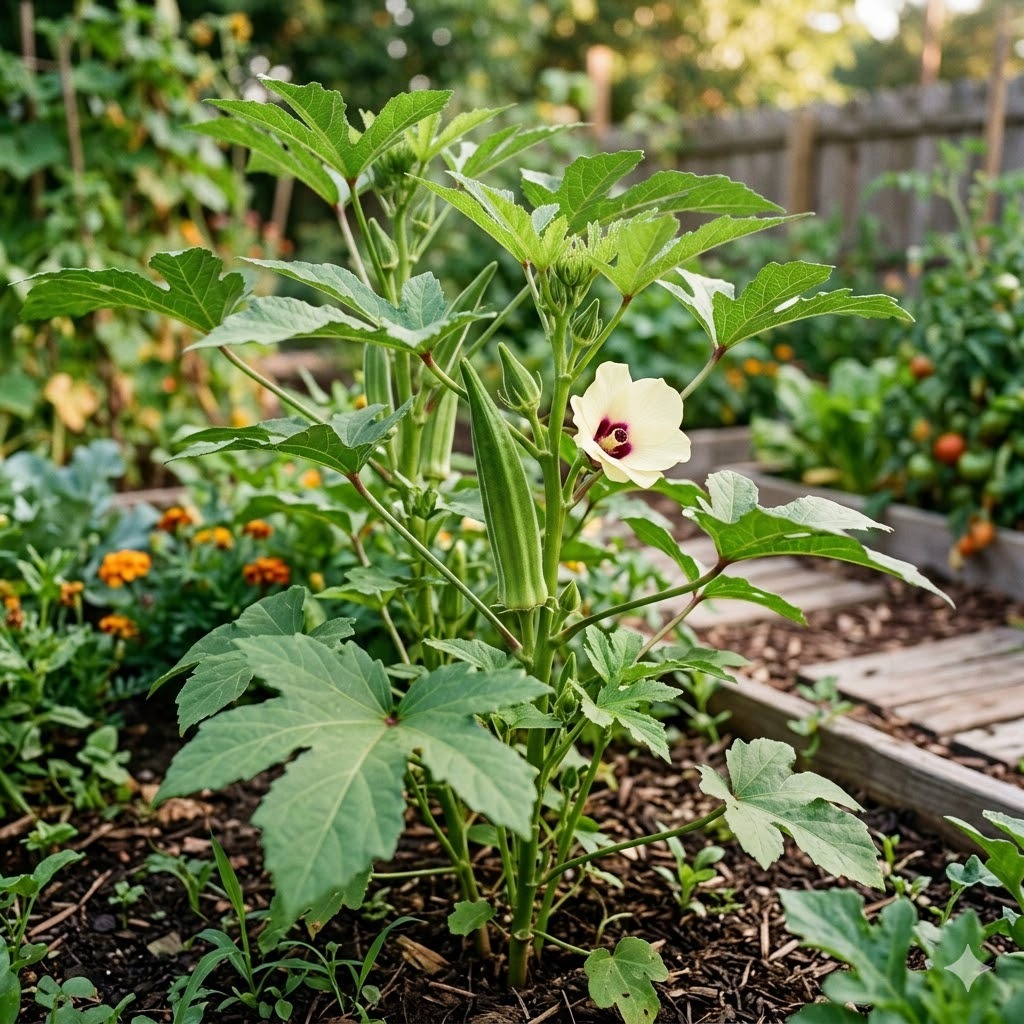
Finally, when it is happy, okra is productive. In a good hot summer under glass a healthy plant keeps setting pods over a long period, giving you a steady trickle to pick every couple of days. It is an ornamental plant too, with large leaves and beautiful, hibiscus-like flowers, so it earns its greenhouse space on looks as well as crop.
Choosing a variety
Okra does not come in a huge range of varieties for the home grower, but there are a few useful distinctions.
The main thing to look for in a cool climate is a variety described as suitable for cooler or shorter seasons, or as early-maturing. Because your growing window is limited by warmth, a type that crops relatively quickly gives you the best chance of a worthwhile harvest before the season fades. Some varieties are naturally more compact, which suits growing in pots and in the confined space of a greenhouse.
You will find both green-podded and red or burgundy-podded types. The green ones are the familiar okra; the red-podded varieties are ornamental as well as edible, though the pods often turn green on cooking. Spineless varieties are worth seeking out, since some okra plants carry irritating fine spines on the pods and stems that make handling and picking uncomfortable.
For a first attempt under glass, choose an early, reasonably compact, spineless variety. It gives you the best combination of a quicker crop, a plant that fits the greenhouse, and pods that are pleasant to pick and prepare.
Sowing and starting off
Okra needs warmth to germinate and to grow, so it is sown in spring under heat and never rushed outdoors into the cold. Everything about starting it off is aimed at keeping it warm.
Sow in spring, under warmth, in a heated propagator, warm greenhouse or on a warm windowsill. The seed is hard-coated, so germination is helped by soaking the seeds in water overnight before sowing, which softens the coat and speeds things up. Sow the seeds individually into pots of moist compost, a couple of centimetres deep, and keep them consistently warm - okra germinates best in real warmth, and cold, damp compost simply rots the seed rather than sprouting it.
Once up, grow the young plants on in warm, bright conditions, keeping them cosy and never letting them get chilled, which checks them badly. They resent root disturbance, so it pays to pot them on carefully as they grow rather than letting them become pot-bound, and to move them into their final position with as little disturbance as possible.
Do not be tempted to plant okra outdoors in a cool climate as you would a bean. Unless you have a genuinely hot summer, it belongs under glass. Transfer the plants into large pots or greenhouse borders once they are growing strongly and the greenhouse is reliably warm, giving each plant room to develop into a substantial, upright plant.
Where to grow
In a cool climate, okra is a greenhouse or polytunnel crop, plain and simple. It loves the greenhouse, where it gets the consistent heat, sun and shelter it needs to grow and set pods, and trying to grow it outdoors in anything but a hot summer is usually disappointing. This is the single most important thing to get right.
Grow it in large containers of good compost or planted into the greenhouse border, in the sunniest, warmest position you have. It appreciates rich, free-draining soil and plenty of light. As an upright plant that can grow quite tall, it may need a cane or support to keep it steady, especially once laden with pods.
Warmth is everything. Okra wants daytime heat and dislikes cold nights, so a greenhouse that holds its warmth suits it far better than an exposed spot. In the very warmest, most sheltered gardens with genuinely hot summers, okra can be grown outdoors against a sunny wall, but for most people in a cool climate the reliable route is under cover, where you can keep the temperature up and the plants happy through the summer.
Day-to-day care
Once established in the greenhouse, okra needs steady warmth, watering, feeding and a little support.
Keep the plants warm and, on hot days, ventilate the greenhouse to stop it overheating while still holding plenty of heat - okra likes it hot but appreciates fresh air and some humidity too. Consistent warmth through the growing season is what keeps it flowering and setting pods.
Water regularly to keep the compost or soil evenly moist, increasing as the plants grow larger and the weather warms. They should not dry out, but nor do they want to sit sodden, so aim for steady moisture. Once flowering and podding begins, a regular feed with a high-potash liquid feed, like the one used for tomatoes, supports continued flowering and a good run of pods.
Support the plants with canes as they grow tall, tying them in loosely, since a well-grown, pod-laden okra plant can become top-heavy.
The plants produce those lovely large flowers, and each pollinated flower gives rise to a pod. Under glass, where pollinating insects may be scarce, fruit set is usually fine but can be helped along in dull weather. Once pods start forming, the key ongoing job becomes harvesting, because keeping the pods picked young is central to keeping the plant productive, as covered below.
Common problems and pests
Under glass, okra faces the usual greenhouse pests plus a couple of issues tied to its need for heat.
Aphids are the most common pest, clustering on the soft growing tips and undersides of leaves, sucking sap and weakening growth. Watch for them and deal with them early by rubbing off colonies, rinsing them away, or using a suitable control, since a greenhouse can let their numbers build quickly.
Whitefly is the other classic greenhouse pest to watch for, tiny white insects that rise in a cloud when the plant is disturbed and, like aphids, weaken plants and leave sticky honeydew that encourages sooty mould. They can be persistent under glass, so keep an eye out and act promptly, using sticky traps or biological controls as needed. Red spider mite can also trouble greenhouse okra in hot, dry conditions, causing fine mottling on the leaves; raising humidity helps deter it.
By far the biggest problem, though, is not a pest but cold. Okra that is too cool simply refuses to perform, growing slowly, dropping its flowers, and failing to set or ripen pods. There is no real cure except warmth, so if your plants are stalling and sulking, the answer is almost always more heat and a warmer position rather than any spray. Getting the temperature right prevents most of okra's troubles.
Harvesting
Harvesting okra well is a job in itself, because the whole point is to pick the pods young, and to do it often, before they turn tough.
Start picking once the pods reach around finger length, which is where the crop gets its ladies' fingers name. At that size they are tender, mild and at their best for cooking. This is the stage to aim for, and it comes just a few days after the flower fades.
The crucial point is to harvest young and frequently. Okra pods grow fast and quickly turn tough, woody and stringy if left on the plant even a little too long, becoming inedible once they are large. Check the plants every couple of days through the cropping season and pick anything that has reached size, because a pod left an extra day or two soon passes its best. Frequent picking also encourages the plant to keep producing, so regular harvesting gives you both tender pods and a longer, heavier crop.
Cut the pods off with secateurs or a sharp knife rather than tugging, leaving a short stub of stalk. Because some varieties carry fine irritant spines on the pods and stems, it is worth wearing gloves and long sleeves when picking, unless you are growing a spineless type.
Storing and preserving
Okra is best eaten fresh, and it does not keep for very long, so the sensible approach is to pick pods young and use them promptly rather than trying to store them for any length of time.
Fresh pods will hold for a few days in the fridge. Keep them dry and loosely wrapped, since damp okra spoils and goes slimy quickly, and use them while they are still firm and green. They do not improve with keeping, so the fresher they are cooked, the better.
For a glut, okra freezes reasonably well. Pick young, tender pods, wash and dry them, blanch them briefly in boiling water, cool and drain them, then freeze, either whole or sliced. Frozen okra is best used cooked in dishes like stews, curries and gumbos rather than expecting it to stay crisp. Okra can also be pickled, which is a good way to preserve small, tender pods with plenty of flavour for the store cupboard. But since a healthy plant gives a steady trickle rather than one big flush, most of the time simply picking and cooking as you go is all you need.
Is it worth it?
That depends on your setup and your appetite for a challenge. Okra is an advanced crop for a cool climate, wholly dependent on heat, and without a greenhouse or a genuinely hot summer it is likely to disappoint, stalling and refusing to crop when it gets cold. If you cannot offer it real warmth, it is honestly not the crop to start with.
But if you have a greenhouse or polytunnel and enjoy stretching what you can grow, okra is a rewarding and rather special crop. Given consistent warmth, steady watering and feeding, and diligent picking of the pods while they are young and tender, it will hand you a run of exotic, flavourful pods through a hot summer, along with those handsome hibiscus-like flowers. For the adventurous gardener with warmth to spare, it is well worth the effort.