How to Grow Oregano: The Tough Perennial That Comes Back Every Year
A beginner's guide to growing oregano, a hardy Mediterranean herb that thrives on sun and neglect, returns each spring, and dries better than almost any other herb.
When to sow & harvest
A rough guide for a temperate climate - shift it to your own zone and last-frost date. Greenhouse growing stretches both windows earlier and later.
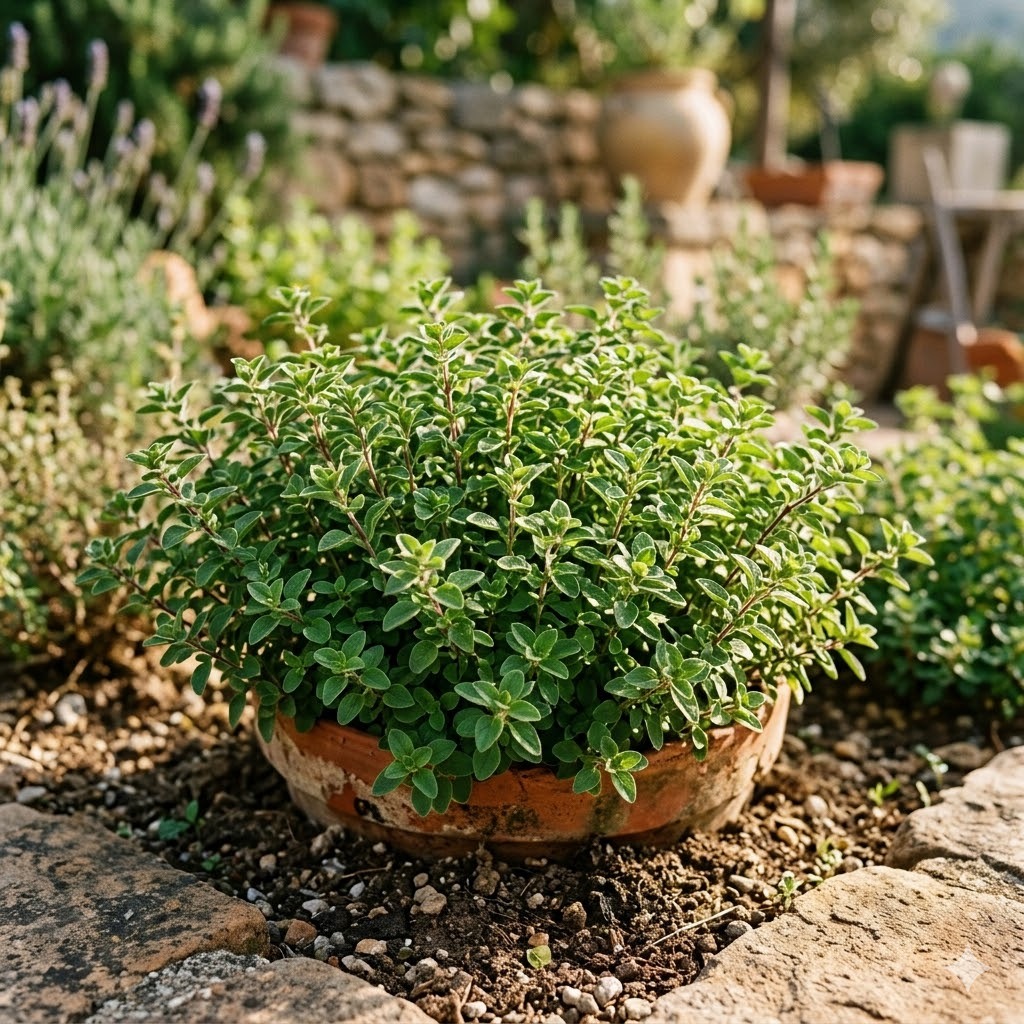
Oregano is the herb for gardeners who like a plant that looks after itself. It comes from the hot, dry, stony hillsides of the Mediterranean, and it has never quite forgotten that. Give it a sunny spot, poor soil and not much water, and it will thrive on exactly the kind of neglect that would finish off a fussier herb. Treat it too kindly - rich compost, plenty of feed, constant watering - and you get a lush, sprawling plant that tastes of almost nothing. This is the herb's great lesson, and it runs against every gardening instinct: the harder its life, the better it tastes. It is also a perennial, which means one plant, well sited, will come back to you spring after spring for years.
Why grow oregano
The first reason is longevity. Unlike the soft annuals you resow every year, oregano is a hardy perennial that dies back a little in winter and bursts into growth again each spring. Plant it once, in the right spot, and you have a permanent fixture in the garden that asks for almost nothing and keeps on giving. For the effort of a single planting, that is remarkable value.
The second reason is flavour that shop oregano cannot match, particularly when you dry your own. Oregano is one of the rare herbs that is arguably better dried than fresh, its warm, peppery, slightly bitter flavour concentrating as it dries. It is the backbone of Italian and Greek cooking - pizza, tomato sauces, roast vegetables, grilled meats - and a jar of your own home-dried oregano knocks the tired supermarket version into a cocked hat.
And it is genuinely easy, which makes it perfect for a beginner. Oregano thrives on the sort of treatment that kills other plants with kindness. If your instinct so far has been to overwater and overfeed, oregano is the herb that teaches you to step back, and it rewards that restraint handsomely.
Choosing a variety
Here is the thing to get right, because it is where oregano trips people up: not all "oregano" tastes of oregano. The one you want for real, punchy flavour is Greek oregano, sometimes sold under its botanical name as the true culinary oregano. Its leaves have that hot, spicy, unmistakable pizza-herb bite, and it is the type to seek out if flavour is your aim.
The common trap is that a plant simply labelled "oregano" is often the far blander wild marjoram, or true sweet marjoram, both close relatives with a much softer, sweeter, gentler taste. There is nothing wrong with marjoram - it is a lovely mild herb in its own right - but if you are expecting the robust flavour of Greek oregano and get marjoram instead, you will be disappointed. Where you can, buy a named Greek oregano plant and, ideally, crush and sniff a leaf before you commit.
Beyond the culinary types there are ornamental oreganos grown mainly for their pretty flowers and foliage, such as golden oregano with its lime-yellow leaves. These are attractive and the bees love them, but their flavour is milder, so choose them for looks rather than the kitchen.
Planting
Oregano is easiest bought as a young plant, since a good named Greek oregano bought this way guarantees you the flavour you are after - something seed-grown plants can be hit and miss about. You can raise it from seed, sowing thinly on the surface of gritty compost in spring and keeping it warm, but be aware that seed-raised plants vary in strength and are more likely to turn out bland. For most beginners, one bought plant of a known variety is the surer bet, and it will soon give you cuttings and divisions to make more for free.
Plant it out once the frosts have passed, into a warm, sunny position with sharp drainage. This is the key to a good oregano: it wants its roots in free-draining, even poor, gritty soil, and it wants sun. If your ground is heavy or wet, dig in plenty of grit, or grow it in a pot where you control the drainage completely. Space plants generously, as a happy oregano will spread into a low, spreading mound over time.
Do not be tempted to plant it in your richest, most pampered bed. Rich soil pushes soft, sappy, flavourless growth and can even rot the plant over a wet winter. Poor and dry is what oregano wants, and giving it that from the start sets it up for years of good, aromatic growth.
Where to grow
Sun is non-negotiable. Oregano needs a hot, bright, open position to develop its flavour and to stay healthy - a shady, damp corner will give you a weak, straggly, tasteless plant. A sun-baked border, a spot at the front of a bed where it can spill over a path, or a sunny patio pot are all ideal. The more sun and the sharper the drainage, the better it does.
A pot is an excellent home for oregano, and often the best choice if your garden soil is heavy or wet. In a container you can give it exactly the free-draining, gritty mix it likes, stand it in the sun, and lift it somewhere sheltered over a hard winter if needed. Use a peat-free compost with plenty of grit mixed in, and a pot with good drainage holes, and it will be perfectly at home.
A windowsill is workable but not oregano's favourite. Indoors it rarely gets the intense sun it craves and tends to grow soft and leggy, so a sunny outdoor spot or a greenhouse bench will always give you a better, more flavourful plant. If a windowsill is all you have, pick the brightest one and keep it on the dry side.
Day-to-day care
The guiding principle for oregano is to do less. Water it sparingly, feed it rarely, and otherwise leave it be. Once established, an oregano plant in the ground is drought-tolerant and needs watering only in prolonged dry spells; a plant in a pot needs a little more, but even then let the compost dry out between waterings. Overwatering is the surest way to spoil the flavour and rot the roots.
Feeding is much the same - generally, don't. Oregano is adapted to lean soils, and feeding it just produces lush, weak, bland growth. Skip the feed and let the plant find its own character. This genuine ease of care is a large part of why oregano suits beginners and busy gardeners so well.
The one active job is a good trim. Cutting the plant back keeps it bushy and productive and stops it turning woody and sprawling. Give it a trim after flowering, and again cut it back in late summer or early autumn to tidy it before winter. In colder areas a light mulch or a move to a sheltered spot helps the plant through the coldest months, but in most gardens a well-drained oregano is tough enough to shrug off frost and return in spring.
Common problems and pests
Oregano is one of the least troubled herbs you can grow, and most problems come down to too much wet rather than any pest. The great enemy is wet soil, especially in winter. Sitting in cold, sodden ground causes the roots to rot, and a plant that collapses over winter has almost always drowned rather than frozen. Sharp drainage is the whole answer, so if you lose plants over winter, improve the drainage or grow in pots.
Pests rarely bother it much - the aromatic oils that make oregano taste good also make it unappealing to many insects. Occasionally aphids may gather on soft new growth, and can be rubbed or washed off, and in damp, crowded conditions you might see fungal spotting on the leaves, which good airflow and spacing prevent.
If your oregano is growing lushly but tastes of little, that is not a disease - it is a sign of too much water, too much feed or too little sun. The cure is to grow it harder: more sun, leaner soil, less water. Stress, within reason, is what draws out oregano's flavour, and a slightly struggling plant on a hot, dry spot will always taste better than a pampered one.
Harvesting
You can start picking oregano once the plant is growing strongly, snipping sprigs and leaves as you need them through the growing season. Regular light harvesting is good for the plant, keeping it bushy and encouraging fresh growth, so do not be shy about taking what you need for the kitchen.
For the best flavour, harvest just before the plant flowers, in early to mid summer. This is when the leaves are at their most aromatic and full of the oils that give oregano its punch. Cut whole stems rather than picking individual leaves, taking the top two-thirds of the growth and leaving the plant to bush out again. Many gardeners take one big harvest at this point specifically to dry, then let the plant flower for the bees and pick lightly for fresh use afterwards.
Storing and preserving
This is where oregano truly shines, because it is one of the very best herbs for drying - arguably better dried than fresh. Cut whole stems, tie them into small bunches, and hang them upside down somewhere warm, dry and airy out of direct sun. Within a week or two the leaves will be crisp and can be crumbled off the stems and stored in an airtight jar. Home-dried oregano keeps its flavour for many months and outperforms almost any other dried herb, so a summer harvest can supply your kitchen right through the winter.
Freezing is possible too - strip the leaves, pack them into ice-cube trays with a little water, and freeze for cooking - but with oregano, drying is usually the better route, since it loses so little in the process. You can also steep sprigs in a good olive oil to make a flavoured oregano oil for dressings and cooking, though as with any home-made herb oil it is best kept in the fridge and used within a week or two.
Because a single mature plant produces so much, and dries so well, it is easy to put up a whole year's supply from one good harvest. That combination - a perennial that returns each year and preserves better than almost anything - makes oregano one of the most practical herbs to store.
Is it worth it?
Yes, and it is one of the best-value herbs a beginner can grow. Plant a good Greek oregano once, in a sunny spot with sharp drainage, and you have a tough, drought-proof perennial that comes back year after year, asks almost nothing of you, and dries into a jar of flavour far better than anything on the supermarket shelf. For anyone who cooks Italian or Greek food, that is a genuinely useful crop from a plant that thrives on neglect.
The only real ways to go wrong are choosing a bland marjoram sold as oregano, or killing it with kindness in rich, wet soil. Get the variety right and grow it hard - sun, poor soil, sparing water - and oregano is close to foolproof. Few herbs give so much back for so little care, and fewer still keep doing it, unbidden, every spring.