How to Grow Pak Choi: Fast Juicy Greens Best Sown for Autumn
A practical guide to growing pak choi at home, from its quick weeks-not-months harvest to the crucial timing of a late-summer sowing that avoids the bolting brought on by midsummer heat.
When to sow & harvest
A rough guide for a temperate climate - shift it to your own zone and last-frost date. Greenhouse growing stretches both windows earlier and later.
Pak choi is one of the fastest and most satisfying leafy crops you can grow, going from seed to plate in a matter of weeks and giving you crisp, juicy stems and tender leaves for stir-fries and salads. It is easy to grow and quick to reward, which makes it a good crop for a beginner - with one important catch that trips up a lot of people, and which this guide is really built around.
That catch is bolting. Pak choi has a strong tendency to run to seed rather than form a good plant when it is sown into the heat and long days of midsummer. Sow it at the wrong time and it can shoot up a flower stalk before you get a decent harvest. The fix is simple once you know it: sow pak choi mainly in late summer for an autumn crop, when the shortening days and cooler weather suit it perfectly. Get the timing right, keep it watered, and protect it from a couple of common pests, and it is a genuinely easy and generous vegetable.
Why grow pak choi
The first appeal is speed. Pak choi is ready in weeks rather than months, so it is one of the quickest ways to get a real harvest, which is enormously encouraging for a new grower and useful for filling gaps between slower crops. You do not wait long for a result.
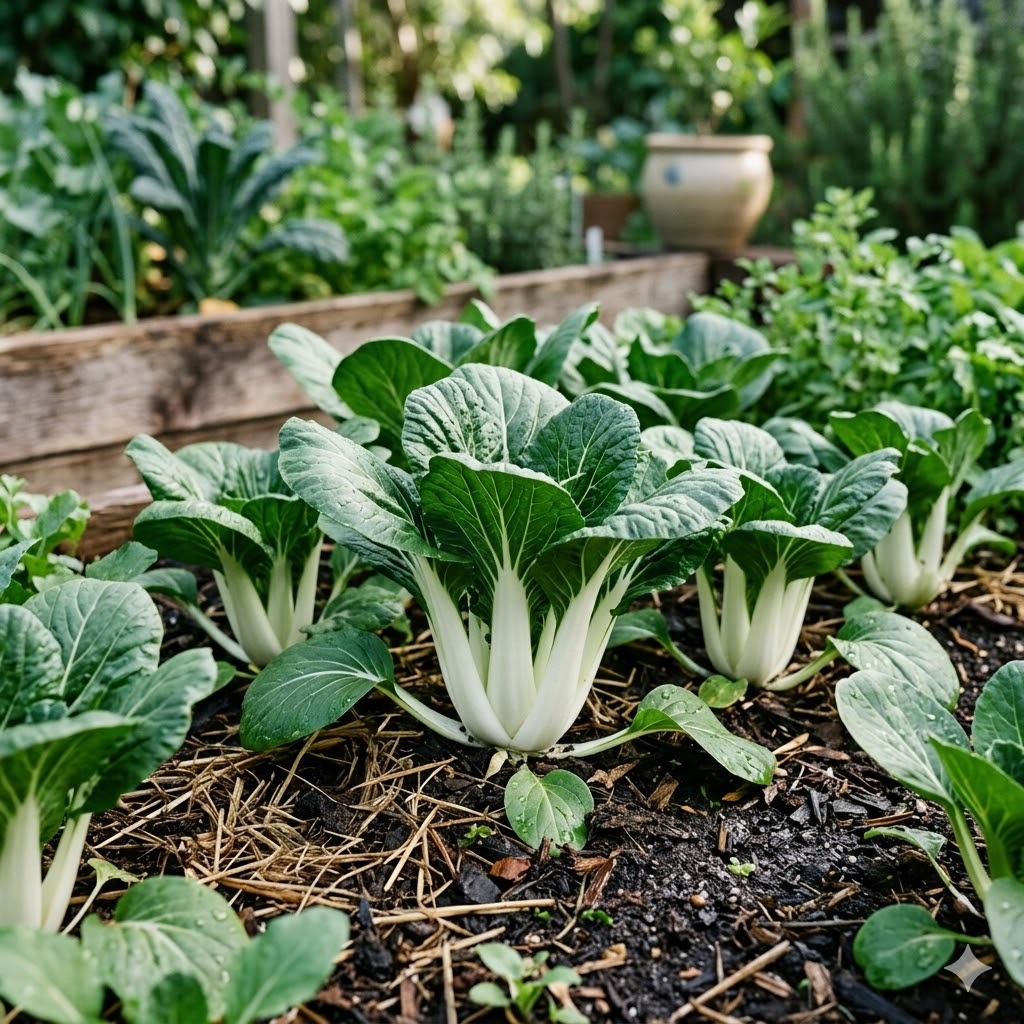
It is also a lovely fresh vegetable that is hard to buy at its best. Home-grown pak choi has crisp, succulent white or pale green stems and soft leaves, and picked fresh it is far crunchier and more vibrant than the tired heads that have sat in a shop. It is versatile in the kitchen, going into stir-fries, soups and salads, and you can eat it young as baby leaves or grown on into full heads.
The honest trade-off is that pak choi is fussy about timing and needs a bit of protection from pests, so it is not quite a sow-and-forget crop. But once you understand its liking for cooler conditions and guard against a couple of easy problems, it repays you quickly and generously.
Choosing a variety
Pak choi comes in a range of types that differ mainly in size and in stem colour, and for a first attempt the choice is not complicated.
There are the larger, traditional types that form a substantial head with broad white stems and dark green leaves, good for growing on to full size for cooking. There are also green-stemmed varieties, sometimes a little more compact and tender. And there are smaller, quick baby types bred to be grown close together and picked young, which are ideal if you want fast salad leaves and are especially forgiving.
If bolting is a worry - and with pak choi it always is a little - it is worth looking for varieties described as slow to bolt or bolt-resistant, which have been bred to cope better with the conditions that make ordinary pak choi run to seed. For a first go, a reliable variety with some bolt resistance, sown at the right time of year, gives you the best chance of a clean, trouble-free crop.
Sowing and starting off
Pak choi can be sown direct where it is to grow or started in modules and transplanted, though because brassicas can dislike root disturbance, sowing direct or using modules and planting out while still young works best. The seed germinates quickly and the plants grow fast, so things move along at a good pace.
The single most important decision is when to sow, not how. Because pak choi bolts so readily in the heat and long days of high summer, the reliable main sowing time is from mid to late summer, giving a crop that matures through the cooler, shortening days of autumn - exactly the conditions it likes. You can make earlier sowings in spring if you choose a bolt-resistant variety and the weather is not too hot, but the late-summer-for-autumn sowing is the one that most consistently succeeds.
Sow into fertile, moisture-retentive soil, spacing plants according to whether you want small baby heads grown close together or larger heads with more room. Sow thinly, keep the seed moist, and thin the seedlings to give the remaining plants space to develop. Because the crop is so fast, small successional sowings a few weeks apart in late summer can give you a run of harvests through the autumn.
Where to grow
Pak choi grows well outdoors in the open ground and prefers cool, moist conditions, which is why the autumn crop suits it so well. An open spot with fertile, moisture-holding soil is ideal, and a little light shade is no bad thing in warmer weather, since strong heat is one of the things that pushes it to bolt.
It also grows happily in containers, which makes it a good option for a patio or a smaller space, as long as the pot holds enough moisture and does not dry out - drying out and heat stress are the enemies of good pak choi. For late sowings heading into the colder part of autumn, a cloche, cold frame or fleece can extend the season by protecting the plants as temperatures drop, letting you keep cropping later.
The key with siting is to keep the plants cool and consistently moist and to avoid subjecting them to the hot, dry, high-summer conditions that trigger bolting. Choose the season and the spot with that in mind, and pak choi grows readily.
Day-to-day care
The two watchwords for pak choi care are water and pest protection. Because it grows so fast and is so leafy, pak choi needs plenty of consistent moisture to produce those crisp, juicy stems, and any check from dry soil both toughens the crop and pushes it toward bolting. Keep the soil reliably moist, water regularly especially in warmer or dry spells, and mulch to help hold moisture in.
Pest protection is the other essential job, and it is best put in place from the start rather than after damage appears. Covering the crop with a fine insect mesh or netting from sowing keeps off the pests that most trouble it, which are covered in the next section. Keep the bed weeded so the fast-growing plants are not competing for moisture and light.
Beyond water, netting and weeding, pak choi asks little. It grows quickly enough that it is usually harvested before it needs feeding, provided the soil is reasonably fertile to begin with. The main thing is to keep it growing steadily and without check, since smooth, unstressed growth is what gives you tender plants rather than tough, bolting ones.
Common problems and pests
The single biggest problem with pak choi is not a pest at all but bolting - running to seed before making a good plant. It is caused mainly by heat, long days, and any stress such as dry soil or root disturbance. The answer, as stressed throughout, is to sow at the right time for an autumn crop, keep the plants cool and well watered, choose bolt-resistant varieties, and avoid disturbing the roots. Get the timing right and bolting largely stops being an issue.
The main insect pest is flea beetle, which peppers the leaves of young plants with lots of tiny round holes and can badly weaken seedlings. The most reliable defence is to cover the crop with a fine insect mesh from the moment you sow, keeping the beetles off entirely, along with keeping plants growing strongly with plenty of water. Slugs and snails are the other serious nuisance, especially in the damp conditions pak choi enjoys, and they can shred a young plant overnight, so watch for them and protect vulnerable seedlings.
As a brassica, pak choi can also attract caterpillars from cabbage-white butterflies, and the same netting that excludes flea beetle helps keep butterflies from laying on the plants. Kept covered, watered and grown in its preferred cool season, pak choi stays remarkably clean and healthy.
Harvesting
One of the pleasures of pak choi is how flexibly you can harvest it, and how soon. You can begin picking individual young leaves as a cut-and-come-again crop while the plants are still small, taking a few outer leaves and letting the plant carry on growing, which is a great way to get early salad and stir-fry leaves quickly.
Alternatively, you can let the plants grow on and harvest whole heads once they have developed a good size, cutting the entire plant off at the base. Because pak choi matures so fast, you often have the choice of an early light picking of leaves followed by a main harvest of heads a little later. Either way, harvest before the plant shows any sign of bolting, as a plant that starts to run up a flower stalk will turn tougher and less pleasant.
Harvest in the cool of the day for the crispest, freshest leaves, and use them soon after cutting for the best texture. Since the crop is quick and often sown in succession, you can keep cutting and pulling through the autumn as successive sowings come ready.
Storing and preserving
Pak choi is very much a fresh crop and is at its best used soon after cutting, when the stems are crisp and the leaves tender. It does not store for long: harvested heads or leaves will keep for a few days in the fridge, ideally bagged to stop them wilting, but they lose their crunch fairly quickly, so it is a vegetable to grow and eat rather than lay down.
Because it is so quick and is best eaten fresh, the sensible way to manage a supply is through successional sowing rather than storage - sow small batches a few weeks apart so you have plants coming ready in turn, and harvest them as you need them. That keeps a steady flow of fresh pak choi rather than a glut you have to preserve.
If you do end up with more than you can use fresh, pak choi can be cooked down into dishes and does not lend itself well to long-term storage as a raw vegetable. For the most part, treat it as a pick-fresh crop and rely on timed sowings rather than the fridge or freezer to spread the harvest.
Is it worth it?
Pak choi is a quick, generous and genuinely useful crop that rewards a beginner with fresh, crisp greens in just a few weeks, and it grows readily in a bed or a container. Its speed alone makes it satisfying, and the flavour and texture of freshly cut pak choi are well worth the small effort of growing your own.
The one thing that decides success is timing. Sow it into the heat and long days of midsummer and it will likely bolt and disappoint you; sow it in late summer for an autumn harvest, keep it cool and well watered, and net it against flea beetle and slugs, and it becomes an easy, reliable crop. Understand its liking for cool conditions and guard against those couple of pests, and pak choi comfortably earns its place in the garden.