How to Grow Parsnips: Slow, Sweet Winter Roots Worth the Patience
An honest guide to growing parsnips, a slow root that sweetens after frost, needs deep stone-free soil and fresh seed each year, and famously tests your patience at germination.
When to sow & harvest
A rough guide for a temperate climate - shift it to your own zone and last-frost date. Greenhouse growing stretches both windows earlier and later.
Parsnips ask for one thing above all: patience. They are slow to germinate, slow to grow, and they sit in the ground for the best part of a year before you lift them. But at the end of that long wait, after the first frosts have sweetened them, you get something you simply cannot buy in the same quality - deep, nutty, honeyed roots that are one of the great pleasures of the winter kitchen. Roasted parsnips fresh from your own soil are hard to beat.
They are not a beginner's easiest crop, mostly because of that famously reluctant germination and the need for deep, stone-free soil. But they are not difficult once you understand their quirks, and none of the tasks are demanding. The trick is to work with their nature rather than against it: use fresh seed, sow direct, prepare the soil properly, and then leave them alone and wait. This guide covers the whole slow season, from that testing spring sowing to lifting sweet roots in the frost.
Why grow parsnips
The first reason is flavour, and it is a strong one. Parsnips develop their full sweetness after cold weather, when frost converts some of their starch to sugar. Home-grown parsnips, lifted fresh after the first hard frosts, have a richness and depth that shop parsnips, often stored and tired, rarely match. For roasting and for winter soups and mash, they are superb.
The second is timing. Parsnips stand in the ground through winter and are lifted as needed, so they give you fresh vegetables in the coldest months when little else is available. Because they are so hardy, the ground itself acts as your store.
The honest trade-off is time and space. Parsnips are slow, occupying their bed from a spring sowing right through to a winter or even early-spring harvest, and they need deep ground. If your space is tight or your soil is shallow and stony, that is a real consideration. But if you have the room and can prepare the soil, few crops reward patience so well.
Choosing a variety
Parsnips do not come in the range of shapes and colours that carrots do, but there are still useful choices to make.
Longer-rooted varieties produce the classic long, tapering parsnip and give the biggest roots, but they need deep, well-prepared soil to grow straight and unforked.
Shorter or wedge-shaped varieties are a better choice if your soil is shallower or heavier, since a shorter root is less likely to hit an obstruction and fork or twist.
The most important thing to look for, though, is canker resistance. Parsnip canker is the crop's main disease, and several modern varieties are bred to resist it. If canker has troubled you before, or you simply want an easier time, choose a resistant variety.
Whatever you grow, buy fresh seed each year - which brings us to the single most important quirk of this crop.
Sowing and starting off
Two rules matter more than anything else with parsnip sowing, and ignoring either is the usual cause of failure.
The first is: use fresh seed every year. Parsnip seed does not store well and loses its viability quickly, so seed left over from last year often germinates poorly or not at all. Always start each season with a fresh packet. This alone solves a lot of the disappointment people have with parsnips.
The second is: sow direct, and be patient. Like carrots, parsnips form a long taproot that hates being disturbed, so they must be sown straight into the ground where they will grow. Forget modules and transplanting - it leads to forked, stunted roots. And parsnip germination is famously slow and erratic, often taking two to four weeks, sometimes longer. Do not give up on a row that looks empty; it may simply be taking its time. Keep the soil consistently moist through this long germination, because if it dries out, the seed may fail.
Prepare the soil before you sow. Parsnips need deep, loose, stone-free ground to grow long, straight roots. Stones, clods and fresh manure all cause forking and twisting, so dig the bed over, remove stones, break up lumps and rake it fine, and do not add fresh manure beforehand. If your soil is shallow or stony, grow shorter-rooted varieties or use a deep raised bed or container of sifted, stone-free mix.
Sow in spring once the soil has begun to warm, since seed sown into cold, wet ground rots or germinates even more slowly. Sow thinly into shallow drills a centimetre or so deep, and thin the seedlings to give each room. A common trick is to sow a few quick radish seeds along the same row to mark it while you wait for the slow parsnips to appear.
Where to grow
Parsnips are an outdoor crop from beginning to end. They are extremely hardy, they want the open ground and, crucially, they want the cold, since it is frost that sweetens them. There is no case for growing parsnips under glass.
The only thing protected growing might offer is warming the soil slightly for an early sowing, but even that is marginal, since parsnips need deep ground and a long season out in the open. In practice, prepare a good deep bed outdoors, sow direct, and let the plants spend their whole long life there.
Because they are in the ground so long, choose a spot you will not need for other things, and fit them into your rotation, avoiding ground where you recently grew other root crops such as carrots.
Day-to-day care
Once parsnips are up and growing, they need very little, which is one of the compensations for their slowness.
Keep them weeded, especially in the early weeks. The seedlings are slow and easily swamped, so a clean bed while they establish makes a real difference. Once the plants are up and growing strongly, their large leaves shade the ground and suppress weeds themselves.
Water in prolonged dry spells. Parsnips are not as fussy about constant moisture as celery, but a long drought will check growth and can cause the roots to split when rain finally comes, so aim for steady moisture rather than extremes. Once established, their deep roots make them fairly drought-tolerant.
That is genuinely most of the care. Parsnips do not need staking, blanching or earthing up, and on decent soil they rarely need feeding, since over-rich ground can encourage forking and lush leaf at the expense of the root. In short, prepare the bed well, keep it weeded and watered, and then leave the plants to get on with their slow work.
Common problems and pests
Two problems are worth particular attention with parsnips.
The first is parsnip canker, the crop's main disease. It shows as brown, orange or black rotting patches, usually starting at the crown or shoulders of the root, which can spread and ruin it. Canker is worse in wet conditions and where roots have been damaged. Reduce your risk by growing canker-resistant varieties, improving drainage, avoiding damage to the crowns (for example from careless hoeing), not over-feeding with nitrogen, and rotating your crops. Drawing a little soil over the shoulders of the roots can also help protect them.
The second is carrot root fly, which affects parsnips just as it does carrots. The larvae tunnel into the roots, leaving rusty channels. The defences are the same: cover the crop with fine insect mesh, well secured at the edges, since the low-flying females are kept out by a barrier; or grow in a raised bed above the flies' usual low flight path. Since parsnips are in the ground so long, this protection matters over a long stretch.
Beyond these, most parsnip troubles are soil-related and preventable. Forked, split and misshapen roots come from stones, fresh manure, over-rich soil or erratic watering, all covered above. Get the soil deep, loose and stone-free, water steadily, and choose a resistant variety, and parsnips give little trouble.
Harvesting
The golden rule with parsnips is worth waiting for: leave them until after the first frosts. Frost converts starch to sugar and transforms the flavour, taking parsnips from merely fine to genuinely sweet and rich. So resist lifting them too early. They are usually ready from late autumn onwards, but the best eating comes once the cold has done its work.
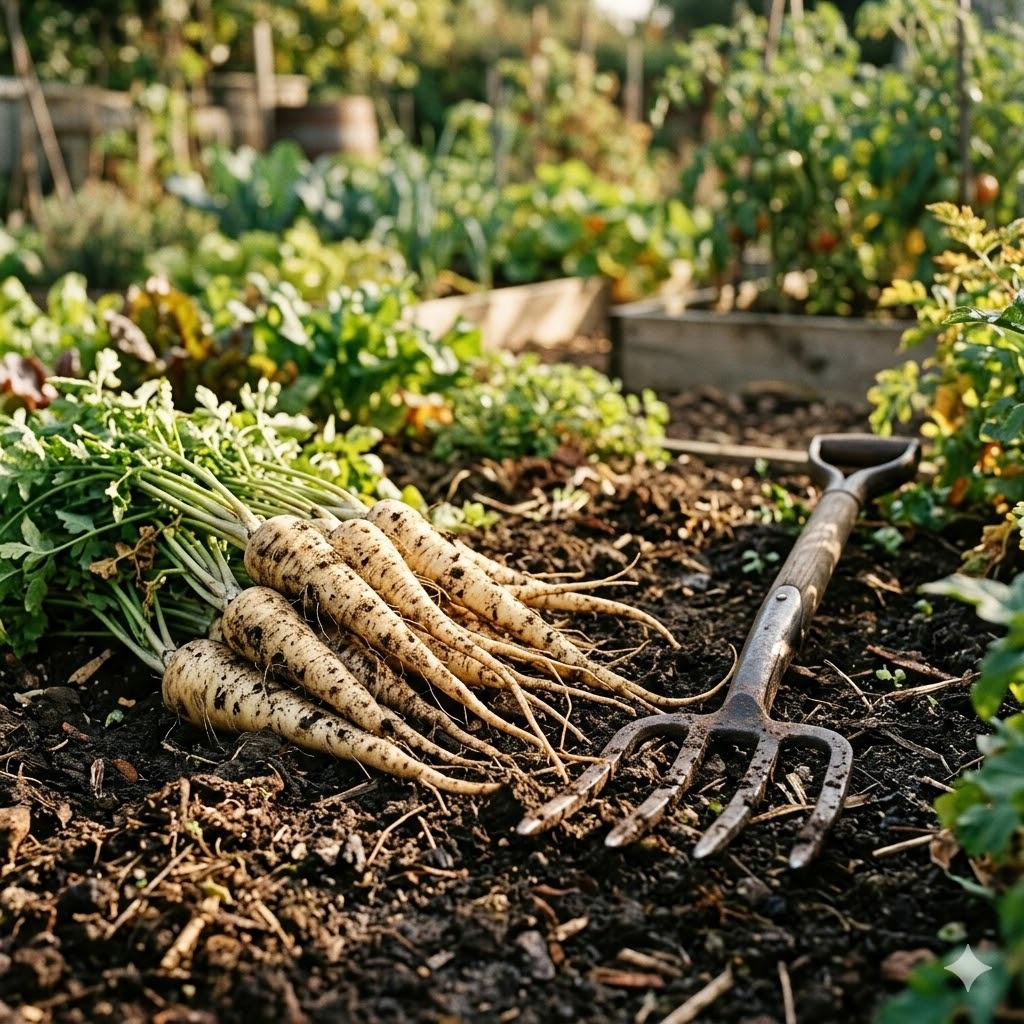
To harvest, ease the roots out with a fork rather than pulling on the tops, which will simply snap off and leave the long root in the ground. Loosen the soil well alongside, since parsnip roots go deep, then lift them out whole.
Because parsnips are so hardy, you do not need to lift them all at once. Leave them standing in the ground through winter and lift as needed - the frost only improves them. In fact many growers leave them right through to late winter and early spring, taking roots as required.
The one deadline is spring: once the plants start into growth again and send up a flower stem, the roots turn woody and are past eating, so use them all before that happens.
Storing and preserving
The simplest way to store parsnips is to leave them in the ground where they grew. Being very hardy, they keep perfectly well through winter in the soil, so the bed itself is your store and you lift as needed. In very hard, prolonged frost the ground can freeze solid around them, so it is worth lifting a few in advance during a mild spell to have some in hand.
If you need to clear the ground, lift the roots and store them in boxes of just-moist sand or dry compost, layered so they do not touch, somewhere cool, dark and frost-free, where they will keep for a good while.
Lifted parsnips also hold for a couple of weeks in the fridge if the tops are trimmed off.
For longer storage, parsnips freeze well, ideally after their frost sweetening. Peel and cut them into chunks, blanch briefly in boiling water, cool quickly, drain and freeze. They are excellent frozen for roasting and soups, keeping for months, and blanching stops them deteriorating in the freezer.
Is it worth it?
For anyone with deep enough soil and a little patience, yes. Parsnips ask for a long wait and proper soil preparation, and their slow, erratic germination tests your nerve at the start of the season. But the reward is a hardy, generous crop that stands right through winter, needs almost no attention once growing, and delivers a depth of sweet, nutty flavour that shop parsnips simply cannot match, at their very best after the frosts arrive.
The honest caveats are the deep stone-free soil they need and the two rules you must not break: use fresh seed every year, and sow direct rather than transplanting. Get those right, keep canker and carrot root fly at bay, and then be patient. Do that, and a row of frost-sweetened parsnips lifted in the depths of winter will feel very much worth the wait.